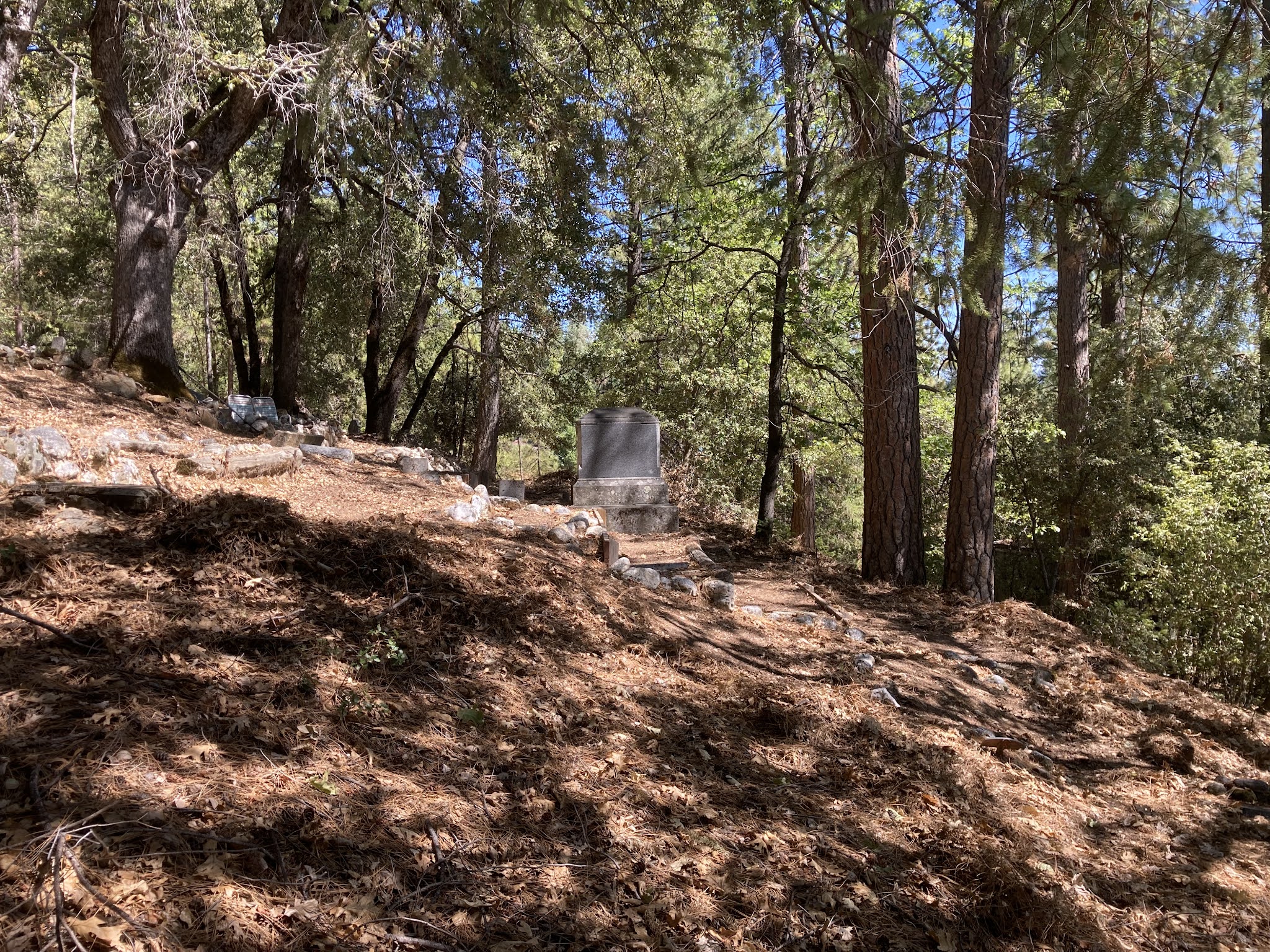
When I was looking out the back door a few nights ago, the deer were out grazing:
Saturday, September 18, 2021
Deer Sightings
Friday, September 17, 2021
Renewal
I had an epiphany this week.
I am not quite sure when I turned the corner on this issue. It has been within the last two weeks. And I cannot tell you precisely what contributed to it, but I can tell what seemed to contribute to it.
But I can tell you the moment it happened.
The "what" seems to have been a series of thoughts and readings over the last two weeks, apparently just overlaying each other: The Benedict Option. Live Not By Lies. Taking time away to train with my coach, The Berserker. Coming to The Ranch, as I have for over a year now. Visiting with My Dead. And lastly - just this week, Claire Wolfe's latest post, Our job, should we choose to accept it... It is, apparently, dangerous to read things and think about them at length.
The When? 6:30 PM, more or less, on the Wednesday past.
The Why? Because the writing of the past two weeks reached a crescendo that manifested itself in Claire's post.
Quoting from the post:
"Last week, I wrote that freedomistas had just two jobs to do in our new totalitarian society: live with the ugly reality and plan to outlive it.
The catch, of course, is that neither of the two jobs is simple or easy.
Part of those jobs involves developing parallel systems, or even parallel societies as described in “How to Escape a Sick Society.” We need, as human beings and as a culture, to “route around” the damage of totalitarianism. By routing around, we accomplish multiple good things, from weakening the power of the oligarchy to giving dissidents a way to live and thrive to (potentially) replacing the oligarchy without bloodshed when the day comes.
Really we won’t end up with one, or even two or three, parallel societies, but thousands of them."
All of a sudden I realized what I had been missing, what has been a drag on my thoughts and emotions for months now, maybe even years: I have been fighting a rearguard action.
It is not, I think, a secret that on the whole I despair of society in its current form and where it seems to be headed - and I am not the only one, not by far. But what hit me as a bolt of lightning is that both sides of that argument - what society seems to be becoming and those that oppose it - are looking back both back into a past that no longer exists and will not come again and a future that has nothing under it except hopes and wishes and checks that cannot be cashed.
What they are both missing - what I have been missing - in the concept and idea of building something new.
The underlying thoughts that motivated all those posts above as I wrote them were one of two things: either acknowledging that what is being done is not working and building something - whether societal or in my own life - that will be a way to manage, cope, and thrive under such conditions as well as hopefully endure.
The past? It matters. Roots matter. The great thoughts of the past matter. History matters. But trying to build on past systems that have effectively failed of their vision leads nowhere, even if it seems like an point of view or ideology is "winning". The forward motion that is present is the declining power of inertia; given enough time, "winning" will itself turn into a rearguard action.
Ah, but to build! To create! To manufacture systems and ways of connecting and conducting life - preserving all that is good of the past but not hemming our lives in solely by it - this is forward looking, this is taking action.
This is hope. This is life.
By mostly dumb luck (and their graciousness), I have learned to follow some amazing bloggers. Go follow Leigh and Dan, or Dawn McHugh, or Rain, or Patrice Lewis, or my friend (and official optimist of The FortyFive), Ed. They are all in the process of building things (they might not define themselves as totally doing that in the way I am thinking of, but I will go ahead and just define it for them as that is what they are doing...). They experiment. They build networks around their experiments. They share information.
In some small fashion, they provide hope.
This is not meant to say that there is some sort of naïve optimism at work here - indeed, in some ways things seem darker than ever. But rather than curse the darkness, in their own way all of them (as well as Claire) have chosen to light a candle.
Can you remember a time when you became really excited about doing something? Do you remember the energy and optimism you felt, how you were awake at night thinking about it and up early anticipating it? Yes, that feeling. That is what suddenly hit me at 6:30 in the evening on Wednesday night.
There is a life to build. There is a society or series of societies to build. In a way, it is like actually getting to play the Old "Now Available for the Macintosh" version of Sid Meier's Civilization or any of the "Build Your Own" cities/zoos/rollercoaster games. Except this time, it is for real. What could be more exciting than that?
I took an evening walk after all of this hit me. The evening was cooler, cooler than it had been all week, cooler than it has been since April. And yet, the world seemed on fire like it had not been in years.
Go light a candle. Go be a raging fire.
Thursday, September 16, 2021
The Collapse LXXXI: The Day Of Fools
01 April 20XX+1
My Dear Lucilius:
And here it is, the Day of Fools.
There was a time, of course, when the Day of Fools was patiently waited for – probably around the middle of grammar school to high school, I should imagine. The years that Easter fell late, it was a long haul until the next holiday, so The Day of Fools made a welcome break.
And it was such an anticipated holiday. In the beginning, of course, pranks were spur of the moment things thought up in the morning, mere verbal sleights of word or wildly outrageous lies. As time went on, they because more and more elaborate, sometimes involving a month of planning. Sometimes they worked, sometimes they did not – and sometimes we were so caught up in the cleverness of the fool that our targets in turn fooled us (teachers, who seemed so much older and non-hip, were actually pretty clever).
Over time, of course, this sort of thing fell by the wayside. High school gave way to college and college to work, and at each step the Day of Fools had less and less relevance to our annual lives - and instead became more and more concerning: there came to be rules of conduct and engagement as one moved farther up the educational and career ladder, so many and in such unwritten abundance that at some point the risk of creating an issue outweighed the potential laugh.
Humor, and the Fools of April that was one embodiment of it, seemed to have disappeared.
Old humor, of course, was completely out. Humor had to conform to modern mores – and by modern, it came to mean within the last five years of whatever the year was. Yesterday’s humor became today’s faux pas. Wildly popular shows that twenty years previous were the peak of humor and clever repartee were now things to be set aside in the Modern modern world.
In terms of relationships – work, social, church – humor could be an instant conversation killer. One never knew precisely what others thought might be funny, so one simply stopped making any sorts of jokes at all, unless one knew the audience well – and not just well, but extremely well. Self-deprecating humor became a way to break the ice among the strangers and the uncommitted, I suppose – after all, most everyone is happy to have someone to laugh at, at long as it is not them.
Starting one of these social events – a work meeting, a church gathering, a social gathering – turned into a bit of an uncomfortable and high risk event every time. People would meet, exchange greetings – and then some brave soul would make a quip or comment. The gathering seemed to pause for a moment, as people stopped and waited to see what would happen next. Either someone - apparently someone of sufficient standing or rank – would laugh, at which point everyone felt they could laugh, or there would be silence and coughing and then the inevitable “Well, it looks like we are all here, so we should start.”
But as these written and unwritten rules and mores went into effect, the outcome was quite different that what was intended.
Instead of laughing more because humor was now in theory correctly distributed and focused, everyone laughed less. And humor was coarsened as well: sex, mockery of others, and just a general “grossness” in humor may have generated laughter, but it also made everyone less civilized over all. In the desire to find things that were acceptable to laugh about, the lowest common denominator became the standard, at which point it seemed everyone tried to find a way to go below the standard.
For a while to find something I could laugh at, I tried to just watch shows that we had watched with my children – the “Disney sitcoms or cartoons” and their like. And they were funny in a sort of rollicking innocent way – although by the time my children had stopped watching (and thus, my direct acquaintance with them) even they had started to go the way of the larger world.
Old comedies were by the wayside – looking back, the rot had set in there even earlier; I had been to foolish to not see it. One would have to go way back – perhaps pre-1965? - to find some of what we used to call “wholesome” humor. At that point it became too much of an effort, and frankly I did not want spend my days and off time in front of a computer, watching a small screen, desperate for a laugh that felt honest and clean.
I have a few of the genuinely great comic collections that either my wife or I had collected over the years: The Far Side, Calvin and Hobbes, Peanuts (of course), and even a New Zealand Comic strip called Footrot Flats that I refer to now and again when I feel the need. Simple humor well done, without a trace of controversy because in point of fact, life is simply amusing on its own.
On the whole, I laugh more now, even in our current situation, than I have for many years. This truly is the greatest comedy of them all.
Your Obedient Servant, Seneca
Wednesday, September 15, 2021
Traveling Lighter
Last week it struck me that it was about time to start booking the Spring round of flights to come to The Ranch (if you are not aware, most airlines release them in tranches; I believe Southwest issues theirs through April this week). I have got more of my rhythm now in terms of travel (one would think, after 14 months, this would be true), so booking early will give me my best chance at getting the flights I want (Not leaving too early, not arriving too late. There is no reason to be at the airport at 0 dark thirty.).
As I sat down and reviewed the upcoming year, I suddenly realized that - between planning flights once a month and vacation which will have to be used - I will be traveling 33% of the year.
I simply had no idea.
What it did mean, as I sat and pondered it, was that I was going to need to change how I do things for travel and my expectations at home.
For travel, the biggest change I needed to make was simply what I brought - for over a year, I have traveled with a suitcase and a computer bag. I, on average, probably spend an hour trying to recover my luggage between two arrivals (luggage systems at modern airports seem to be much slower than they used to be). Why, I thought to myself, was I wasting an hour?
After all, at this point I know precisely what I need to bring when I come to the Ranch. There is never any variation, except by season. And what if, I wondered, I started simply pre-positioning things? It is not as if I need to travel with toiletries (well, except of course moustache wax. That is a bit hard to come by - the good stuff, anyway). And clothes? Yes, there are things I can bring with me, but things like underwear and socks and undershirts do not need travel with me every time. I certainly have enough of them.
And so, the travel bags you see above: a backpack and a computer case. Surprisingly so far, the world has not ended with not having brought other things. I will wash what I brought and leave the bulk of them here when I go. Within two trips, I can effectively have a compact second wardrobe here.
(Would that I could only travel with one computer instead of two. That said, there is no way I am crossing the work/personal streams. I will just have to lug both.)
But having resolved this, I realized that it impacted my life on a larger scale as well.
In point of fact, if I am gone 33% of the time, that means my involvement in activities is 33% less: 33% less Iai class, 33% less Rabbit Shelter, 33% less gym time (but not necessarily working out, of course), 33% less time on things like gardening and cheese. It does have an impact.
What it means, of course, is that I have to be somewhat smarter and more innovative about how I do these things. Find time when I am there to effectively "double down" on those activities; find time when I am away to continue to do or support them even if I am not physically there (for example, I have had to effectively rig a sprinkler system for the garden while I am away).
It also means that going forward, thoughts about involvement in other things and purchases need to be evaluated as well. I will not be the best card carrying member of any organization at the moment, nor does necessarily buying more things that will sit somewhere being make a lot of sense.
It is odd - without thinking I had entered a transition, I have entered a transition of indeterminate length and unknown extent. I had hoped, perhaps, to do this in a more thoughtful and organized way. However, as wiser heads than I have pointed out, Life is as much what happens to you as it is what you try to make happen.
Tuesday, September 14, 2021
Time Passes Dropping Slow
Time has a rhythm when I come back here that it lacks anywhere else.
To be fair, part of that is simply due to the fact that my life here is very streamlined; all of my ordinary activities are curtailed as I am here alone. There is no dog to walk (although I walk myself), no rabbits to clean, no cat to move about. The gym is the floor of the living room and Iai class is practiced outside my door. Meals, when eaten here, are Spartan, utilitarian, and almost inevitably the same: I am done with 10 minutes.
But even beyond those things - which are uses of time (though appropriate ones) - there is the overall sense of simply being away.
I have written of it before, but there is no traffic here, no neighbors walking themselves or their dogs, no delivery trucks making their passes through the neighborhood. My aunt or uncle may drive down from the Big House on an errand, The Cowboy will come by twice a day to water his garden and feed his cattle, neighbors may come occasional come by on walks or slow ATVs. But that is for spots of time only.
In the morning one hears the chirp of birds nearby and barking of dogs and sounding of roosters farther off. The squirrels argue with each other over things I cannot comprehend: the taste of acorns or whose trees is whose, I suppose. Occasionally the cattle will start off on a sound off or the horses in the Lower Meadow will comment. But all of this will die down in the late morning as the sun heats up and everyone sensibly retreats to the shade, to pick up their discussions in the evening.
Time just flows differently.
Even my work flows differently. Why, I cannot be sure. Is it the distance from the office, or just the realization that it some form or fashion, all of what I do is transient and this represents a reality that will be here when the job has moved on? Perhaps it is the simple feeling that somehow, I am beyond their immediate reach, although not having been into the office more than a few times in the last 18 months. I cannot imagine why I should feel that way; old habits dying hard, I suppose.
The outside world is literally what I want of it: the satellite dish was cancelled months ago and it is up to the InterWeb to provide me with as much or as little ongoing events as I desire. Did I not have both the interest and need to keep up on current events and some very fine blog writing, I could literally go weeks without having the slightest idea what was going on in the world.
The older I get, the more it surprises me that people rush to the cities and urban areas - as I did - in the hope of finding a better or more rewarding life. Perhaps we had to because or a job or a relationship, but over time this habit of being surrounded by life - not necessarily true Life, as in trees and birds and squirrels and deer and the changing of the seasons but life as defined by busyness - becomes so ingrained that it becomes habit. Most people can imagine a day or three away from the world; I wonder if most can imagine years of doing it.
I somehow think we are poorer for the change.
Bonus Round: I took a walk over the weekend on the Outer Loop, which goes around the property which my parents and my aunt and uncle own. While I was on my walk, I found this:
Yup. Appears to be a mountain lion. We have had rain in last four days, so it is recent. I know we have had a mountain lion up here; The Cowboy's son saw one years ago cutting through the Upper Meadow. Just a good reminder that Nature is - literally - all around us.
Also a coyote- He is the brown blur just under the brush there, about 30 feet away. He looked at me, moved into the brush, came back and looked again, and then carried on. We have not seen them in several years.
Monday, September 13, 2021
My Dead
These are my Dead.
Growing up, I thought that everyone had their own Dead. It was only later I learned that in fact no, most people did not their own Dead - or at least their Dead all in one place, that they were scattered out hither and yon, a continually growing root system as people and families moved.
I have no idea who Sua Long Bing was, or how they came to be here. I can see from the name plate that they passed on 04 August 1957 and their age was listed as 113; I believe memory serves that their spouse was the other nameplate. If true, that means they died very far home and undoubtedly without anyone left to remember them.
They, too, are now my Dead.
With burial of my Aunt J, the graveyard will begin to reach the end of its lifespan. My mother will undoubtedly be placed there someday, as will their older brother, my uncle. But of their generation, no-one goes there now or has gone there for many years - as mentioned above, as families have spread out, the dead lay where they lived and no-one left of my mother's generation may remember it is here. I am sure beyond my sister and my cousins, no-one in my generation remembers it is there either. And with those two burials, it is likely that none of them will have reason to return.
It will fall to me.
I will become the Rememberer, the Old Mortality of Sir Walter's Scott's book of the same name, wandering among the gravestones, the last caretaker of four generations to do so. It is not so much as a task given as a task unconsciously appointed. Someone has to do this, in some way to keep the dead in memory and honor. Not that such a loss of memory will matter to them of course, or to the world at large.
It will, however, matter to me.
Sunday, September 12, 2021
Saturday, September 11, 2021
Twenty Years On
I was driving to work. It was a morning like any other morning. I had just crossed one of the two bridges I had to cross in the pre-dawn darkness. The talk show I always listened to was chattering away.
Then the host came on - somewhat confused, he announced that a plane had hit the World Trade Center.
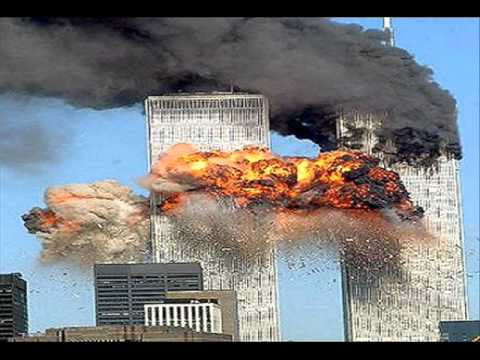
From there, the drive to work became a series of worsening news: a second plane hitting the World Trade Center, a plane hitting the Pentagon, the collapse of the Two Towers, and a final plane crash in Shanksville PA, destination unknown (we knew later, of course).
I called my future business partner, Himself. "Look at the TV" I told him. "Really, what is up?" was the response. "Look", I said back.
The silence on the other end of the line was deafening.
I arrive at work at my usual time, 0530. By 0900 we were all sent home - who knew where the next plane was likely to hit? We sat for the rest of the day, eyes glued to the screen and ears to the radio, as the description of the World Trade Center continued to roll in: Plane parts falling, people falling, firefighters and police charging into the buildings as people fled them - and the buildings falling themselves. And then, the endless digging, looking for survivors with occasional wins, until the wins stopped altogether.
Twenty years.
As I look back over the last twenty years, I have to ask the question "Who won?"
Certainly we have not had such an attack since that date, so in that sense "we won" - but at the cost of thousands of dead, thousands more wounded, and literally trillions of dollars. All to find out, as it seems, that twenty years of fighting was not destined to destroy the ideology that enabled this or the people that believed in it.
But twenty years has drastically changed us.
We now shuffle through airports like cattle, benignly taking off our shoes and putting our items on the X-Ray track. We lock our pilots behind doors and only use the front lavatory one at a time. Almost no-one meets anyone at the airport anymore: you cannot go greet someone at the gate so we just call at the luggage carousel and wait to get picked up out front by the letter "J". Travel, once a gateway to parts unknown, has become a series of holding pens and lines.
Our e-mails, phone calls, and other communication modes (texting was not really a thing in 2001) can now be captured and stored by the government, theoretically only with permission but that feels to be observed as much in the breech as in practice. Our financial transactions are more and more limited: too much money might make you "of question".
We are less free personally and economically and far prone to government oversight and actions "for our protection", yet somehow feel no safer.
In the end, who really won?
Friday, September 10, 2021
The Teaman And The Ronin
The following story appears in Daisetz Suzuki's Zen and Japanese Culture. It is a bit of a long read (grab a cup of beverage as needed), but to me it demonstrates the power of an individual dedicated to doing their best, even in a world where they simply do not fit in, when faced with death. It also, to my mind, demonstrates the power of fearlessness in the face of bullies.
(The text is drawn from Internet Archive. Due to the time printed, certain anachronisms are present: Yedo for Edo (Tokyo), Yama-no-uchi for Yamaouchi, Toku-gawa for Tokugawa.)
The Teaman and the Ruffian
What follows is the story of a teaman who had to assume the role of a swordsman and fight with a ruffian. The teaman generally does not know anything about swordplay and cannot be a match in any sense of the word for anybody who carries a sword. His is a peaceful profession. The story gives us an idea of what a man can do with a sword even when he has never had any technical training, if only his mind is made up to go through the business at the risk of his life. Here is another illustration demonstrating the value of resolute-mindedness leading up to the transcendence of life and death.
Toward the end of the seventeenth century, Lord Yama-no-uchi, of the province of Tosa,
wanted to take his teamaster along with him on
his official trip to Yedo, the seat of the Toku-gawa Shogunate. The teamaster was notwhere he was well known and had many good friends. In Yedo he would mostlikely get into trouble with ruffians, resulting not only in his own disgrace but in his lord’s.The trip would be a most risky adventure, and he had no desire to undertake it.inclined to accompany him, for in the first place he was not of the samurai rankand knew that Yedo was not a quiet and congenial place like Tosa,The lord, however, was insistent and would not listen to the remonstrance of the teamaster; for this man was really great in his profession, and it was probable that the lord harbored the secret desire to show him off among his friends and colleagues. Not able to resist further the lord’s earnest request, which was in fact a command, the master put off his teaman’s garment and dressed himself as one of the samurai, carrying two swords.
While staying in Yedo, the teamaster was mostly confined in his lord’s house. One day the lord gave him permission to go out and do some sight-seeing. Attired as a samurai, he visited Uyeno by the Shinohazu pond, where he espied an evil-looking samurai resting on a stone. He did not like the looks of this man. But finding no way to avoid him, the teaman went on. The man politely addressed him: “As I observe, you are a samurai of Tosa, and I should consider it a great honor if you permit me to try my skill in swordplay with you.”
The teaman of Tosa from the beginning of his trip had been apprehensive of such an encounter. Now, standing face to face with a ronin of the worst kind, he did not know what to do. But he answered honestly: “I am not a regular samurai, though so dressed; I am a teamaster, and as to the art of swordplay I am not at all prepared to be your opponent.” But as the real motive of the ronin was to extort money from the victim, of whose weakness he was now fully convinced, he pressed the idea even more strongly on the teaman of Tosa.
Finding it impossible to escape the evil-designing ronin, the teaman made up his mind to fall under the enemy’s sword. But he did not wish to die an ignominious death that would surely reflect on the honor of his lord of Tosa. Suddenly he remembered that a few minutes before he had passed by a swordsman’s training school near Uyeno park, and he thought he would go and ask the master about the proper use of the sword on such occasions and also as to how he should honorably meet an inevitable death. He said to the ronin, “If you insist so much we will try our skill in swordsmanship. But as I am now on my master’s errand, I must make my report first. It will take some time before I come back to meet you here. You must give me that much time.”
The ronin agreed. So the teaman hastened to the training school referred to before and made a most urgent request to see the master. The gatekeeper was somewhat reluctant to acquiesce because the visitor carried no introductory letter. But when he noticed the seriousness of the man’s desire, which was betrayed in his every word and in his every movement, he decided to take him to the master.
The master quietly listened to the teaman, who told him the whole story and most earnestly expressed his wish to die as befitted a samurai. The swordsman said, ‘'The pupils who come to me invariably want to know how to use the sword, and not how to die. You are really a unique example. But before I teach you the art of dying, kindly serve me a cup of tea, as you say you are a teaman.”
The teaman of Tosa was only too glad to make tea for him, because this was in all
likelihood the last chance for him to practice his art of tea to his
heart’s content. The swordsman closely watched the teaman as the
latter was engaged in the performance of the art. Forgetting all
about his approaching tragedy, the teaman serenely proceeded to
prepare tea. He went through all the stages of the art as if this
were the only business that concerned him most seriously under thesun at that very moment.The swordsman was deeply impressed with the teaman's concentrated state of mind, from which all the superficial stirrings of ordinary consciousness were swept away. He struck his own knee, a sign of hearty approval, and exclaimed, “There you are! No need for you to learn the art of death! The state of mind in which you are now is enough for you to cope with any swordsman. When you see your ronin outcast, go on this way: First, think you are going to serve tea for a guest. Courteously salute him, apologizing for the delay, and tell him that you are now ready for the contest. Take off your haori [outer coat], fold it up carefully, and then put your fan on it just as you do when you are at work. Now bind your head with the tenugui [corresponding to a towel], tie your sleeves up with the string, and gather up your hakama [skirt]. You are now prepared for the business that is to start immediately. Draw your sword, lift it high up over your head, in full readiness to strike down the opponent, and, closing your eyes, collect your thoughts for a combat. When you hear him give a yell, strike him with your sword. It will probably end in a mutual slaying.” The teaman thanked the master for his instructions and went back to the place where he had promised to meet the combatant.
He scrupulously followed the advice given by the sword-master with the same attitude of mind as when he was serving tea for his friends. When, boldly standing before the ronin, he raised his sword, the ronin saw an altogether different personality before him. He had no chance to give a yell, for he did not know where and how to attack the teaman, who now appeared to him as an embodiment of fearlessness, that is, of the Unconscious. Instead of advancing toward the opponent, the ronin retreated step by step, finally crying, “I’m done, I’m done!” And, throwing up his sword, he prostrated himself on the ground and pitifully asked the teaman’s pardon for his rude request, and then he hurriedly left the field.
Thursday, September 09, 2021
The Collapse LXXX: Firearms
29 March 20XX
My Dear Lucilius:
Today was the monthly cleaning of firearms.
My “firearm battery” (a very fancy word for a very plain thing) consists of a pistol, two rifles, and a shotgun. They all have a varied history, of course: the . pistol I acquired because one day my father decided I needed one; one rifle (a single shot loader from the 1940’s) came from my grandfather: and the other rifle and shotgun just “appeared”, as these things do.
Yes, I know. Why did I not acquire a more robust firearm collection, given the time and circumstances? Frankly, not a great deal of interest. Firearms were always for me at best a tool to be used: I seldom hunted, and the likelihood that I would have to defend myself seemed relatively a far away proposition, especially once I relocated here as people are pretty far enough apart in general terms and a stranger trying to burst their way in – at least in these parts – would be picked out long before they reached the point of doing harm.
And so I got a moderate proficiency – enough to hit targets with some degree of accuracy and kill something if I absolutely needed to. But it was mostly practice or a way to have something to discuss with others at gatherings.
I polish them and clean them, checking for rust and collections of dust – there are none, of course as I have always tried to take the best care of them, assuming I could not or would not be able to buy replacements. After each cleaning, they will get placed back to where they came, and an ammunition count done (as I have done every month since I moved here) – more important now than ever since, of course, there will be little new ammunition to be bought, only traded for or reloaded if possible.
Could I use them if pushed to it? Ah, Lucilius, there is the rub. Many an armchair gunfighter has declared themselves as “ready and able”; few know how they would react under actual circumstances. One can only imagine the adrenaline, some level of fear and uncertainty, even concern about being hit themselves. This may be different for those that have served in such conflicts, but I am a relatively sheltered man with the biggest “attack” I have ever faced being a fellow iaidoka bearing down on me with a wooden weapon.
Still, I clean, account, and mentally prepare. Because while there is no sure knowing, intent should count for something.
Your Obedient Servant, Seneca
Wednesday, September 08, 2021
Job Nervous
I am getting nervous about my job.
Oh, nothing so clear as an actual concern. No bad announcements. No bad financial or data. No concerns because a host of people have suddenly left. Everything is cheerily moving forward.
But still, nervous.
Maybe it is a sign of the times -after all, while there is (from what I read) any number of positions open in any number of industries, I get the sense that all of this is very fragile. And the industry I am in is sometimes more fragile than most - as I explained to someone once, the Biopharmaceutical industry is a lot like playing a game of craps: one rolls the dice and then hopes for a good development before the dice stopping rolling.
I have been laid off once and gone through rounds of layoffs more than once, so I do not completely discount my feelings as "just nervousness" though. I have been too often correct - not in precisely timing of course, but in overall direction: I might not have called when layoffs were happening, but I knew they were coming.
What does not help, of course, is that working away from the office, one misses the usual signs: meetings that happen with rather important people that are mysterious, odd and unusual involvement from HR "all of a sudden", and the somewhat valuable Grape Vine which does not necessarily always have precise information, but often has a general sense of things on the ground in a way that management will never convey. One is very isolated, and I acknowledge that isolation can give rise to some otherwise unusual theories.
In all my years of Quality, one sense that one develops - or does not - is the ability to read between the lines, to hear the thing unsaid, to sense there is a problem before the problem completely manifests itself. That sense, once developed, is not only for the execution of one's job - given time and practice, it will work for many things.
I cannot tell you specifically why I am worried. Only that I am worried.
Tuesday, September 07, 2021
Book Review: Live Not By Lies
"What does it mean to live by lies? It meant, Solzhenitsyn writes, accepting without protest all the falsehoods and propaganda the state compelled its citizens to affirm - or at least not to oppose - to get along peaceably under totalitarianism. Everybody says that they have no choice but to conform, says Solzhenitsyn, and to accept powerlessness. But that is the lie that gives all other lies their malign force. The ordinary man may not be able to overturn the kingdom of lies, but at least he can say that he is not going to be their loyal subject." - Rod Dreher, Live Not By Lives
Monday, September 06, 2021
Book Review: The Benedict Option
The name Rod Dreher was one I was not terribly familiar with until last year, mostly in the context of being belittled by Conservative writers who considered him something of a unrealistic dinosaur with the vague aroma "Old School Christian and Unrealist". I read the comments and thought nothing of it - after all, there are plenty of individuals that write on the InterWeb - until in several postings Claire Wolfe mentioned not one of two of his books and the concepts and writing in them very favorably. And then he showed up in one of Joel Salatin's writings as well.
I like Claire and respect her opinion. And I am becoming more fond of Salatin. And the longer I read some of those other commenters, the less and less I find I have in common with them - so if they are opposed, probably worthy of a purchase or two (Yes yes, I know - I swore off buying any new books until next year. Forgive me, I am a flawed sinner like all...).
And so, The Benedict Option: A Strategy for Christians In A Post-Christian Nation.
The Benedict Option starts with a basic premise: The United States has become a post-Christian nation and not only a post Christian nation, but an aggressively post Christian one. He quotes conservative Anglican theologian Ephraim Radner: "There is no safe place in the world or in our churches within which to be a Christian. It is a new epoch". He notes that the seeming abundance of churches (the book was published in 2017) is not indicative of the actual state of the church, based on demographic trends and that fact that with the end of the Cold War, the thin Christian veneer is "all finally being stripped away by the combination of mass consumer capitalism and liberal individualism".
Dreher notes:
"Americans cannot stand to contemplate defeat or accept limits of any kind. But American Christians are going to have to come to terms with the brute fact that we live in a culture, one in which our beliefs make little sense. We speak a language that the world more and more cannot hear or finds offensive to our ears."
He then posits a solution:
"Could it be that the best way to fight the flood is to...stop fighting the flood? That is, to quit piling up sandbags and to build an ark in which to shelter until the water recedes and we can put our feet on dry land again? Rather than wasting energy and resources fighting unwinnable political battles, we should instead work on building communities, institutions, and networks of resistance that can outwit, outlast, and eventually overcome the occupation.
Fear not! We have been in a place like this before. In the first centuries of Christianity, the early church survived and grew under Roman persecution and later after the collapse of the empire in the West. We latter-day Christians must learn from their example - and particularly from the example of Saint Benedict."
Benedict of Nursia (480-537 A.D.) was a young Italian nobleman who went to Rome to complete his education and then serve in the government. Disturbed by what he saw there in the post-Empire Visigothic Rome, he retreated to a cave for three years for a life of prayer and contemplation. After three years of living as a hermit, he acquired a reputation for piety and holiness and was asked to be an abbot at a monastery. As part of the monastic experience, he wrote the Rule of St. Benedict, a guide to living in the community - and thereby established almost accidentally the Order of Benedictine Monks and the monastic community in the West. It is this sort of community that Dreher suggests that Christians are called to become part of again - not as monks and nuns specifically but as Christians living together in community, supporting each other and their commitment to Christ in a world that at best sees them as anachronistic and at worst as an enemy to be eliminated.
Dreher moves in three streams as he writes: In one stream, he writes of the revived monastery of Nursia (now Norcia, Italy) with interviews of the Abbot and the brothers that live and their understanding of the rule and how it functions in their daily lives. In a second, he discusses how the Post Christian World we are in came to be (In six easy steps over 700 years, in case you were wondering) and what that actually looks like in the worlds of religion, business, education, sexuality, and technology. In a third, he looks at people who are actually doing this right now in sundry ways through world by starting schools, reviving communities, starting businesses, and preparing themselves for the Long Night - not in the sense of apocalyptic terms, but in the sense of how the Church was treated and existed under unfriendly regimes, be it the Roman empire or modern Communism.
Two items of note which could be considered complaints and worth dealing with up front:
1) The first is that in reading reviews of this work, one counter complaint that comes across is that Dreher was not proposing a Christian solution. Christ never proposed running from the world but in engaging with it. That interpretation, in my point of view, is partial correct. In point of fact Christ did send His disciples out into the world to preach the Gospel. However, if one reads the rest of the New Testament beyond the Gospels, what one finds is that the apostles spend a great deal of time talking about Christians in relation to each other. The expectation is that Christians will support each other and be a part of each others lives in meaningful ways. While they may not have specifically looked like a monastic community or even a somewhat separated community, I think it is also fair to say that times determine the means: The Rome of Paul and Christ had a functioning government and legal system, the Rome of Benedict did not.
2) The book, both by title and content, is primarily directed at Christians - but I would argue, not exclusively so. Recent developments should have convinced almost anyone that in point of fact most governments these days are leaning in Totalitarian directions, and today's group of accepted non-conformists is tomorrow's group to be thrust aside and brought under. And Dreher is also pretty clear that communities are not exclusive in the sense that should not reach out and make alliances with other like-minded people wherever interests collide (I believe his book Crunchy Cons was about this very subject). And certainly the principles espoused in the book could be applied by literally any group that is seeking to create an island of civilization and culture in a rising tide.
As may be obvious, I liked this book. I am inclined in this direction anyway as regular readers may be aware, and in super small ways (buying old books and saving them) I am trying to preserve Classical Culture (if your community or monastic-style organization needs such a person, do not hesitate to reach out!). And this book is rich, not only in stories but in ideas and their application - so rich, this review does not even begin to scratch the surface (because I really want you to read it). And a man that, beyond a fabulous set of new writers I have never heard of (but need to acquire their books as well, apparently) quotes C.S. Lewis, Wendell Berry, Aleksandr Solzhenitsyn, Dietrich Bonhoeffer, and Vaclav Havel - all heroes of mine - is someone I at least need to become more familiar with.
But this book was hard for me too.
It was hard to read the words "The culture is lost" and that in reality, the Benedict Option is building for a world that we who are now living will likely never see. Hard for me, anyway - even in my wildest rantings and ravings here, there is always some small part of me that believed that there was still an ember to be brought back into flame. The reality - the cold reality that is evident since this book's publishing four years ago - is that there are no embers left. There is only the scattering of embers on the wind.
The Benedict Option, then, is to catch those embers, nurse them back into flame in a thousand small places, and then bring them out again when the the current zetigeist of modern culture and thinking has come to its logical conclusion.
An quote early in the book by the philosopher Alasdair MacIntyre from his book After Virtue sums up the whole situation quite nicely and could just as well have served as a capstone for the entire text:
"A crucial point in that earlier history (the fall of the Roman Empire) occurred when men and women of good will turned aside from the task of shoring up the Roman imperium and ceased to identify the continuation of civility and moral community with the maintenance of that imperium. What they set themselves to achieve instead - often not recognizing fully what they were doing - was the construction of new forms of community within which the moral life could be sustained so that both morality and civility might survive the coming ages of barbarism and darkness."
Sunday, September 05, 2021
On Away Time
Being away from home this weekend is a rather unusual experience.
My training time with The Berserker, while good, is limited - a four hour session today, a three hour session tomorrow. As a result, I have a great deal of time to myself - removed, of course, from all of the normal aspects and distractions of my life.
It makes for a curious sensation.
For the first time in what seems like forever, I have no chores to look to, no things to take care of, no animals to feed or shoo off of furniture, no conversations running in the background. No meals to worry about, because there no place to cook. Just, myself, the computer, some pre-selected books, and time alone.
One of the hardest things in such a situation is simply giving myself the permission to not feel like I have to be doing anything.
This is a challenge that I am not sure if I am specifically prone to, or one that modern civilization heaps upon us. To living in the modern world, or at least the modern urban world, is to always feel like one has to actively be doing something.
Lay aside the common things of living, like washing clothes and dishes and cleaning and the base mechanics of life that all of us, to one extent or another, have to do. Beyond that, modern society seems to demand that we always be about something. "Idle work are the devil's hands" as the saying went, but we have taken it to the extreme. We fill our lives with work and if not work, then hobbies. Technology is no friend to us in this aspect either - after all, with the advent of the InterWeb and computers and smart phones, it is almost assumed that we should be doing something even if we are not actually doing something, because we have the ability to literally wander the world ever live second of the the day.
And in a lot of meaningful ways, that has been placed to the side of me this weekend.
Having the luxury to read a book (or three) without the demands of "I should be about something else" because there is nothing else to do seems exactly like that - a luxury. And that idea strikes me as a somewhat unhealthy thing.
Mind you, the pressure for all of this is coming from one person: Myself. I am the one that feels I need to be about things almost constantly. I am the one that subdivides my day into small portions for this and that, like a buffet plate with little bits of everything on it.
I wonder if part of rediscovering an actual life, instead of the life that that the modern world demands we create for ourselves, partial lies in a path where we allocate for ourselves larger and larger chunks of time not otherwise subdivided into smaller tasks? Yes, it might mean that we do less things overall and yes, it might mean that some of those larger chunks are of less desirable tasks (yay sorting laundry and cleaning toilets). But without the time to spend, we do not have the time to think and ponder. And without the time to think and ponder, how can we really think on and act on the really important things in life?
Saturday, September 04, 2021
Road Trip To Doom 2021
Apologies for the delay in replying yesterday. For the first time in almost 5 years, I am on a road trip.
The trip involves driving across parts of three states - almost 10 hours by the time I go to where I was going - to spend a weekend training with my weight coach, The Berserker.
Yes. I took a day off so I can drive 1200 miles round trip to see a man who enjoys making me suffer. And I do so gladly (well, not the suffering part. A high level of soreness is anticipated on the return drive home).
I have not driven much beyond 3 hours regularly in at least 4 years, and not beyond 1.5 hours regularly in at least 2 years. So this seemed like much more of an expedition than it might have in the past.
In general - to the eye that would not know better - things largely look back to normal. Travel plazas (glorified gas stations for those that do not have them) were rather packed, and 90% of the people inside looked just like they must have in late 2019: few masks, very crowded. Lots of traffic on the road and the drive throughs were very busy (in a fit of weakness I stopped to get a burger at a statewide chain. Never again: the fries were cold, the burger tasteless, and my diet drink tasted a heck of a lot like Root Beer). Fuel prices were as high in this part of the country as I have seen in years.
As I have not been most of this way in a while, there were some interesting changes. Lots of construction still going up around urban areas and smaller towns. Car lots seemed to vary in their availability of vehicles - although I saw one with not more than a dozen cars and trucks on its lot. In some other places, I did see where businesses had contracted as well, which struck me as a bit odd.
So think happy thoughts for me as I face the iron and am - again - reminded of the fact that the cost of action and fitness is constant training and some level of suffering.
Friday, September 03, 2021
Of Notifications And More Cases
Now that Nighean Dhonn has restarted high school, we are getting the now-familiar round of e-mails: campus updates, newsletters, "opportunities for students" - all the things that fill my mailbox and I have to remind myself at graduation to unsubscribe from.
We are also almost daily getting notifications of The Plague.
This should probably not come as a surprise; after all: packing in hundreds of children and young adults into an enclosed space with not a lot of social distancing and The Plague still being active will lead to this sort of thing. And in a perhaps not-unrelated note, notifications of confirmed cases from my employer have also been on the rise - driven, no doubt in some part, by the aforementioned returning school children.
From what we are continuing to find out, the vaccines issued under Emergency Use Authorization are not nearly as bullet proof as they were originally advertised: at best now, they seem to modulate the severity of The Plague, not prevent it entirely. It is as if we were hoping for a titanium answer and got a copper one instead: still metal, but much more malleable and much less enduring.
Which makes me posit a question: are we just all going to get it anyway?
I know this is heresy in certain circles, the suggestion that sooner or later we will all end up with a virus that we are supposedly in the process of defeating. But reality seems to be that we are not nearly as far along as we thought we were.
(And yes, to be fair, there are still those nagging questions about the reproductive studies and long term safety studies the companies are going to get to here "any day now". By count, in the recent Pfizer extension letter, they had committed to another ten. And that was still without full approval. Moderna and JNJ are not scheduled to complete their trials until Summer 2023.)
I know there are varying opinions of The Plague, even here; as is also widely known, at least here, I have lost two aunts to it as well as had a number of cousins come down with it. It is not - from everything they have conveyed and the literature suggest - just the Flu. And I would be the first in line to state that the initial "two weeks to flatten" was the most damaging thing I can think has been done to an economy since maybe 2008 and the "Shovel Ready" support package, if not the Stagflation of the Carter administration. So anything like that is a non-starter (and, it seems, even government authorities, who are often in love with their grandiose "emergency powers", seem to not be suggesting that again).
But at what point does the plan change from "complete destruction" which seems impossible to "mitigation"? There is some data that suggests that natural antibodies are far superior and longer lasting than chose generated by the vaccines (which again, should not surprise anyone); some enterprising young graduate student might make their name by performing a study tracking those with acquired immunity versus those with vaccinated immunity over the next five years and see what shakes out.
Is the strategy just to continue to let The Plague mutate until it becomes attenuated? If that is the strategy, it seems a rather poor one: I would imagine it could just as easily become stronger instead of weaker.
Am I calling for the equivalent of Chicken Pox Parties? Hardly. Any disease affects the individual quite differently and what I may shrug off, you may die from. But we still seem to be stuck in this paradigm that we can completely prevent some portion of the population from ever getting The Plague. My question is, knowing what we know now, is that still an actual or potential possibility or do we simply begin managing towards a different goal?
Thursday, September 02, 2021
The Collapse LXXIX: Sorrow
25 March 20XX +1
My Dear Lucilius:
Today I was overcome by sorrow.
This occurs as it has been for some years now. I cannot really predict the periodicity or what triggers it. There is no seasonality, no particular sets of actions, no sentimental items, no random song or memory – nothing to draw a casual relationship. It just comes.
The initiating event this time was one of the more innocuous ones: While washing my dishes from breakfast I began thinking about dishes and life in the past.
I was the one that was responsible for dishes. That was my great contribution to the operation of the daily family unit. Everyone would bring their dishes back to the sink – or I would get them if I thought that they were lingering over dishes overmuch. I would either rinse them off and put them into the dishwasher or wash them down and put them into the drying rack. More than once I got ahead of the person using the dishes when they were not quite done with them and had to get another (actually, this was rather a frequent occurrence). Why, I would be asked, could I not just leave the dishes until we were done?
Because I truly hated to see dirty dishes.
I am not sure where this originally came from. It must have been growing up – I never remember a dirty dish being left in the sink overnight, and this came to be my own philosophy as well. So every night prior to going to bed, I would police the sink one last time.
And then I find myself today standing in the morning sun, washing a bowl and spoon with some warm water and a bit of soap.
Life can be cruel in this way Lucilius, cruel in ways that one cannot imagine on the other side of it.
Moments like this remind me of everything that is gone: the things that came unexpectedly like my wife’s cancer and ultimate death and the things that came indirectly, like the slow unraveling of my family that followed.
Compared to these, the complete unraveling of society almost seems an after thought.
This was not how it was meant to be. There were to be golden years and trips abroad and grandchildren and family reunions. All the things that one spends life working towards because that is what was supposed to happen.
Instead I find myself here, alone, my life mostly bounded by the acre that is my homestead. Those that depend on me – the rabbits, the quail, even the bees – are always glad to see me in their own fashion.
But it is never the same.
The moment passes – it always passes – and I will wipe my eyes again and make myself a cup of tea and sit in the quiet. It certainly does not change anything about my situation but in some way soothes the hurt.
But never heals it. Healing it is beyond anything on this Earth.
Your Obedient Servant, Seneca
Wednesday, September 01, 2021
Of Conflict And Controversy
Conflict makes me uncomfortable. I sincerely dislike people being angry at each other, let alone actually yelling at each other, and have been known to leave a room - which is a fancy word for flee - when things get to a disagreement, let alone an actual argument. I am so anti-conflict that when people ask The Ravishing Mrs. TB how I argue, she replies "I have no idea. He never argues."
The reality is that if we are going find solutions to the significant issues that face us - and they are significant - it is neither going to be by (verbally) firing upon against our potential allies nor by passively standing off and picking away in a method that never accomplishes anything except to create a punditry that is always opinionated but never action oriented.