Tuesday, February 07, 2023

An Odd Dream - Church Restoration

 I am not a great "believer" in dreams.  They happen:  most of them I forget upon awakening, a very few I remember.  Even fewer of those impact me upon awakening.

It is not that I discount the potential of dreams.  Can God communicate through dreams?  Certainly.  I know people that would swear to you that He has.  Can the unconscious mind process information through our dreams in a way the conscious mind cannot?  That sounds reasonable to me, although I am conscious of the fact I do not have the background in neurology to assert that (extra points if you get the pun!).  Do I believe that dreams tap into a larger energy, a stream that moves forward and back in time, giving us visions and insights?  Well, not precisely yes - although even I have had more than one deja vu experience for which I can directly correlate to a particular dream.

So when I have the same dream twice in a night - and remember it - this is something worth taking note of.

In this case, both dreams (from Sunday night) involved the restoration of a church.

In some ways, it was a very vague dream.  It was definitely a church (as opposed to another building or a cathedral).  It was definitely a church made of stone.  It was definitely not in the United States - my sense was that it was in Europe, although why I cannot say.

But what was very clear - very clear from my impression - was that I was there to restore the church. I needed to.  That was my job.

One place I go when such dreams happen (and I actually remember them) is Dream Moods, which has various dream images and their "interpretations".  From the site, with relevant notes:

Church:  "To dream that you are inside a church suggests that you are seeking for spiritual enlightenment and guidance.  You are looking to be uplifted in some way.  Perhaps you have made some past mistakes which have set you back on your path towards your goals.  With proper support, you will get on the right track again.  Alternatively, the dream may also mean that you are questioning and debating your life path and where it is leading.  You are re-evaluating what you want to do."

Fixing (closest thing I could find to restoring):  "To dream that you are fixing something indicates that you need to re-evaluate and rethink a situation or relationship in your life."

Stone:  "To see a stone in your dream symbolized strength,  unity, and unyielding beliefs.  Look at the shape, texture, and color of the stone for additional significance.  If the stones are rough, then it represents your quest in recognizing and developing your self-identity.  Part of this quest is to also become aware of your subconscious and hidden thoughts. To place a circle of stones around yourself (maybe a restored stone church?) suggests that you are channeling a higher energy.  You are contemplating an important decision."

Now to be fair, I have spent a lot of time recently reading up on Romano-British/Anglo-Saxon history, so the fact an old church that needs restoring shows up may not be quite as mysterious as it might seem.  My mind has been on "old things" a lot recently.  

Still, it is rare that I wake up from the same dream theme twice in one night and have a strong memory of the dream and some sense that the dream actually meant something.

Monday, February 06, 2023

The Season Of Reviews

 We are entering the time in my industry where things like bonuses, raises, promotions and layoffs happen.  

I come by my wariness of this period of time naturally.  My layoff happened at the end of January.  My "reassignment" happened at the end of February.  Once upon a time, I looked at these times with an especial sort of hope.  Now, I hold my breath and hope for the best.

The timing of all of this has changed over the years, at least in my industry. When I started in the long ago, all of this happened before the end of the year with the mad dash to turn in assessments and get reviews completely by 31 December.  Somewhere along the line this changed - probably for the best, given what passes for the end of the year rush at this point - and while the reviews continued to have to be done by the end of the year, the actual decisions and announcements were pushed into the next year.

At some point, one gives up the idea that magical things happen during these cycles given that, at this time in the career cycle, such significant changes are few and far between and at some point become fewer and farther between (in my own experience, the years between 2017 and 2019 were an aberration of an otherwise staid career of cost of living raises and occasional promotions). One quietly waits for the conversation to occur, the review to happen (certainly my reviews now with my manager are pleasant affairs and there are no surprises), the financing to be expressed, and then we go on with our lives.

Except...

Except this year I am experiencing a sort of wariness. It is industry-wide of course - one reads more and more these days of smaller biotech and pharmaceutical companies laying off employees, but now it seems to be extending to larger companies as well.  It is not a surprise, or not really:  given the state of the Post-Plague economy, small companies are having a terrible time launching Initial Purchase Offers and larger companies are trimming down assets which are not performing or appear to have no future as an asset class (not just individual products).  

Can I project manage in other industries?  In theory, yes - the practice of project management is in theory industry agnostic.  At the same time, there are nuances that feed into any industry: I am more likely to be a better performer in a biopharmaceutical company than, say, an IT company simply because I understand the process and know the "language".  

But I would be lying if I said I was not approaching this week with a bit of trepidation.  Perhaps not "Something Wicked This Way Comes", but "Something A Little Disconcerting Meanders In".

Sunday, February 05, 2023

Lectio Divina: Glory

 "Holy, Holy, Holy is the Lord Almighty;

The whole earth is full of His glory."

- Isaiah 6:3b

This familiar passage, taken from Isaiah vision of the Lord "in the year King Uzziah died (~752 B.C.)", is one of the most well known of Old Testament visions of God.  We have liturgies and songs based on it, and likely if you have been in the Church long enough, you have heard one or more sermons on it.


The whole earth is full of His Glory.


That the whole earth is full of God's glory is easy enough to believe; I have traveled enough to see the wonder of His creation both here and in the near abroad.  The glory of earth - the untrammeled earth - easily reflects His glory.  The people in it, not so much.


If there would seem to be a single flaw in this assertion of the Seraphim as they hover before the throne of God with their faces and feet covered, eternally singing His glory, it is humankind.  Us.  If I look into Nature I easily see Him; if I look in the around me, not quite as much.

That would seem to be an inconsistency, would it not?  In Genesis, God states "Let us create Man in our image". God - at least at that moment - views mankind as the pinnacle of His creation. and yet to look around at ourselves now, we see little if any of God's glory.


It is easy enough, I suppose, to view Man's inhumanity to man as example one of how we fail at God's glory.  And those examples are as horrifying as they are self-evident.  But too often that is where the Church seems to stop:  the external manifestations of sin. 


But stare into the way the Church is itself, the way Christians are themselves:  do these represent God's glory as well?  Do the services we follow reflect Heaven, or do they appeal to our own sense of what entertains us and makes us feel "spiritual"?  One can make an effective argument that past glories of High Church are boring and out of touch, but does the all too often modern practice of pulsing bass, overpowered vocals, and emoting demonstrate His glory any more?


In our practices - what the Church celebrates, what it calls forth, what it glorifies - are we demonstrating the same radiance and beauty as the rest of Creation? Or do we merely reflect ourselves, what we think is important and matters and is relevant?


The Seraphim cry out that the earth is full of His glory - Are we?  Are our churches?


Do we - as individuals, as the bodies of Christ on earth - do we reflect this glory that Scripture assures us the rest of the earth is filled with?  Or have we become satisfied with less, that which does not call us out or challenges us only ways that we find acceptable to be challenged?


Would that we, too, might cry out "The earth is full of His glory - and that includes us".


Saturday, February 04, 2023

Stranger In A Warm Land

Thanks to all for their patience in my responses and posting this week.  There was, of course, an adventure involved.  And thus, the rest of the story...

I had an out of business travel appointment set since the middle of January to a contractor for a project review.  This was part of a larger team.  We would leave on a Monday and return on a Wednesday.  Everything was in place and we were moving along fine.

Around last Saturday or Sunday the weather reports, which had been predicting rain and cold, suddenly began to take a turn for the worst, predicting the potential for freezing weather and ice.  Even by Monday, when we were getting ready to leave, things were still not in alarm mode but the temperature was falling.  

As it turns out, I may have gotten out on one of the last planes to leave New Home.

Our meeting went off without a hitch - but New Home, caught in the midst of an ice storm, did not.  We followed the news, got updates from spouses and coworkers of the low temperatures, building ice, and resulting power losses and falling branches.

All of this, while we continued to "endure" the weather in San Diego.

Our flights home Wednesday were either canceled by Tuesday evening or Wednesday morning; like other refugees we rebooked our flights - and then needed to find a new hotel.  Four of us were stuck in town for another day and headed 5 miles up the road for one more night.  Fortunately we were already all accomplished in working remotely and continued to manage ourselves even though we were a ways from home.

For An Taigh Thoirdhealbheach Beucail, everyone was okay.  School was canceled as was work, and so everyone sheltered in place.  Apparently they lost power Wednesday night which was not restored until Thursday afternoon (doubly fortunately, we have one of those almost illegal gas stoves, so they were able to cook).  Other than the cold and the popping and crashing branches, no serious harm done.

I arrived home Thursday night and thus could not look at the trees until yesterday afternoon.

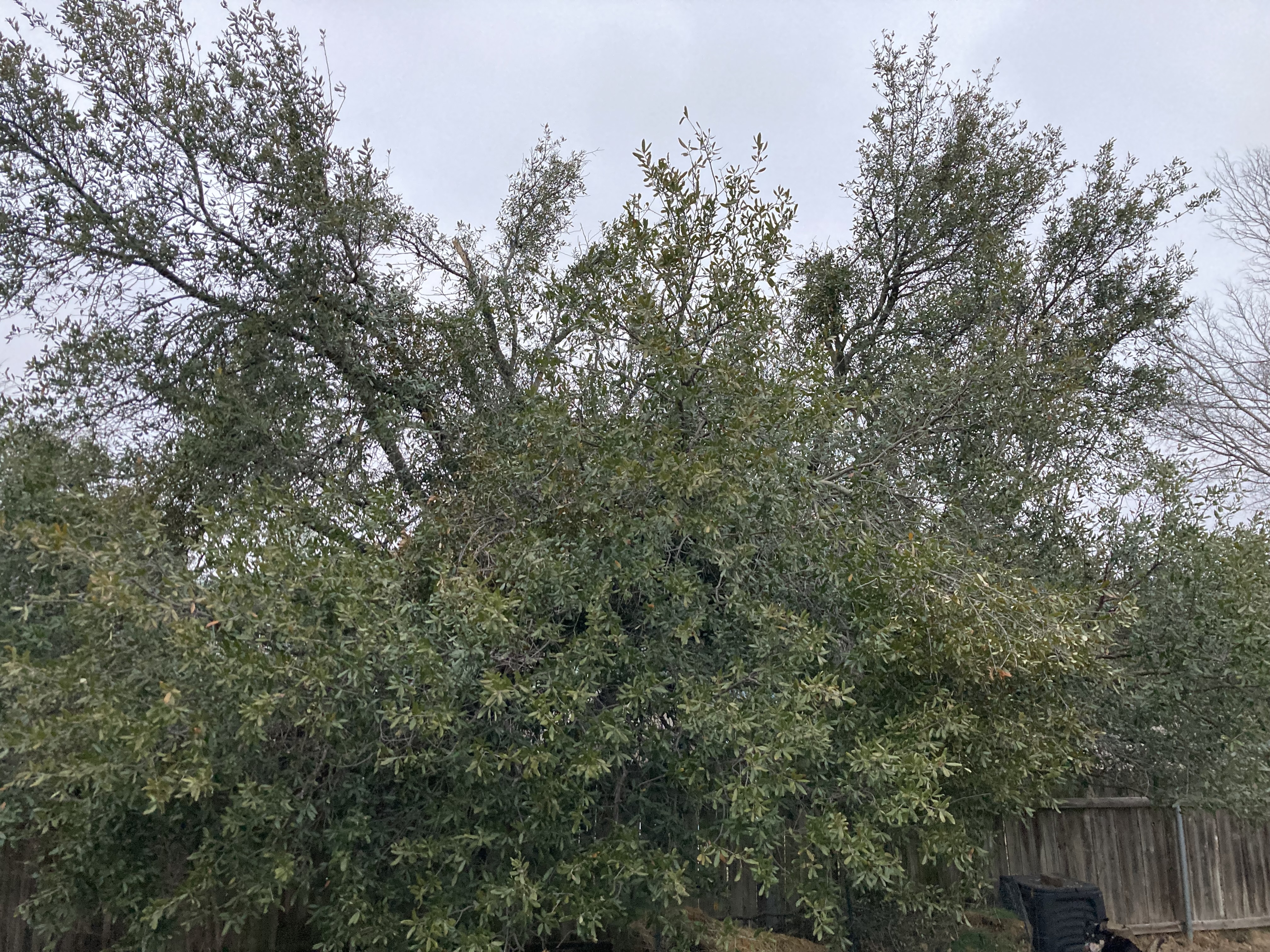
On the "bright" side, none of our trees split down the middle, but the three major oaks near us all lost more than one branch.  And we, of course, are not the only ones - estimates are around here that up to 90% of certain kinds of trees suffered damage.

There is now a growing tunnel along the streets as the branches stack up on the side of the road.


All of these pictures are from the front.  Yesterday, I was able to get all the branches out and all but one of the fallen branches still in the trees down and cut up.  The last one is within my reach and I should be able to do it today.


If you have never seen ice-encrusted leaves, the picture below is an example:

Hard to see, but the picture below is of the major tree in the backyard.  There is one branch weighting down another one on our side of the fence.  Unfortunately it is much larger than I think I can handle and likely I will have to find someone to do the work (perhaps mysteriously, tree services are currently 60 to 90 days booked out).

A couple of interesting lessons here.  The first is simply that being out when any kind of major event happens - a not great one - is something worth planning for.  Even if it is a regionalized issue, both you and the folks back at home may essentially be "on your own" (so remember to pack extra socks and underwear).  The second, of course, is to accept what you can and cannot control.

After all, I was pretty much a victim of circumstance.

Friday, February 03, 2023

Book Review: Dirt To Soil

 In an earlier blog post last year, were discussing Masanobu Fukuoka's One Straw Revolution and the practicality of organic farming.  Friend of the blog Leigh Tate from Five Acres and A Dream suggested a number of authors to review along with Fukoka.

Another book on agriculture by a new author.  I was up to the challenge (to be fair, I am up to any challenge involving buying a new book).


Gabe Brown is a rancher and farmer in North Dakota.  He and his family manage 5,000 acres of land near Bismark, North Dakota.  In his book Dirt to Soil:  One Family's Journey into Regenerative Agriculture he (with the very able assistance of a writer from Chelsea Green, Courtney White) chronicles their almost accidental stumbling into regenerative agriculture, the evolution of their farming business as a result of this journey, and the principles of regenerative agriculture and their application.

The background is that Brown and his wife, Shelly, entered farming by purchasing land from her parents and entering the traditional farming practices of his background and his in-laws.
Then, disaster struck.  A back to back to back run of bad luck - hail damage, hail damage, a blizzard - reduced him to almost quitting but also forced him almost accidentally to begin the process of regenerative agriculture simply because he did not have any other option.  It was during this time that he continued his study into soil and range management (Allen Savory's method).  At one point he heard a rancher from Canada, Don Campbell, speak at a conference and one line from that speech comes up several times in the book (and is actually a rather life changing statement):

"If you want to make small changes, change the way you do things.  If you want to make big changes, change the way you see things".

From this point, the first half of the book then relates his journey as they continued to modify their practices away from traditional agricultural and livestock management to regenerative agriculture and livestock management that more reflects how the American plains once looked with the great Bison migrations.  It also follows their journey as they modified and expanded their business practices to extract more income from the products they produced (in a comment elsewhere, I noted that Brown states that the average American farmer only receives around $0.14 of every dollar that their final product nets).

The second half of the book discusses the five steps that Brown calls "The Five Principles of Soil Health":

1)  Limit Disturbance
2)  Armor the Soil Surface
3)  Build Diversity
4)  Keep Living Roots In the Soil
5) Integrate Animals

He discuss each of this principles in depth, including data backing up the claims made by him and others on the practical, demonstrable improvements of their soil and their operations.

I have to confess, I really like this book.

In the preface to the book, Courtney White writes that Chelsea Green Publishers had approached Brown about writing a book, but time was always an issue - thus White's involvement.  And to that extent, it is somewhat hard to judge how much of the voice we hear is Brown's and how much is White's - it sounds like how I would imagine he would speak and if so, more kudos to White for her light touch. 

The style is engaging and has the sort of easy discussion that I find in other author's I like, such as Gene Logsdon or Joel Salatin.  Brown discusses his practices openly and gives examples.  It is clear that he is excited about the discoveries he has made and wants to share them with everyone he can because he believes in them and has seen their transformative power.

If his five principles sound a bit like Fukuoka, it is because they are similar to them - but adapted in some ways to the American plains.  And, Brown thinks a great deal of Fukuoka.

It is clear from the book as well that Brown is a man of continual learning, even if he may not have the philosophical insight of a Logsdon or Wendell Berry.  He is constantly discussing reaching out to government bodies dealing with soils, university professors, other individuals in the fields, and conferences to gain more knowledge.  And he encourages the reader to do the same.

The last chapter of the book is simply entitled "Do Something", and relates the guideposts that he and his family have lived by:

- Trust God
- Keep an open mind
- Do not be afraid to fail
- Understand your context
- Do something

It is really not a bad list not just for regenerative agriculture, but for life in general.  

I highly recommend this book.  It is not only practical, it is inspirational.  Almost makes me want to take a trip to North Dakota to visit his farm.

Thursday, February 02, 2023

Solar Energy Machine


 (Apology friends - Due to inclement weather I am still away from home and on my phone.  Thanks for your patience!)

Wednesday, February 01, 2023

Old English: A Historical Background - From Abandonment To Groaning

(Author's note:  History is a wide ranging discipline which in some senses can be fluid as we learn new things and in some cases is solid as we choose to interpret events and findings in light of our own day, not the day in which it happened.  Individuals spend their whole lives studying these things.  My very concise overview is meant as nothing more than that:  an overview to give background.  All errors and omissions remain my own.) 

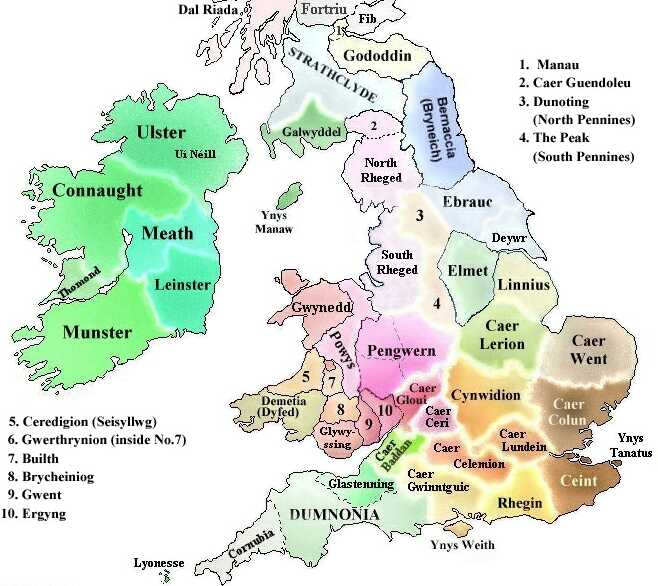
The Province of Britain - increasingly abandoned by Rome over the latter part of the 4th Century with a few bright points of occasional reinforcement from a Roman government that was increasingly concerned more and more with events much closer to home - saw as part of this slow retreat the establishment of client kings and client kingdoms.

This sort of thing had been practiced in other parts of the Empire throughout its history and dating back even to the Republic days:  it allowed Rome to continue to exercise overall control while sparing itself the expense and drain of day to day management.  In the case of Britain as well, it had been "Romanized" for well over 300 years at this point.  There was likely still a functioning bureaucracy and remaining fortifications such as The Saxon Shore (Eastern England) had been turned over to local militia that had likely been trained in the Roman way of war.  Given the circumstances, it was likely the best the Empire could do.


(Source)

But the world was in the throes of the great changes that would eventually fracture the Empire:  great movements of people, generals fighting either for control of the Empire or, as things progressed, setting up their own smaller fiefdoms.  Britain was not immune to this, especially as the coast remained open for raids from across the English Channel from the Jutes, the Franks, the Saxons, the Frisians, and the Angles.

Our knowledge of this period of history is sadly lacking; the fifth and sixth century are poorly documented from around 410 A.D. to the arrival of St. Augustine in 597 A.D.  We have a  On the Ruin and Conquest of Britain, written by the monk Gildas around sometime in the early to mid 500's (likely not later than 540 A.D.) which chronicles the history of Britain from the Roman invasion to the writer's present day.  We have a series of documents known as the Historia Brittanica, a series of genealogies, Easter tables, and small history.  We have a record of a visit of St. Germanus in approximately  (largely to confront the Pelagian heresy).  We have the Venerable Bede's Ecclesiastical History of the English People (based on Gildas' work as well as other history).  And  we have the Anglo-Saxon Chronicles, which is was formalized on or about 891 A.D. but likely incorporated earlier versions.  

In other words, it is if we had the first 150 years of the history of the United States and only 4 documents of questionable historical value to inform us.

What is known is that Britain remained under threat of piracy and raids from the Picts in the North, the Irish in the West (this is the period that St. Patrick was captured and taken to Ireland), and the various German tribes in the East.  And while the settlement of German tribes had been happening for almost 200 years or more, apparently even their reinforcement was not enough to meet the need. Using the idea that the easiest way to defend against a thief is to hire a thief, a Sub-king who comes down to us in history as Vortigern hired Saxon mercenaries (traditionally in the year 428 A.D.) to defend against the pirates.  He offered them land in Eastern England in return.  

This was a fine arrangement - and historically quite sound, as this is something that the Roman Empire had done for hundreds of years.  What was not anticipated was a payment dispute that got out of hand and the following revolt of the Saxons (442 A.D. to 446 A.D.), where great destruction occurred as the Saxons (at least according to our records) burned and pillaged their way across Briton.

Added to the revolt of the Saxons was the continuing and the renewed raids of the Picti and Scoti from the West and North.  Rather obviously to the Britons of that time, the current "hire a thief to catch a thief" strategy had left them wanting.  And so, in 446 A.D., the Britons reached out one last time to a Rome that was increasingly consumed with its own problems on the continent. The communication has come down to us as "The Groans Of The Britons":

"To Aetius, thrice consul

The barbarians drive us to the sea, the sea drives us to the barbarians;
between these two means of death we are either killed or drowned". 

(Source)

We do not have Aetius' response, if there was one.  What most likely became apparent was that the British could no longer look to Rome for any assistance.  They were on their own.

Works consulted:

Blair, Peter Hunter:  Roman Britain and Early England 55 B.C. - A.D. 871.  WW Norton and Company:  London, 1991.

Nicolle, David:  Arthur And The Anglo-Saxon Wars.  Osprey Publishing:  Hong Kong, 1984

Alcock, Leslie:  Arthur's Britain.  Penguin:  Great Britain, 1971

Wikipedia:  Groans of the Britons

Tuesday, January 31, 2023

The Way And The World


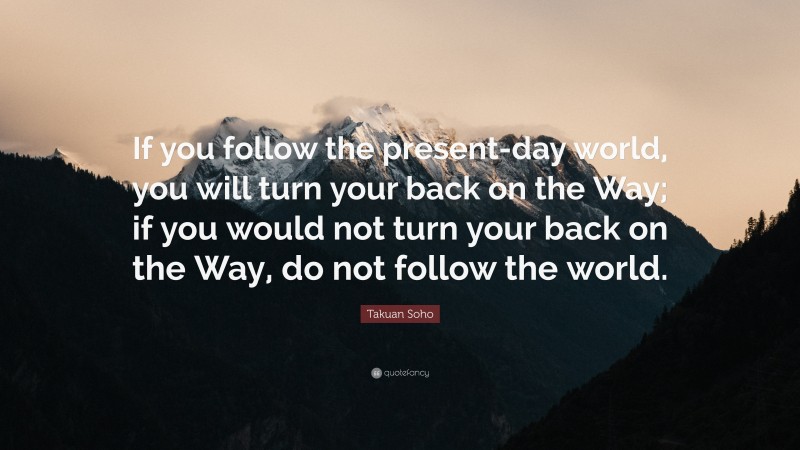
Outside of Miyamoto Musashi, Takuan Soho (1573 - 1645 A.D.) remains in my mind the most approachable of the Japanese writers on martial arts.  This is a remarkable statement as Soho was himself a Zen monk and not a martial artist, yet his best known works - The Annals of the Sword Taia, The Mysterious Record of Unmovable Wisdom, The Clear Sound of Jewels - make up the work known as The Unfettered Mind.  Some writers that I have read from the Sengoku period and later are confusing and cloud their discussion of the practice of martial arts in phrases and techniques I cannot understand; Soho's works are clear and applicable (Yamaoka Tesshu, a former samurai and writer in the Meiji era, also falls into this second category).

How often, then, do I choose to follow The World rather that The Way?

The Way (Dao or Tao in Chinese, Do in Japanese 道)can mean many things.  In Japanese culture many things have a "Way": The Way of Tea, The Way of Flower Arranging, The Way of the Sword).  And of course in Western culture, "The Way" was the original referral to Christians.  In all cases it suggests that there is a particular path to follow in the quest of reaching to the essence of the activity.

The perfect and flawless Iai technique is the one where the draw, the cut, and the sheathing happens in  one extended motion.  To reach that point, one must move beyond just the mechanical practice of understanding how to apply the technique and reach in to find the spirit of it.  Once the spirit of anything is understood, one can apply it in any situation.

And yet, how often I find myself pulled from my own ways to the ways of the world.

The way of the world is broad.  It demands little from us:  no sacrifice, no thought, just a sort of bland acceptance of what is presented to us.  In return, it grants a sort of blissful well being which is often just a fingernail's length deep: look to the way of the world in times of crisis or challenge and you will often find nothing but parroted phrases and wishful thinking that does not sustain us.

The Way demands more of us; in fact it demands all, although we do not always realize it at the time we set out on it.  At some point in my journey in Iai, I made the conscious decision that I would dedicate myself to it instead of it and other martial art practices.  A man can only master a few things, perhaps only one in his lifetime.

We must choose.

I write to those who - at least so far as I perceive of you through your comments here and other places - have already committed to a Way, in whatever form or fashion you practice it.  I can only hope that I can achieve your levels of commitment.

For all of us, if we would follow The Way, we must turn our back on the world.

Monday, January 30, 2023

January Ranch Walkabout - A View From Above

 (All - My apologies: I am on the road for work returning Wednesday, so my responses to your comments will be delayed as I will only have access to my work computer.)

During my last visit at The Ranch as part of an investigation for a roof leak, I climbed up on the roof to look for any definitive loose shingles.  As part of that activity, I took a video from the top of the house.


Sunday, January 29, 2023

Embarking On The Virtuous Life


"All those who wish to embark on the toils of the virtuous life should train themselves to the task gradually, and keep on until perfection is achieved.  Do not be confused by the many different paths our forefathers exemplified, and do not try to copy all of them exactly, for this would upset your way of life.  No, you must choose a way of life that suits your lesser abilities.  Travel your road and you will find life there, for your Lord is merciful and he will find you acceptable not only because of your achievements, but because of your heart's intentions, just as he received the poor widow's gift (Mark 12:43)."

- Evagrios Pontike, from Standing in God's Holy Fire:  The Byzantine Tradition, John Anthony McGuckin

Saturday, January 28, 2023

2023 Garden: Planning

 I am trying to get an early start on my garden planning this year.

One of my goals for this year was "Learn more about permacultures and gardening" and do it.  Part of this just stems from the fact that my gardens here have been marginal at best, which is likely due to a combination factors:  poorly chosen plantings (what grew in Old Home will not grow in New Home), erratic water management, some distressingly hot Summers, and dumb luck (always bad).  Part of this also stems from the fact that overall, our suburban home landscape is set up just like everyone else's around here with grass (that never quite gets enough water for the Summer except in an exceptionally wet one) and no sprinkler system (which makes aforementioned watering a chore, as well as expensive).

I have been reading, of course (my solution to everything). A book that I recommend and fully intend to review (makes careful note to do so) is Gabe Brown's Dirt To Soil, which talks a great deal (almost exclusively) about soil restoration as path to topsoil rebuilding, soil improvement, and water retention.  These are all things that my garden - and my yard - would benefit from.

So the "Plan the Garden" project has turned into "plan the garden and improve the entire yard" project.

In terms of the garden, I think it wise to pull the total amount of area I was planting.  Readers from last year may recall The Red Neck Raised Bed, the pile of decaying wood pellets from my rabbits that I attempted to grow sweet potatoes in (and failed badly).   This would not only focus my efforts a bit more, but especially allow me to get my watering more under control

Another note is that the lime trees got hit by the cold snap we had (yet again) and shed their leaves (yet again).  They are going to come out this year for sure; I got one good crop of limes but never another (and I had no idea why they are marketed in my part of the country).  If I can find a mandarin tree that would be even better as they have a lower cold tolerance (but no luck to date) - but even then, I am not planting it in the same place.

What that will leave me with is one section that is 20' x 2'8" and a smaller section (now with the aforementioned lime trees to be removed of 16' x 3'.  That is a total square footage of 61' - which should be enough for me to do some good if I just focus on that area (to more or less the exclusion of all else).

The rest of the yard?  I am really given consideration to treating it effectively as "pasture".  Long time readers may recall I attempted to seed with clover some years back (which did not really take hold).  Brown's book has given me more to think about in this regard - to be fair, the soil hereabouts has largely all been "lawn" for almost 30 years and a monoculture anywhere will strip out certain nutrients.

To be frank, the other thing I am looking for is ease of management.  Assuming the world does not fall apart between now and the end of Autumn (would that this be true), I will likely be away for a bit.  I would like to have something that, with a bit of automated watering, can still be managed even though I am not here.

So I am re-reading my gardening books and my permaculture works and looking at the Baker Creek Seed Catalog and really trying to make hard decisions on what will grow and what we will likely eat.

Gardening:  A practice where hope truly can spring eternal, even in the face of repeated failures

Friday, January 27, 2023

Burbling Stream


 Burbling stream sings
of a Spring that is coming 
in the Winter's depths.

Thursday, January 26, 2023

The Collapse LXXXIX: A Haircut

23 April 20XX+1

My Dear Lucilius:

For the first time in a very long time, I got a haircut.

Stateira’s mother, hereby renamed Pompeia Paulina (I hear you chuckle from afar, Lucilius; the fact that she is named after Seneca’s wife is as unoriginal for me as it is doubtless amusing to you) mentioned in passing at our lunch this Sunday that it appeared that it had been “some time” since I had been the recipient of a hair trim.

She was right, of course: to be honest I cannot remember the last time I had one. I have always been a negligent at best about getting such things, oscillating between a buzz cut and letting it grow for months on end without doing a thing. I suppose I never had a “look”, but tended towards whatever was easiest (and cheapest). Under the current circumstances, it has mostly been just getting it out of the way in the morning.

But you know the saying: if a woman that has made you a meal comments on anything about your personal appearance, it might be time to give it some consideration (to be fair, I do not think that is a saying, but I suspect it has common knowledge for thousands of years).

But where, precisely, does one get a haircut in a world limited to foot traffic and without a cash economy?

The solution came, as most of these things seem to now, through young Xerxes, who knew of someone in town that was at one time a hair stylist. And so, I found myself out in a lawn chair in the cool Spring weather in a weave lawn chair with a towel over me, waiting for a haircut.

I cannot describe to you the complete sense of sheer surrealism I felt at that moment Lucilius: a year ago this would have been done in a shop with a chair, a mirror, and someone cutting my hair with a license on the wall and an electric razor in one hand. A year later I was in the blue afternoon sky with a light breeze with the proverbial older woman hairdresser armed with a pair of scissors and a comb, asking me what I wanted.

I opted for longer, not so much because I suddenly picture myself as suddenly having re-entered the Middle Ages (although it could be argued that we have) as much as it would be less difficult to manage longer term, if for no other reason I could go longer without an additional visit. And so we sat beneath the April sky, she trimming and I rotating my head forward and back as we made the sorts of conversation one makes with any sort of personal service where one is effectively trapped in place.

She and her husband were retired, having moved here just two years ago from farther south. They drove through here on their way to the larger National Park nearby and feel in love with the place; the next year the moved here. Her husband was a plumber in his former life and, as it turns out, still did a turn or two of work even now.

Handy to know, that.

She teared up a bit when she talked about her family: a son and a daughter, both married, both somewhere south of here and not heard from since everything fell apart. She felt as if they were still alive, but had absolutely nothing to base that on other than a dream she had.

I sympathized and told her of my own situation and my own daughters whom I had heard from in at least that long. Odd that the pain is still fresh even though nothing has changed.

Young Xerxes and Stateira strolled by at one point to observe – and kindly brought Pompeia Paulina with them to “observe the results”. Everyone, it seems, thought this was a delightful turn of events – except me of course, but my opinion seemed to be the least relevant.

At the end of the haircut, when the towel was removed and the hair flicked out into the wind to blow away, we got to the question of payment. How does one pay in a world where money has no meaning. I offered her a jar of honey, which she happily accepted. Whether or not I overpaid will remain to be seen the next time I come for a trim.

It feels good to have a haircut; I feel almost human again. Odd how such a small activity can recall to one the simple pleasures of civilization.

Your Obedient Servant, Seneca

Wednesday, January 25, 2023

A Last Physical Therapy Appointment

(My apologies - my Old English posts have been running on Wednesdays but I find myself a bit behind in research.  Rather than publish something I am not happy with, I am substituting a different post.  To return next week!)

Yesterday I had my last physical therapy appointment.

The fact that this was supposed to be my last appointment was discussed two weeks ago with my PT doctor.  This is something that he had mentioned at my last appointment prior to my going to The Ranch; a combination of me gaining back full functionality after 3 months of PT and the fact that my allocated amount of visits is almost at an end.

When I arrived, I did not have my regular doctor but another one I have seen - no big deal, I had seen them switching patients when one of them was out.  He introduced himself and we went started going through the exercise regime.

Physical Therapy, if you have done it for a while, becomes a semi-individual activity:  the exercise is suggested and quickly covered, then you are left on your own to do the exercise. If new, they will observe and correct, then leave you to it.

And so we rolled through this week's exercises: most the same, one or two new, for about an hour or so as the appointments tend to run.  At the end, the PT assistant looked at my chart, ran her eyes down the list, and said "Okay, you are finished today".

And that was it.

I am not sure what I expected.  Some kind of transition process, commentary, things to be aware of.  Instead it was up to the front for my copay and then off without any mention of scheduling another appointment or checking in if anything occurred.

I am probably reading too much into this - this is a business of course, and they do this all the time - but I honestly felt sad as I left.  Not sad because I was leaving, but sad because, well, I just felt like an after thought.

I had no complaints of my time there - everyone was nice and engaging and frankly, the end result was achieved - my shoulder is back to full mobility and lack of pain (if not completely strengthened yet).

So perhaps there is something else going on here.

I have the tendency - correct or not - to pour meaning into all kinds of relationships that simply is not there.  This is a tendency from youth, where I would see relationships and imagine connections that were real in my mind but were not present anywhere else (when as a teenager and young adult you have the tendency to fall in love five times a week, this happens).  Most went away without any sort of impact but occasionally there would be that moment where the other party looked genuinely confused when you suddenly made a big deal about a moment or a parting which was for them just a two minute event.

I, of course, was crushed.

So likely that is what this is yet again:   a view of the world that I had formed anything other than the briefest of business relationships with a group of individuals who regularly process a fair number of people every week.  They likely meant no more by it than they would for any other patient; in spite of my own imagined good nature, I suspect I make no more impression than other.

But even as I admit this, I cannot help but acknowledge the sense of sadness as I drove away.  I can intellectually understand all of this; the parts of me from long ago still treat such a thing as a dismissal, even if  I have evidence to the contrary.

Tuesday, January 24, 2023

January 2023 Walkabout

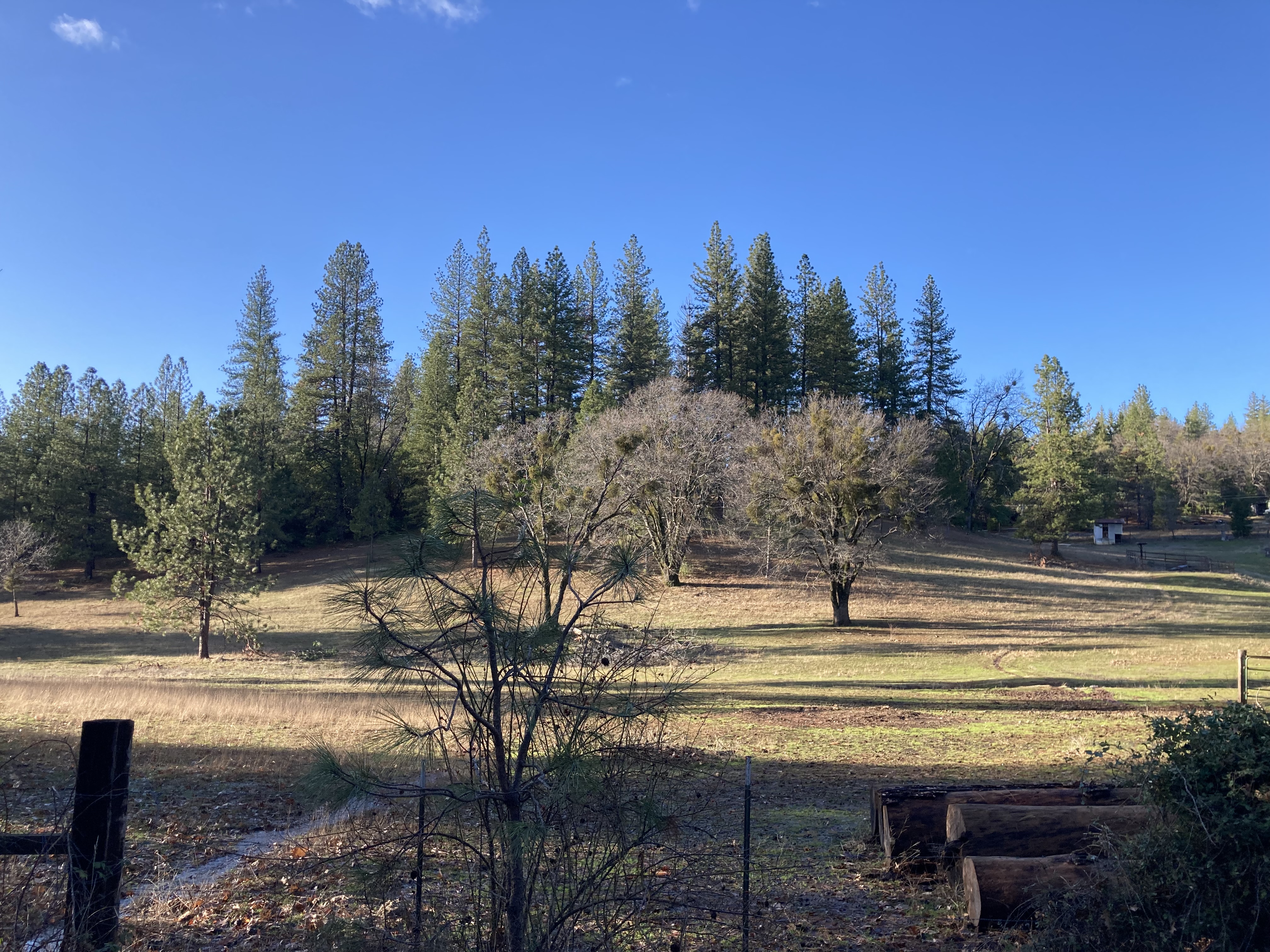
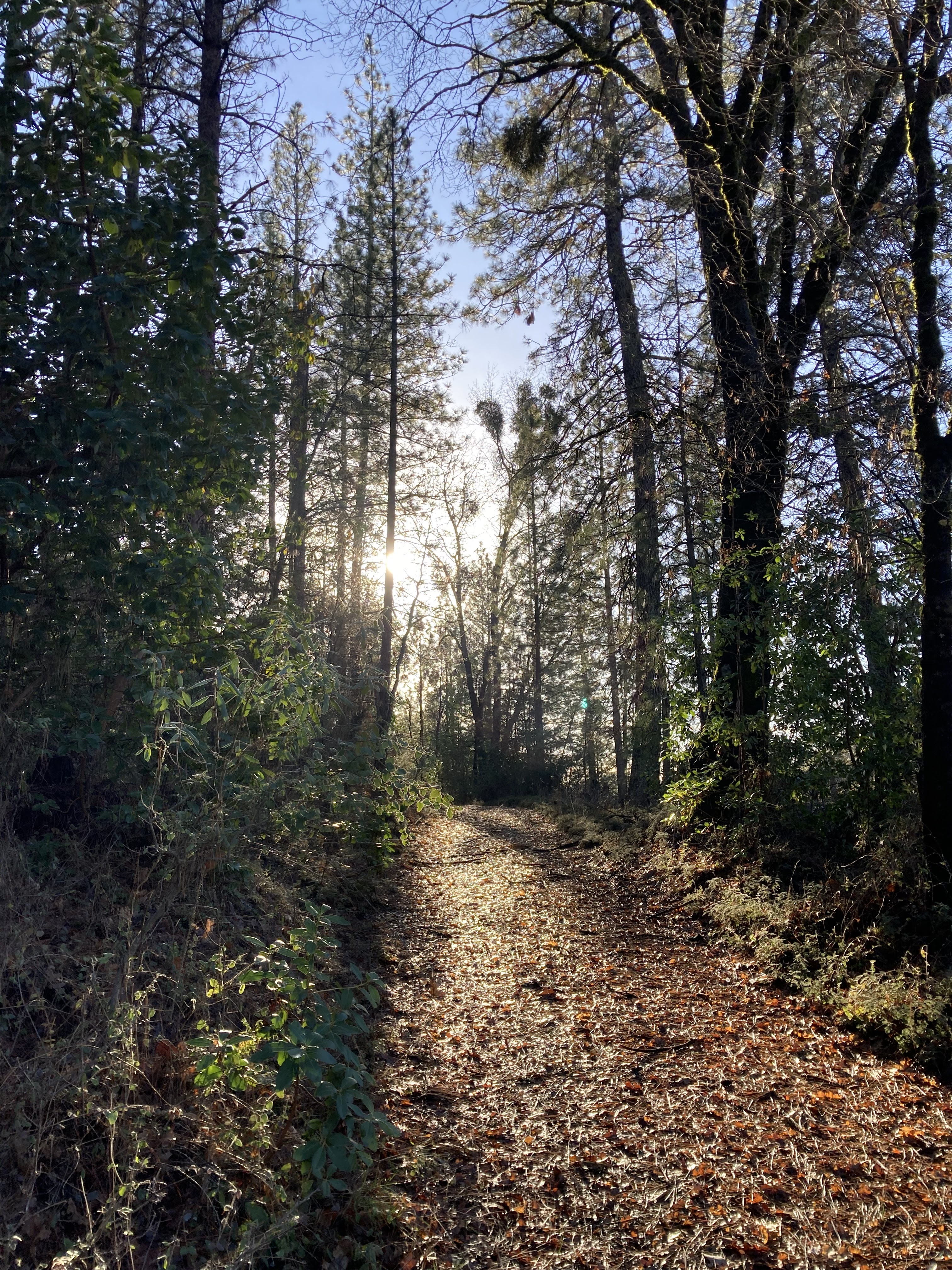
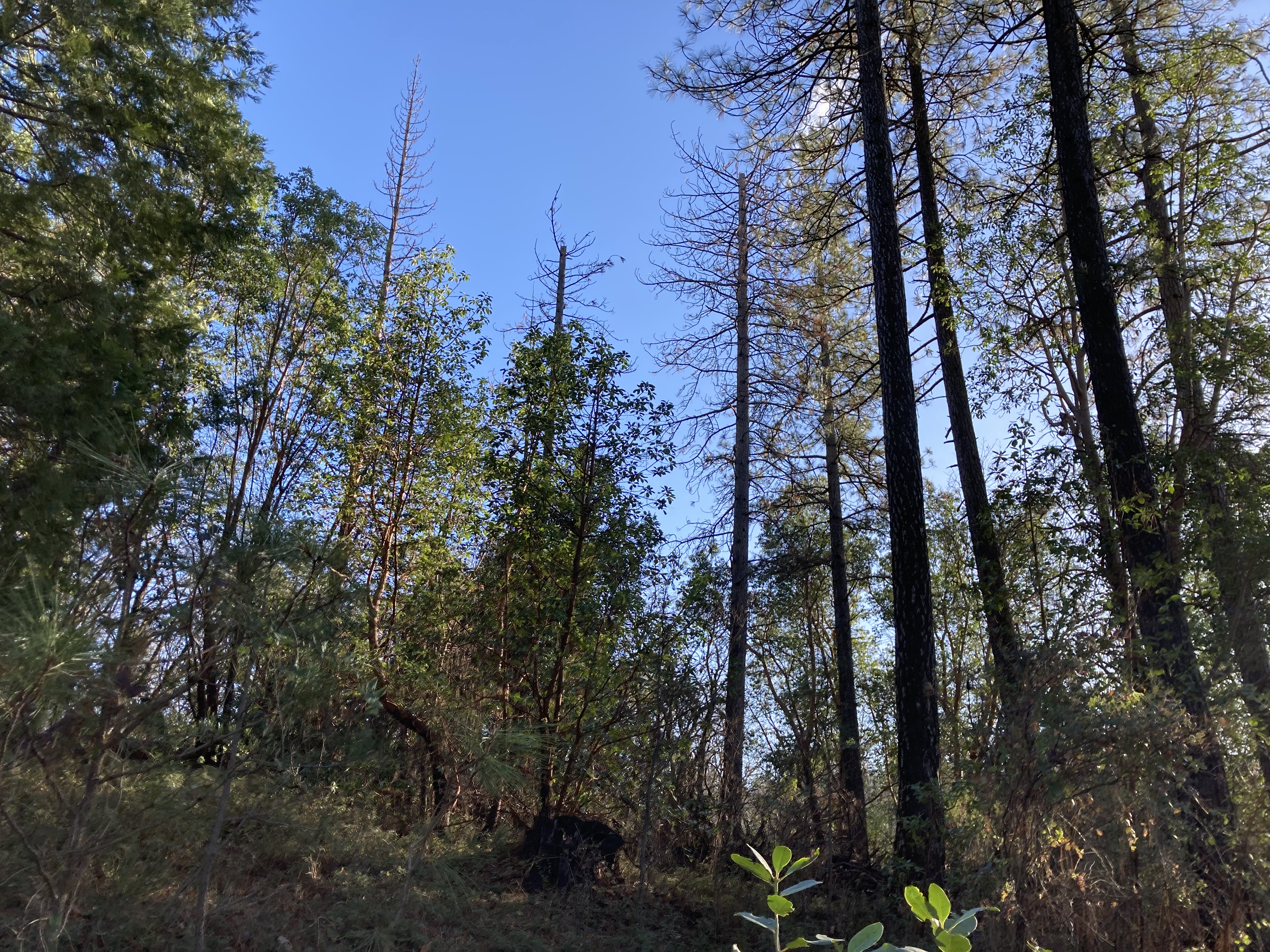
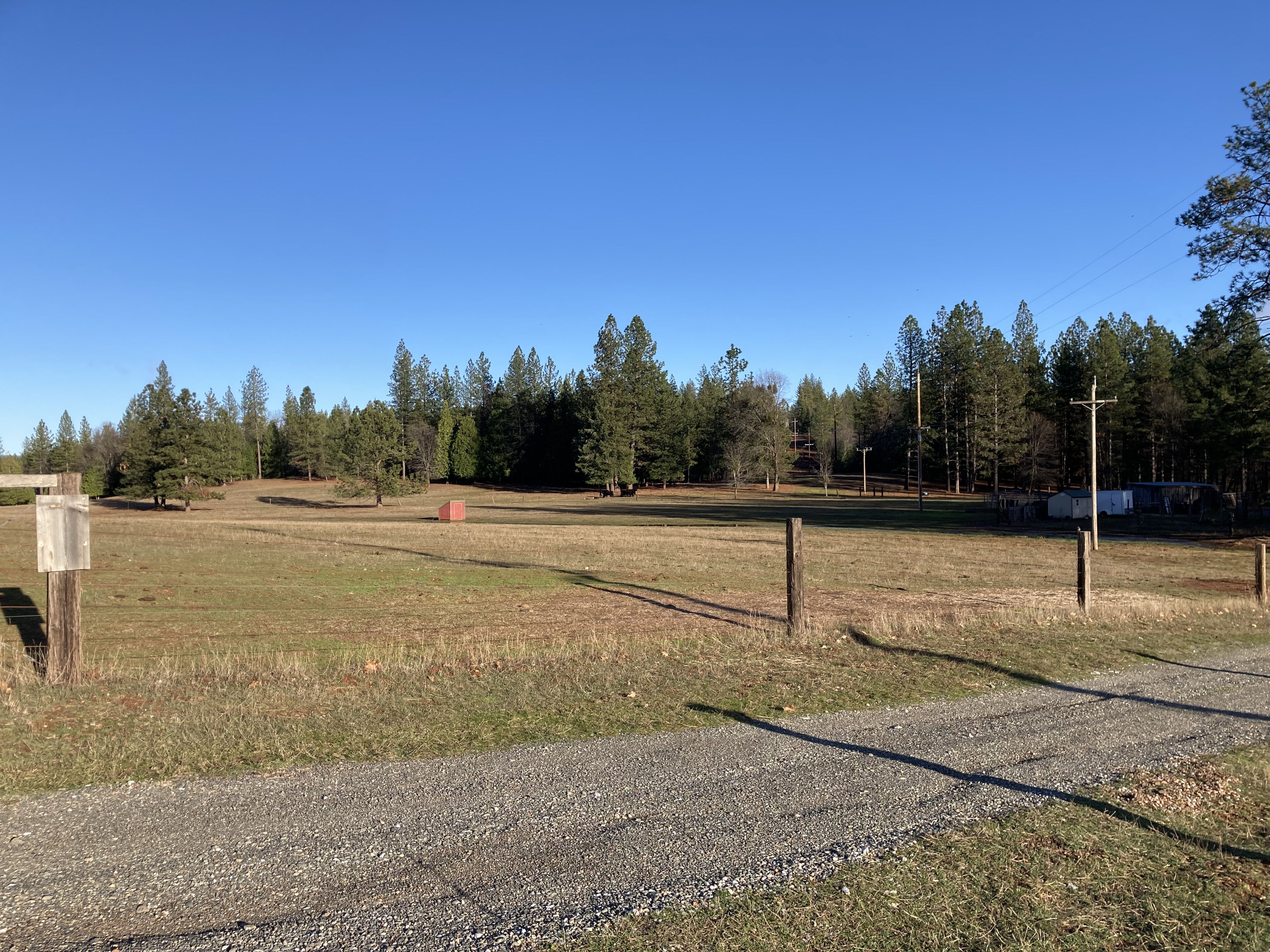
 We have had a spot of rain or two in January, but at least there was some sun last week for a walkabout.

Lower Meadow:


Lower Meadow again.  The seasonal pond is already full and there was a fair amount of water running to it:


The stream along the base of the pastures was full:


Looking up towards the Middle Meadow:


This is the spring in the Middle Meadow.  It has gone dry for years.  I have blown up the pipe for the pond - it has been a long time since I saw that kind of flow:


Upper Meadow:


Back down the Middle Meadow:


More of the Upper Meadow and winding around it:


This the base of the Upper Meadow. The calves were slipping out here so The Cowboy put a cattle panel in place to keep them out.  As it turns out, it also kept them out of the culvert, keep the culvert clear, and is forcing water to stand a lot longer than it would have otherwise to soak in.


The garden area.  Too wet to work in now.


Completing the circuit, back towards the house.