Monday, October 26, 2020

Book Review: Anglo-Saxon Prose

 From 7 years in college, I have only continued with a very few things in terms of things that I learned there:  Japanese of course, and World Literature, and horticulture, and the harp.

And, Old English.

Old English, otherwise known as Anglo Saxon, represents the language spoken by the invaders of the Province of Britain in or about 446 A.D.to sometime around the 1200's, where it transformed itself in the Middle English of Chaucer's Canterbury Tales.  It is unique among early medieval languages of Europe in that so much of it has survived - not just in Bibles and homilies and religious writings but in laws and stories and books and riddles. Most people know the most famous - Beowulf, for example, or The Battle of Maldon - but in point of fact there are literally hundreds, if not thousands, of bits and pieces that we have.  Perhaps more than any other early Medieval culture, we know a great deal about the Anglo-Saxons, what they believed, and how they lived.

I have puttered about with a study of Old English for well nigh on 30 years, sometimes waxing in interest, sometimes waning.  I have spent some profitable mornings or evenings on the weekends translating small selections of texts (I have about a 40% success rate sight reading).  

But just as with Beowulf or The Battle of Maldon, not all of these texts are only there for the scholars and those of unusual interests:


Anglo-Saxon Prose is an edited version of a number of different Anglo Saxon texts, some well known (Some of Alfred the Great's introductions, Legal Codes, The Life of St. Guthlac) and some that are less well known (Bald's Leechbook, sermons by bishops Ælfric and Wulfstan, letters and estate transfers) in modern English.  It gives an interesting - and humorous at times - glance into life well over 1,000 years ago.

From The Laws of Whitræd, King of Mercia, 695 A.D.:

"Men living in an illicit union are to turn to a righteous life with repentance of sins, or to be excluded from the fellowship of the church.  Foreigners, if they will not regularize their marriages, are to depart from the land with their possessions and with their sins; our own men in the nation are to forfeit the fellowship of the Church without suffering the confiscation of property.

If a traveler from afar or a foreigner leave the road, and he then neither shouts nor blows a horn, he is to be regarded as a thief and to be either killed or ransomed."

From the Land Grant at Crediton, 739 A.D.:

"Now these are the lands.  First from Creedy bridge to the highway, along the highway to the plough ford on the Exe, then along the Exe until the grassy islets, from the grassy islets onto the boundary ridge, from the boundary ridge to Luha's tree, from Luha's tree to the enclosure gate, from the enclosure gate to Dodda's ridge, from Dodda's ridge to Grendel's pit, from Grendel's pit to the ivy grove..."

From Bald's Leechcraft (A book on herbal lore):

"For the dorsal muscle, seethe green rue in oil and in wax; anoint the dorsal muscle with it.  Again:  take goat hair; let it smoke under the breeches against the dorsal muscle.  If a heel sinew be broken, take Fornet's palm, seethe it in water, foment the limb with it, and wash the limb with it; and make a salve of butter; anoint after the fomentation.

Against a woman's chatter:  eat a radish at night, while fasting; that day the chatter cannot harm you."

From Ælfric's Colloquy On The Professions:

"Master:  "What do you say, shepherd?  Do you have any work?

Shepherd:  I have indeed, sir.  In the early morning I drive my sheep to their pasture, and in the heat in the cold, stand over them with dogs, lest wolves devour them; and I lead them back to their fields and milk them twice a day, and move their folds; and in addition I make cheese and butter, and I am loyal to my lord.

Master:  What do you say, baker?  What is the use of your trade; or can we survive without you?

Baker:  You might live without my trade, but neither for long nor very well.  Truly, without my craft every table would seem empty; and without bread all food would turn distasteful.  I make people's heart strong ; I am the stamina of men, and even the little ones are unwilling to pass me by."

As you can see, the Anglo-Saxons were descriptive and aware of their world.  Truly, for what is an academic text, the book is a lot of fun.

The picture above is the latest version but, like many academic texts, you can pick up an older version for much cheaper and with little significant content change.  Well worth the money to see how, for some of us in the U.S. and Canada, our ancestors viewed themselves and their world.


Sunday, October 25, 2020

Green And Sustainable: A Way Of Life Versus A Theory

 For today's thought, I would like to consider a quote from The Amish Newcomer from my post earlier this week:

"Then you were lying when you said you were interested in green and sustainable living.  A zero-waste lifestyle.  You say you support those things, yet you disdain the skills that make that kind of lifestyle possible.  If those things are important to you, then you should be willing and able to preach it to others."

This has always been a point of contention with me for those that espouse the theory of green and sustainable.  To many (not all), it often seems like green and sustainable is required to conform to a particular point of view in order for it to truly be green and sustainable:  electric cars are the only acceptable solution to transport (let us not speak of how the batteries are manufactured or disposed of), certain forms of energy are the only acceptable ones (renewable wind and sun:  Good; renewable wood, human, and animal labor:  Bad), organic foods are the only acceptable food (or at least, only organically sourced foods sold at your local supermarket).

This version of green and sustainable is the view of the privileged city dweller:  all green and sustainable efforts must fit within the dominant paradigm that cities and technology are the most important centers, that white collar work is the only desirable work, and that anything which does not involve technology is "archaic" and "outdated" (and probably inefficient).

This is not true sustainability.  As any economist would tell you, something that requires more inputs than outputs is a losing proposition in the long term.  And of course as the technology increases, so does the price and fragility:  a level or measuring tape is much less expensive than the smart phone I buy with those applications on it so I do not have to buy a level or measuring tape.  The level and measuring tape will also not have a cracked screen when I drop them on the ground.

So why is it?  Why is it in our quest for green and sustainable we overlook actual tested techniques and practices hundreds or thousands of years old and try to replace them with the ones that are seemingly the most convenient to us rather than potentially better for the planet and environment?

Lewis hits the nail on the head.  The first arrives from a disdain of this methods, an underlying sense (fed by our culture and educational system) that anything manual or low tech is essentially drudgery or for the "less better" people.  It involves inconvenience.   It involves effort, sometimes a great amount of effort in many cases for what would appear to be a minimal result (the result is not minimal if it meets the requirements of sustainable and meeting the need, it only seems so:  the yield from a gallon of milk is perhaps a pound of cheese.  To many, that does not seem right in the age of the 5 lb. cheese blocks they can buy in the store).

The second - which Lewis addresses in her book but not specifically in the quote - is the question of values.

To the trendy green and sustainable people, all that meets their interpretation of this lifestyle must fit within the context of the modern world.  Values which make green and sustainable living work - hard work, frugality, long hours, simple pleasures, community values built on traditional or religious tenants - are "backwards".  They should not have to adopt the one to keep the other:  we want to be "modern" and still feel as if we have upheld the sustainable values of generations past.

Of course there is adaptation:  a chainsaw works more quickly than a two handed saw, a tractor can take the place of a team of horses.  But at best you are buying time and physical wear:  the food only grows as quickly as a plant grows or stacking cut wood, whether by maul and wedge or by a splitter, only stacks one piece at a time.  Sustainability has a rhythm and pace that cannot ever be moved along faster by our wishes or desires.

This is the rub, of course:  you cannot have the one without the other.  Like anything, there is a trade off.  A trade off that the trendy are not willing to make.

They can try, of course.  And perhaps - for a short time - they can succeed.  But ultimately, the inputs in this system will always be more than the outputs. They are building to a pyramid, a point with  brilliant white marble paneling which can seen (and admired by others) for miles around.

Of course, once you reach the top of the pyramid, the only place to go is back down.

Thursday, October 22, 2020

Wednesday, October 21, 2020

Flame And Ash

I am rather ready for the ongoing political season to be over.

You might think I am sick of the advertisements - I am not, really, as I have almost no exposure to them anymore (not listening to radio or television will do that for you).  You might think I am sick of the political speeches (see previous reference to lack of radio and television).  You might even think I sick of the candidates themselves (on that, you might be right).

No, what I am truly sick of is the smugness and hubris of people.

It is splendid, I suppose, to be enthused by one candidate or the other - it is a bit like a sports team, perhaps.  It is even okay, I suppose, to be rather excitable about your point of view.

What is not okay - what is never okay - is the crass and utter destruction of anything resembling human relationships I am observing.

I chose the word "smugness" intentionally.  Because that is what I feel as I watch people list that they voted.  It is not the sense of exercising the vote, the proud action of a free citizen participating in their republican form of government.  It is the sly, sickly smile as someone proclaims "I fought fascism today" or "I fought communism today" or "I am getting the country on the right track" or "I am keeping the country on the right track".  

Believe me.  Read the actual histories of World War II or Korean or Vietnam or the Cold War.  None of you are doing anything close to that.  At best you are voting against a person or a party you disagree with.  And no matter how much you like to believe it, the authoritarianism you are theoretically voting against will rise up to control you with more glee and smugness than you ever experienced when you left the voting booth.  

The reality is, the day after the election is decide, when someone wins - and someone eventually will win - these same people will have to go back to the people they named communists or fascist or just plain evil and somehow realize they have torched relationships for the sake of politics.  "We are all in this together" we will hear - but in reality we will be farther apart than ever.  Raised fists are seldom  turned into open arms.

Maybe I write more for myself than for the country at large.  I am rapidly finding that the circle of people that I am interacting with - or even want to hear from - continues to become smaller and smaller, mostly by my own choice at this point.  Having lived through the election and having seen how people are reacting, I am coming to see them as they really are.  Occasional interactions are no substitute, it turns out, for what people actually believe and enable in their lives. Or perhaps rather, people have always told me who they were and I chose to ignore that because in some way, I would either believe the best of people or at least believe they were not as they seem to be.

It has become like a forest fire:  having failed to clear out the underbrush in the good times, we are left a fire that consumes all in a roaring inferno with heat so intense that it is creating it owns weather, a vortex of flame and embers that destroys everything in its wake as it hurls smoke to the sky in cascading billows.

Those that think they will wake up to a new utopia will only awaken to a dead landscape, burned to ash.

Tuesday, October 20, 2020

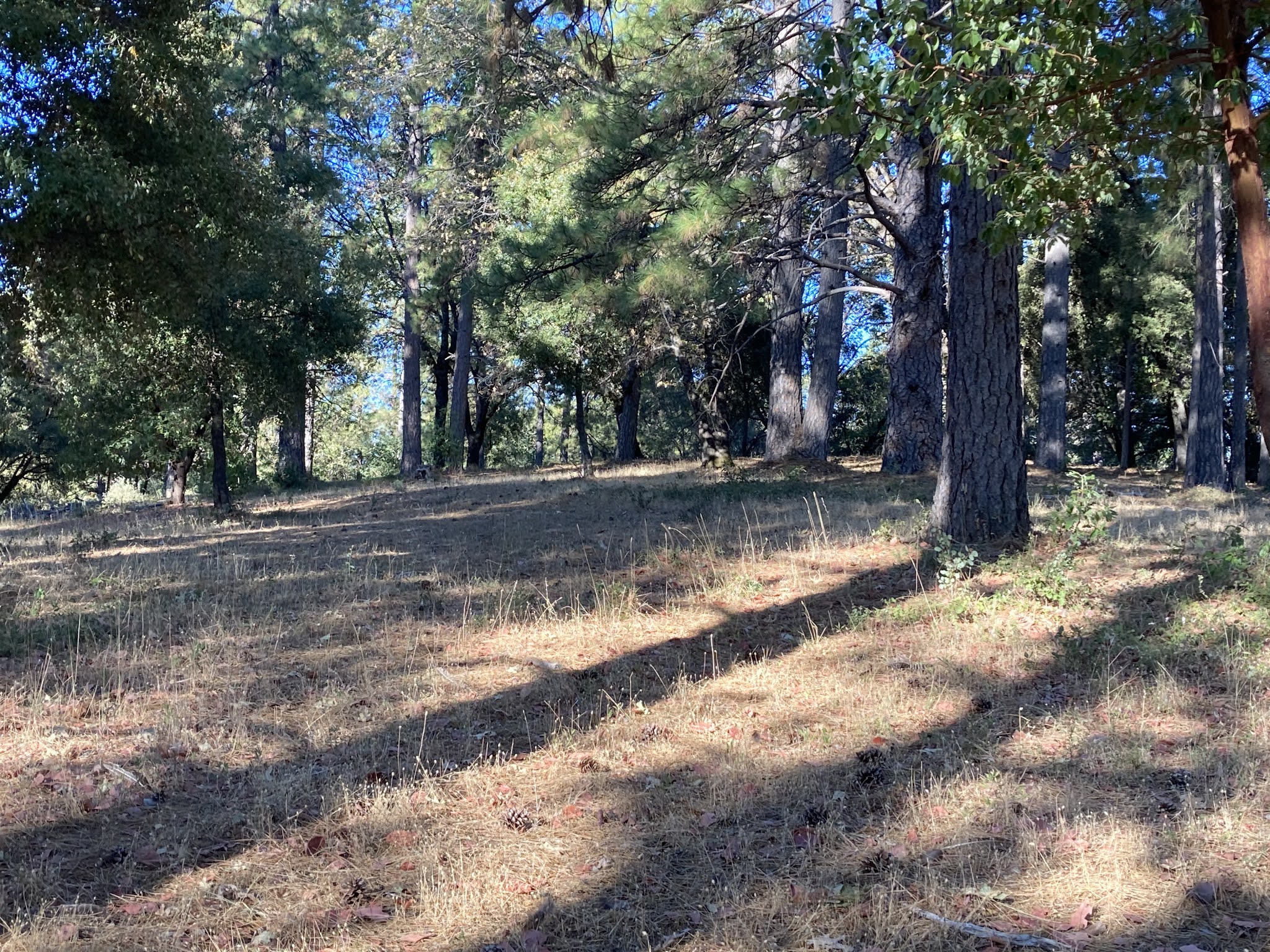
2020 October Walkabout

 Back at The Ranch for another week.  Took a walkabout this weekend.  This time we are going up on the hill above the Lower Meadow and then back down toward the creek:

View of The Lower Meadow


Walking up the Lower Meadow Hill:


This has been filled for as long as I can remember - it is an actual artesian spring.  There is talk of getting into the tank next year and seeing if there is any blockage:


Still walking up the hill:


On top of the hill and looking down:


The tank in the Lower Meadow is dry.  It always dries out, but will fill back up in the Winter:


This lone fruit tree has been here for probably 50 years.  I have no idea why it is here:


The man that runs cattle on the property has slowly been clearing out the blackberries.  You can barely see the fence post.


On the road:


The creek is still fairly full:


Monday, October 19, 2020

Book Review: The Amish Newcomer

 As a 50-odd year old male, I have never once in my life read, purchased, perused, or otherwise been involved in a romance novel.  At best, the pictures I have of them is commercials from my youth with titles (and illustrations) that seemed to suggest situations and storylines that I never really had an interest in.  I carried on happily in my life with a steady of diet of history, theology, novels, and Fantasy and Science Fiction.

That is, until Patrice Lewis at Rural Revolution announced she was publishing a book through Harlequin Romance's Inspirational Romance series.

I have followed Patrice, her husband Don, and their two children (Older Daughter and Younger Daughter) for several years (her children were being home schooled when I started and Younger Daughter is two years into a naval career) as they have lived and worked at a home business and off the grid.  She writes for her blog and well as for other online venues (World Net Daily, for example, and Lehman's) and has been quite free in giving us an insight into what an effort the "simple life" actual is.

You support people doing good things.  So, after 50 years,  I bought a Harlequin Romance:


Leah Porte, a television reporter that witnessed a murder, has been placed into a Witness Protection Program amongst the Amish.  The book follows Leah as she begins to integrate into the life and flow of "The Plain People" and the family she is with, Ivan and Edith Byler and their six children, and the larger Amish Community.  Also in the picture is Isaac Sommer, bachelor and helper of Ivan in his woodshop as well as burgeoning magazine publisher about the rural life. The books covers Leah as she fights three battles: an outer battle as she learns to fit into a lifestyle that is very different from the one she has known, an inner battle as she begins to confront the idea of a personal God and how He might be involved in her life, and an emotional battle as she realizes she may be falling in love with a man who lives in a different world than she does.

The book in and of itself is a lovely introduction to the world of the Amish.  The conversations are peppered just enough with Pennsylvania Dutch German to give the idea of a culture that is almost familiar but not quite. It is also a wonderful introduction (with enough detail) of the aspects of living a life as it is (I imagine) lived among the Amish: large gardens and preserving their output, doing laundry, handling daily milk, even aspects of a social interactions between individuals and groups.  It is convincing enough (to me) that at some level, this must be what that life is like.

It is also peppered with thought provoking statements which, while I am pretty sure underlie the Amish beliefs and practice of life, also underlie what Patrice has done and wrestled with in her own life, not just by writing but by doing:

"Then you were lying when you said you were interested in green and sustainable living.  A zero-waste lifestyle.  You say you support those things, yet you disdain the skills that make that kind of lifestyle possible.  If those things are important to you, then you should be willing and able to preach it to others."

"But you're busy on your own schedules, doing whatever needs doing rather than working by anyone else's schedule, such as working for a boss.  I kind of like that idea."

"I found it easier to maintain my beliefs by living them, not fighting to keep them while living among people who don't share those beliefs."

"But work is an honor.  Labor is a gift.  It's not something to avoid, but something to embrace.  That way, rest is sweeter."

""For what shall it profit a man, if he shall gain the whole world and lose his own soul?" quoted Isaac.  "I can't save the whole world.  That's Gott's job, not mine.  My job is to save my own soul, and perhaps influence the souls around me.  I'm a simple man, so the only way I could figure out how to save my own soul was to return to my roots.""

"Who can say?  But I think faith seldom comes in a blinding road-to-Damascus flash.  It takes time, and it takes practice.  And like anything worth mastering - carpentry or sewing or milking a cow or working on a computer - it is something that takes a lot of time and the chance to mess up without the fear of someone mocking your efforts.  Sometimes it takes patient teachers, and sometimes it's something you wrestle with in private. Everyone's journey is different."

I am not going tell you the ending (you will have to read it yourself and find out), but it is satisfying and left me saying "And then what?", which is the sign of a good book.

At less than $5 - the cost of two/thirds of a movie or most books these days - you will get some hours of being lost in a world which is almost, but not like the one we live now.  I look forward to Patrice's further novels.  

I sure hope we pick up where we left off with this one...

(A simple request, and against my usual grain:  If you are going to buy the book, do it through the regular commercial outlets.  That makes sure that Patrice gets the money.)

Saturday, October 17, 2020

Sci Fi And Fantasy Authors I Enjoy

My friend Glen has lurched back into reading Sci Fi.  This makes me immeasurably happy.

Of the genres, Sci Fi and Fantasy (or Speculative Fiction, as I believe it called nowadays) are the ones that most resonated with me growing up.  I was a reader, and outside of history what I read was Science Fiction and Fantasy.

I drifted away from it largely in the late 1980's due to a combination of factors:  a sense that there was less time to read and the fact that (in my opinion) the stories were not as well written.

Fiction is always to some extent a reflection of the age in which it is written because the writers exist in that age.  Thus, for example, Andre Norton's starships of the future always looked like rockets from the 1950's (a delightful anachronism read through today's eyes).  But well written fiction does not substitute the culture and beliefs of the age for a well written story;  a story which is perhaps "socially aware" but poorly written is a poorly written story.  Additionally (from the prudish side of me), the substitution of sex scenes for well written prose and hinting at instead of blatantly stating it is, well, in poor taste in my world.

I have written here about books that I re-read on an annual basis (some of which are sci fi and fantasy).  To be a little more helpful, I thought I would list some of my favorite authors to give Glen a boost:

H. Beam Piper (Henry Beam Piper):  Works largely published in the 1950's and 1960's.  Space Viking is one of my all around favorite books on the application of history to the future.  Other notable works of his I have read and recommend are Four Day Planet and A Planet for Texans and Fuzzy Sapiens. I have not read his Paratime series but assume it is up to the same standard.

Andre Norton:  I have been reading Andre Norton for over 40 years.  She was a very prolific writer with numerous books under her belt (I easily have 30+ and I have not scratched the surface).  Dark Piper is one I re-read every year.   Recommended:  The First five books of the Witch World Series (they get a bit silly after that), The Stars Are Ours and Star Born (connected series), Daybreak: 2250 AD (a very good introductory "End of the World" novel), Night With No Stars, Star Rangers, Operation Time Search, Knave of Dreams - these are my favorites, but almost anything of hers will be enjoyable.

Robert Heinlein:  I have a conflicted relationship with Heinlein.  Some of his I really liked, some have not stuck with me.  Favorites:  Starship Troopers, The Moon Is A Harsh Mistress.

Robert E. Howard:  The genesis from which most Sword and Sorcery sprang.  His Conan stories are the best known (they were organized in the 1970's into an 11 volume series), but some of his lesser known heroes - Kull of Atlantis, Solomon Kane, Cormac Mac Art - are also worth a read.

Edgar Rice Burroughs:  As Howard set the bar for Sword and Sorcery, Burroughs set the bar for "Earthman transported to a strange new society and has to make his way in it".  John Carter is his arguably most famous character (outside of Tarzan, of course, who I never got into), but Carson of Venus and David Innes of Pellucidar (Hollow Earth) are also enjoyable.  For all of these series, the latter books are exceeded by the earlier parts of the series.

Elizabeth Boyer:  Elizabeth Boyer was a 1980's and 1990's author that wrote books based in a Nordic World; while the Nordic Gods never appear, there are other characters of Nordic mythology:  Alfar (Elves), Dverger (Dwarves), Nisses, Barrow Wights, Trolls.  Her first four or five books were all stand alone - The Wizard and the Warlord, The Sword and the Satchel, The Thrall and the Dragon's Heart, The Elves and the Otterskin.  Her last set of books in this genre (before she apparently fell out of favor and disappeared) was a four part series.  The first two, The Troll's Grindstone and The Curse of Slagfid, are the better of the two.

J.R.R. Tolkien:  Tolkien is hit or miss for people; you either like saga sorts of tales or you do not.  The Triology The Lord of The Rings is his most famous (the books are so much richer than the movies), but The Hobbit and The Silmarillion (which is even more of a saga based story that LOTR) are also worth a read.

Jerry Pournelle:  I accidentally found Pournelle in the early 1980's with Birth of Fire, a book about colonization and creating a free society on Mars.  I loved the books but never followed up with him until years later (sadly, he died within the last two years; I could have followed an actual living author).  His short stories captured in the titles High Justice  and Exiles to Glory capture the transition of Earth into an solar system empire.  His cycle of books Falkenberg's Legion, Go Tell The Spartans, and Prince of Sparta are a lovely historical review cleverly hidden as a science fiction novel of how civilizations fall and are rebuilt.  He also cowrote with Larry Niven; Footfall and Lucifier's Hammer both (in their own way) discuss the end of civilization.

David Drake:  Drake, like Heinlein, is someone I have a conflicted relationship with.  His The Forlorn Hope is a masterful retelling of Xenophon's Anabasis, or the retreat of the 10,000 Greeks through Persia (and one of those books I wish there was a sequel to because the characters were so compelling).  His Hammer's Slammers were gritty, but less appealing as the frequency of swear words is a bit high for me.

I have others, but those are the big ones on my list.  What Sci Fi or Fantasy books could others recommend?

Friday, October 16, 2020

Being Out Of The Know

 One of the changes that has been the most hard to adapt to as I have embraced my new position at work is being on the outer layer of "The Know".

There is a "The Know" in every company.  It is that group of individuals that is aware of everything that is going on at a site, a plant, a division, the company.  They are aware of all of the great challenges and issues, the last minute changes and unexpected events.  If something happens, if something changes, they know.

For the last 20 years, I have been in "The Know" - partially because in my role in Quality, almost everything that happens impacts you and partially because at smaller companies, it is easier to be around such information.

But that has changed.  Rather dramatically.

My focus is essentially now on one single major project and two minor projects that support it.  Anything involving these, I am actively aware and engaged on.  Anything not in this narrow band, I have virtually no idea what is going on.

It might sound like not a terribly big adjustment to have to make - "Hey TB, you are free of responsibility" - but it has been a greater mental adjustment than I had anticipated. You are now one of many fighting for the attention of decision makers where this was no longer an issue (and, in fact, you were one of the decision makers).  Your meeting schedule has dwindled to very specific meetings.  In larger meetings, you are constantly learning new information instead of already knowing the information.

To someone who is used to having such information and to someone who always worries when I have no line of site on larger issues, this is a bit unnerving.

One does what one can:  Focus on the project at hand.  Try to follow up more, make better tools, drive things to conclusion.  

But always in the back of my mind, I now have the following fear:  I am tied to a single thing.  If that thing fails, my relevance and value completely collapses.

It is not an outcome I had expected.

Thursday, October 15, 2020

The Collapse LVI: Winter Calm

 22 December 20XX

My Dear Lucilius:

This evening, as the snow and wind was slightly less than normal, I took a walk.

The argument could be made that this was an extension of my road monitoring duties – which, to be fair, have been almost nothing since Winter opened up here. No-one is moving very far at all – nor can I blame them. Without the comfort of an automobile to shield you from the weather, it is beyond just an inconvenience to travel – it is potentially lethal, especially with the fact that one does not know what the situation is up the road.

I drifted by the road where I typically turn to go home and continued on into the village, a scant 300 yard or so beyond that. We still have clouds which hold some of the warmth in – no bitter cold night with stars for us at the moment.

The buildings themselves are all decked in snow; one can tell by the amount which houses are still inhabited and which are unoccupied, either through being a summer home or simply by individuals who left. Smoke is drifting up from those that are, creating lazy spirals that spread up.

Perhaps one sees flickering lights – battery powered or even flame – in an occasional window but not often after dark: security and common sense dictate available light (although the smoke will give it way), while prudence means the windows are draped to keep in whatever heat is available.

I know in the past I have tried to convey it to you, but the silence remains pervasive to the point of deafening. No automobiles, no animals, no children out playing or adults conversing. Just the wind rattling trees limbs and the periodic drop of snow and the quiet gurgle of the creek that runs across the road from my house.

I am grateful, of course, for the silence. Silence in this new world can mean peace and relative normality; I suspect there are other places which have nothing but noise at the moment and are the more risky for it.

It makes me wonder, of course: for all those who could not live with the silence, for whom the bustle of civilization was proof of life and joy, how are they faring now? Have they adjusted? Or do they seek to fill even this silence with reminders of a civilization that at least, for now, has been put on hold?

Standing in the snow and philosophizing, of course, makes for a terrible combination with cold feet. So I turned and made my way back to my home.

While I have always loved silence myself, I had no idea until I pondered it how much it represented and what the lack of silence in this new world really meant. Sounds of Silence, indeed.

Your Obedient Servant, Seneca

Wednesday, October 14, 2020

On Intentional and Unintentional Cessation

 One day, as the InterWeb meme goes,  you and your friends went outside to play for the last time without realizing it.

I cannot specifically remember the date, but I can remember the time:  the summer between my 8th grade and Freshman year.  My best friend, who lived literally 300 feet away, had a five lot in back of his house, a hilly sort of thing with brush and trees, overgrown, with a drainage ditch running through part of it.  It was perfect for two boys with imaginations and time.  For several years we would tear through the brush, make war on each other, "practice" tracking, make trails and forts and plans.

Two things happened at that point: high school, which for me ended up meaning band and drama and schoolwork and for him meant soccer and schoolwork, and games, video and roleplaying.  Suddenly time spent outside was replaced (when we could cobble it together) playing Atari or Dungeons and Dragons.  We occasionally still went outside, but it was never the same.

It makes me realize that in life, the number of things we unconsciously never do again greatly outweighs the ones we consciously end.

The conscious endings are often understandable: the coworkers we will likely never see as we move across the country, the sport we "retire" from because we become too old or too broken.  In some cases it is the passing of the torch:  the matron who surrenders her holiday meal preparation to the younger generation or the patron who gives his prized possession - a gun, a knife, a vehicle, a lease on a cabin or fishing right - to the next generation.  

The unconscious endings are the sadder part by far.

The unconscious endings are the ones we never see coming.  They are things that perhaps we intended to do someday again - things that we perhaps loved - but somehow the circumstances never present themselves to do them again.  It is the musician who never plays, the athlete who no longer participates, the friend or family we have not seen for years.  We never really intended to stop doing these things, yet somehow we continue to keep not doing them.

Sometimes, of course, it simply is time:  I cannot go back and somehow pretend I have the interest or stamina to do some of these things.  Sometimes it is interest, which is harder because I think if asked most people would not say "Well, I have completely given up on that".  There is something about us that does not like the words of concept of "giving up".  Things leave us; we do not leave things.

What it should do - what it very occasionally does for me if I am paying attention - is make me more conscious of those activities that I am in and doing.  It is hard to think about doing something for the last time except when you think that it might be the last time that you do it.  Constantly bearing this in mind can give a piquancy to the activity, a certain flavor and bite, that just doing it the way you have always done will not.  

If you think it might be the last time, you will spend more time trying to enjoy it.

A few years ago, on a whim, I drove by the old property to see it.  There is at least one additional house there but most of the brush and trees are present and from the road I could still see the trench where we looked out over the invading hordes.

If there ghosts from times past running in the forest, they ran in the woods far away from the road beyond my ability to see.

Tuesday, October 13, 2020

Wax On, Wax Off

My current automobile surpassed its ten year anniversary this year.  

 It has a been a reliable Mazda which we originally purchased as the alternative to a dying mini-van: seats six, has a fold down back, and (most importantly) is a standard transmission.  The car has performed well, seeing us back three times to Old Home and back again and numerous in-state travels.  Its status as "my automobile" occurred when the determination was made that the back seats really were not all that comfortable and a mini-van was really needed for the hauling of people, animals, and things at which point it reverted to me (the old saw about my next new car being my wife's old one is rather true).

We have yet to crack 200,000 miles (The Plague Of 2020 saw to that) and may not do so until next year.  That said, it it has had it 200,000 mile service and overall is in fine running condition inside and out.  A few things have gone wrong, of course:  the fancy cable port to hook up your phone for music no longer works and the CD player no longer plays CDs but that is a minor issue and - since I drive far less and listen to things far less in the car - not really an issue.  The interior remains in relatively pristine condition:  scratches on the plastic of course, a small dent in the ceiling where a 4" x 4" post went in a bit - but still eminently serviceable for the all too few times I haul anyone besides animals around any more.

The outside is also in "reasonable" shape considering 10 years of molten sunshine and freezing cold - again, the minor scratches and dings that any car acquires after so many years but the paint has held up relatively well.

My hope is that I can keep the car for another 10 years (I was spoiled by an early 1990's Ford Escort my wife had when we got married; we got 310,000 K mileage on the car and only got rid of it because it failed emissions testing; it still ran fine).  Given my current or even future mileage over the next 10 years, this seems very possible given it is a standard transmission, I change the oil regularly and the transmissions fluids semi-regularly, and I continue to foresee low mileage.  But the outside has to hold up as well,

So this weekend I waxed my car.

Car waxing is a thing that I seem to remember being done far more often than I see it being done now.  My father would do it from time to time with the cars we had growing up:  I remember him washing them in the driveway, smearing the wax all over it, waiting for it to dry, and then polishing it off.  Polishing it off was a fun task when one is young - for a while, until you get bored or it becomes clear it is a great deal more difficult than it looks.  Later - in my teenage years - my father got a buffer, which helped matters immeasurably.

My car - being small and short - makes waxing at least possible.  I washed the car, put on the wax, and waited.

And thought while I waited, of course.  There is always that.

What I realized is that in fact one does not see people doing this anymore at all.

Oh, occasionally I will see someone in the neighborhood doing it.  But it is a rare - to be fair, it is rare to see anyone really doing anything to their car in the driveway anymore.  For long years we had droughts and washing a car was forbidden at home; this seems to have stuck and now it almost never happens (I cannot tell you how odd it felt doing it in my own driveway).

This represents, I suppose, just another task most have outsourced.  I believe they call it "detailing" now, where the car goes through the wash and then someone else does the work while one drinks coffee and watches the phone or someone comes to your place of business and does it while you do your regular job.

There is nothing inherently wrong with this of course - the value of time and money, etc. - and represents the same general trend that sees lawns mowed and bushes trimmed by a third party and oil changes done while you wait.  I certainly understand it: yard work is the least favorite of my domestic chores, my confidence in working on my car and not creating a larger issue is low,  and there are certainly more profitable ways to spend my time.

But I wonder if we lose something by all of this outsourcing.

As I discussed earlier, the Economy of Service can be a dangerous path to go down - not only for those that become dependent on it but for those that use it.  Skills atrophy or are even lost.  The ability to do a relatively simple task like waxing a car or mowing a lawn becomes a task which is overwhelming in our mind, something left to someone who can do the work well instead of our pathetic efforts to do so.  Given enough time and outsourcing of our skills, we can become incapable or doing anything or even being willing to try.  Everything must be left to the "experts".

I finished the polishing of my car within an hour after starting.  There were certainly spots that I missed and I had to go back and re-polish (there always are; the sign of an amateur), but it overall looked better and at two hours, was not an immeasurable task.

Who knows?  Maybe next time I will get better enough to have to re-polish less.

Monday, October 12, 2020

On Writing A Manifesto And Being Intentional

 I have been toying with the idea of a Manifesto for The New Normal.

As we slog through the implications of The Plague of 2020 and the outcome of the continuing economic ruin caused by actions taken to halt its spread, what I think should be obvious to anyone is that 2020 is going to represent a seismic shift in the way we live, the way we do business, the way we interact with each other, the way we live  (To be clear:  Yes it exists, Yes many people recover from it, No we do not know the long term health implications from it or what and how it will mutate during the "High Sick Season" of Winter.  Color me "talk to me in three years when the data is in".)  The more I read and ponder, the more I believe this will ultimately be as seismic a shift in either of the Two World Wars of the last century.

Having said that, I have to also note that this is not always a bad thing; things are usually all not one sided in that respect.  But it can take a lot longer for those things to make themselves evident:  deaths and job losses are easily seen and quickly felt.  Shoots of new ways of living or new economic changes are much slower to manifest themselves.

But I want to capture these changes now, as I see them coming, and embed them in my life rather than quickly gloss over them into the areas of The New Normal.

The other reason to consider a Manifesto - which to be clear how I am using the word, is simply a declaration of my views of the world and how I intend to live in it - is that without a conscious decision on my part, others will make that decision for me.  The world, to appropriate a Christian metaphor, will attempt to squeeze me into its mold instead of the other way around.

Over my years of blogging, I have been exposed to a number of very good effective manifestos, people living out their intentions in life (to be fair, most of them live them without ever really thinking to write them down).  And perhaps therein lies the secret and the discussion:  intentionality. They are living their lives intentionally. 

For me, something written down is the place to start (it always is, for me.  I do not perform quite as well with thought exercises only).

I have no particular idea when this will come out as I am picking through my ideas and thoughts - but part of the reason of speaking of this at all is by writing it here, I am now committing to do it.

And perhaps that is the great lesson of this new age:  that more so than ever, we need to be intentional in how we live, how we speak, how we spend our money and time and our lives.  

Before it is determined how we should act and react.

Sunday, October 11, 2020

Sunsets


There are, as the saying goes, two kinds of people for every situation:  those that like something and those that like something else.  In this case, there are two kinds of people:  those that like sunrises and those that like sunsets.

A sunrise itself can be spectacular as the world turns from the deep blue of night to the faint pinks and reds of dawn, the stars slowly dwindling into the morning sky, the clouds (if you are lucky) tinged with gold as they rise.

A sunset can be spectacular as the sun pushes up on the clouds in pinks and reds, making the whole sky seem an amphitheater, hitting that color of green/blue/aquamarine that I can never quite describe and lasts only for minutes before it is submerged into the rising darkness.

Of the many things that are lesser here in New Home, the sunsets have never been one of them.  Sunsets here can be grand, glorious things with colors I have never seen anywhere else - and if I am traveling in certain places it stretches for miles and miles over a landscape that does not obscure it.

That said (and because I have the rather annoying habit of trying to find deeper meaning in everything), I am wondering if my love of and continuing enchantment with sunsets is indicative of my view of the world.

A sunset is a sign that a new day is coming, that a day of possibilities and tragedies awaits.  A sunset is a sign that the day has ended, that darkness is coming, that (for the most part) activities are ceasing and the quiet of night (or the terror of night, if you are prey) is coming.

Perhaps my love of sunsets is simply the acknowledgement of the fact that personally, professionally, or even nationally, I see my part winding down (not right now of course, but sooner rather than later).  It is not so much a loss of hope as it is understanding that things always, inevitably draw to a close no matter how much we may work or labor or act.

On the bright side, the clouds are always lovely.


Saturday, October 10, 2020

The Decline And Fall Of The Service Economy

 If The Plague of 2020 has demonstrated anything to us, it is the inherent weakness of the Service based economy.

For those of you that have been in some sort of economics class in the last 35 years, you will remember the progression:  herding, agriculture, handcrafting, guilds, industrial, service.  The service economy represented the upper echelon of development for any economy.  It was the apotheosis of the worker:  freed from the drudgery of blue collar and farm labor and relieved of having to do everything by hand, the worker would enjoy the fruits of modern technology, avoiding risk of injury and burnout so prevalent with those other "old fashioned" models.

 And then The Plague of 2020 arrived with all the subtlety of a hurricane.

 We have learned a few things about the nature the Service economy now.  The first, and perhaps most important, is the word "service" can easily be redefined as "non-essential".  This was discovered by (literally) millions as their jobs, effectively determined to be "likely to spread disease" by the way the were treated, were summarily removed from their ability to work by their companies or their local and state governments.  Apparently, their services were not required.

The second thing we learned - which in fact, I suspect we secretly knew all along - was that the service economy was very dependent on people desiring and being able to access services.  Take away the ability to spend on services - like restaurants and entertainment - or prevent them from using them by locking customers and clients away from each other and while the need and desire may still have been there, the ability to actuate that need or desire was gone.  And without access to those services, those services went out of business.

The third thing we learned - which I do not think many people anticipated - is how many services are really desires more than needs.  Entertainment comes to mind as the clearest example of how when the service was shut down, people realized they did not need it.  The decline in the ability to go out and shop has been replaced by the ability to order our shopping in.  Even I occasionally need new articles of clothing:  I do not need to go to the store to get them anymore as they can be delightfully delivered to my door.

Which brings us to the things most people have not learned - but will.

The first thing that people will learn - well, really be reminded of more than learn for most - is that the future belongs to people who are considered either "essential"  or in a position where the question of "essential/non-essential" no longer applies.  If you provide a skill or service or item that is needed, you have a greater change of retaining an income (not guaranteed of course, just greater).  And if you do so in a way that is not dependent on someone else providing you the ability to exercise that skill or service or make that item, so much the better.

The second thing that people will learn - and the lesson is already out there for anyone paying attention - is that in the question of essential and non-essential, service and non-service, automation is supreme and more and more coming into its own.

Industrial robots have been around long enough that most of us take them for granted.  But more and more now, service related "robots" are coming into our daily lives.  For a great many on-line activities now, an algorithm - a form of robot - will answer basic questions for you, track your packages, allow you to make reservations, give you cash at an ATM.  And now, with the rise of The Plague and a desire reduce the risk of transmission, I predict (to be fair, it is not a stretch) that this trend will continue.  The food server, already on the decline, may very well be replaced by a combination of ordering via a tablet or online and being brought to you via robot.  And I predict (again, not a stretch) that I will see a fully automated restaurant in my lifetime.  The great thing about robots is that they work through night, day, disease, and will likely never be considered "non-essential".

There are, of course, ways to exploit all of this:  career paths that will continue to be useful or new ones based on trends such as these, learning to simply live more by what we can make and trade and barter and less by what we need to purchase, or simply becoming indispensable to someone or some organization.  But the writing, I think, is clearly on the wall:  If we have not entered the Post-Service economy, we are on the brink of doing so.

Sadly, like most economic changes, I fear many will be caught in the headlights.
 

Friday, October 09, 2020

The Decline And Fall Of The Movie Theater

 I cannot precisely remember the first movie that I saw in a theater.

 Giving it some thought and going through what my memories were, my guess it is was sometime in the early seventies as the films that most likely qualified - Herbie Rides Again, Escape From Witch Mountain, Robin Hood - were all about that time period and are all ones I remember seeing in the theater (and, of course, all were Disney - who else was there back in the day?).  

 Theaters back in the day, as you might remember if you were of an age, feel into two categories: the local home town theater with its one screen or an assembly of theaters which only happened in large cities and were several screens together (you may lived in a city where they had one of the fine old theaters from the 30's and 40's, but it was not so amongst us hill folk).  It was an experience.

 The year I remember everything changing was 1977, when I convinced my mother to take to that big multi-screen theater complex to see Star Wars (oh, how I had to beg).  Movies became both more plentiful and less remarkable after that.

 I write this, because in the past period of time this week I have seen three different news items of note:  the first two relating to two major theater chains (of which even I have heard) in financial trouble, one "temporarily" shutting down and the other saying they have limited funding left, and another in which an industry group states they believe up to 70% of smaller theaters will fail.

Much like the home rental business, we may be watching the end of an era.

The movie theaters are not completely to blame, of course.  Their model, built on being  the only method of distribution of content, has been undercut for years now by the encroachment of television, the afore mentioned home videos, and digital distribution.  The Plague of 2020 and resulting fears of contamination have meant they were closed for longer than expected and now, once open, are not frequented by patrons.  And finally, the distribution well has gone dry:  The blockbusters are not being released - good heavens, thanks to The Plague they are not being made at all.  And those that exist and are ready to be launched keep being pushed farther and farther back in launch dates in hopes that all will be back "to normal" and they can approach something like a launch weekend's income.

Of course, theaters do hold some blame too.  Ticket prices - in case you have not been lately - are exorbitant.  Snack costs are ludicrous, as perhaps they always were.   And theater experience is essentially as it has ever been - the chairs may be wider, the sound better, the color sharper, but people still talk loudly and walk between you at inconvenient moments.  

The trifecta of lack of content, lack of customer base, and lack of technology are all coming together to create a self-repeating set of circumstances:  without a clear health path, many people will not come at all; without content, people will not come to see nothing; with technology and movies that can be accessed for $14.95 a month at home,  less people will come at all.

 I highly suspect at some point (Disney tried this with Mulan but was not as successful as they hoped), studios will just stop releasing to theaters at all and go directly to the home.  The movie theater - except as a much smaller niche market - will be gone.

It is unfortunate for the workers there, of course.  Any job loss is.  The usual platitude will be said - The Plague, technology, changing tastes, etc.  But they will be gone and in a generation - like the home video store workers of my generation - will remember the days when they worked in the great house of Movies.

 Some of the theaters - the old ones, the classic ones - may maintain their status or be converted into some other kind of theater.  Those that are embedded in other structures - strip malls or malls themselves - will be converted (so long as those continue to exist) into some other forum.  

But I suspect that we will see - in our cities and suburbs - large structures surrounded by parking lots with glass holders where posters once stood and ticket booths where people once congregated, standing alone and untouched with "for sale" signs in front, titans of an age when we saw getting together to watch flickering lights a way to pass the time. 

 Post Script:  After writing this meditation (but before it posted), I found reference to an article:  "Wonder Woman 1984 director warns movies theaters face extinction".  So it is not just me.

 Interestingly, the director's suggestion is not that the movie industry find ways internally to support theaters in their time of need.  Instead, the suggestion is that the government (really, the taxpayers, because that is where the money is coming from) offer support  until such time as they can get back on their feet.

 To be clear: An industry which has made literally billions in revenue and tax incentives suggests that the taxpayers support its major distribution network with their money until such time as said taxpayers can start paying the industry with their money instead of the industry that benefits from this distribution network supporting them in their time of need.

It is not often that I am offended by a response, but in this case I find myself so.

Thursday, October 08, 2020

The Collapse LV: Unchanged

18 December 20XX

My Dear Lucilius:

I know I have mentioned to you before that the winters here are long. They are longer still when you are trapped inside with literally no where else to go, even if you wanted to.

This is no surprise or mystery to the human condition of living where I live now, of course. It is well documented in the histories and biographies and stories of 100 to 150 years ago. You will read much of what I am experiencing right now: cold, dark, struggles to eat and stay warm, struggles to stay engaged through the endless nagging wind and bitter cold and lack of news and new information.

I have adapted, I feel, relatively well – any time the true reader is trapped anywhere, it is merely an excuse to whip out a volume to catch up on! - but to be fair, I have been living a version of this life for several years now, although perhaps not quite in this “battened down hatches” mode. In that sense, the loss of commerce and interaction has the feel of an unanticipated emergency morphing into a long emergency, hardening into existence by the very reality that many of the outlets to this life – shopping, interaction, new information, rather intermittent power – have moved to stark realities that of unknown duration.

100 years ago this sort of thing would have been the expected norm which be acknowledged as “That is the way is” and followed by “If you cannot stand it, head South”. We, in our modern life and modern conveniences, had come to believe that such thinking was optional.

In meaningful ways the world has not changed. We have.

Your Obedient Servant, Seneca

Wednesday, October 07, 2020

Tuesday, October 06, 2020

On The Sorting Of Books

Recently, as part of The Plague of 2020 and the resulting amount of time I have had at home, I have been going through my books.  On the whole I am not the sort of person that tends to just buy books and get rid of them (I have read ever book I purchased with two exceptions, both of which were so bad I had to sell them back), but I am becoming the sort of person who looks and what he owns and asks "Is this still relevant to my life?"

This weekend's review feel into two categories:  business books and religious books.

The business books were straightforward.  I own two categories.  One is the category of self improvement, life skills, and planing.  These all stayed.  The second group is the actual books "on" business and how to do well or succeed in it.  These are all books I have read and benefited from in the past, but the situation has changed thanks to Hammerfall and my change in career.  The likelihood that I will ever be in a position of leadership again is minimal and I certainly have no interest in building my career to that point again.  These went into the gifting/sell pile.

For religious books, I have acquired a hefty amount of the years - it is my largest subcategory after history.  They came from a variety of sources: ministries I supported, conferences I attended, books I purchased at Christian Book Stores (in the old days when such things existed), and the books I purchased from "regular" sources.

Over this past year I had already been making room on that bookshelf. 

The interesting thing about religious writers, the more I have read them, is that I find I prefer the dead ones to the living ones.  The dead have left us their corpus of work and we can analyze how on-target or off target their teachings were (for example, 88 Reasons The Rapture Must Occur In 1988 not really accurate, in retrospect).  We also have the total example of their lives, not just the part of their life where they wrote books so we can see if they finished as strongly as they started or fell away at some point later and all we are told of their life was the "high point" of their religious life, not the actual end of it - as if Judas had written a book extolling Christ's ministry two years into it, not after that rather unfortunate "betrayal" business.

In fairness, I do own a lot of dead theologians:  Augustine of Hippo, Martin Luther, John Owens, John Bunyan, CH Spurgeon, C.S. Lewis, Dieterich Bonhoeffer, Francis Schaeffer, Chuck Colson, R.C Sproul, various and sundry writers of the Early and Middle Ages.  These books, without exception, have remained.

I have retained one or two of the current living authors I own, but only those that (frankly) are relatively old and their corpus of work and lives stand for themselves.  Most of the newer (and by newer, I generally mean younger) are moving into the box to be sold.

The reason they are moving are precisely the two reason I listed above.  For some, like the author who did not date, he has surrendered the Christian lifestyle, divorced his wife, and moved on.  He may have had words of wisdom and possibly impacted people in wonderful ways, but in my mind I will always know that he was never really serious about what he wrote.

For others, it is simply that they are effectively "evolving" in their understanding of Christianity and how it impacts the world around them.  Suffice it to say that in many cases they have replaced the actual Gospel with the social Gospel, somehow pretending that all replacements of the Gospel in the past with something else have gone well for the Christian Church (they have not, by the way).

Not to worry about any of this, of course:  I still have books that I need bring out of my closet onto a shelf and books that I still want and need to buy.  The space will always get filled.  
 
But  I am finding the dead and old to be far more reliable and instructive than the new and fresh. 


Monday, October 05, 2020

Choosing Activities

One of the things I have become more conscious of over the last two months is planning out the activities to see me through the rest of my life.

I have two useful precedents guiding me.  The first is being able to visit The Ranch more often now and spend time with my parents, who are now in their eighties.  Frankly, things change in the eighties in terms of physical ability and energy (and my parents are in reasonably good health, to be clear). 

The other factor is my friend (and often commentator) Glen, who has gone through a number of job changes layoffs even since I have known him (3 years or so) which has effectively resulted in his retirement in his mid-fifties (something which I believe he was not anticipating).

I love to do new things.  I have always loved to do new things.  But there are two immovable facts: I am as healthy today as I will ever be until the end of my life (which hopefully is years and years away from now) and there is a finite amount of time and to a lesser extent physical wherewithal to I will have to these things in - given my family history, likely 30-35 years at most (although I had a material great-grandmother that made it to a very active 99, so there is always hope).  And the sub-text, of course, that in this new age of economic uncertainty, one never knows if one will keep one's job or a if a job loss will become an early retirement.

To that end, I have been given more consideration both to what I am doing and what I want to do.

To what I am doing, I looking at cost and sustainability.  Cheese making, for example, now costs me very little except for milk and the occasional recharge of my cultures at my current level (sure, there are always different cheeses to make and I could benefit from something to age them in like a wine refrigerator, but I need to get consistent first).  Gardening is literally the cost of seeds for new items and water.  Languages can vary - I have enough to study a number of languages for a very long time without having to buy new materials, but there is always "one more language" that somehow manages to appeal to me.  Books, of course, never seem to go away even (this, I mitigate by purchasing used).  

All of these above items I can literally do to the end of my life costing me very little except time and  money.  So to any new thing, my first new questions have become "How much will it cost to start?" and "How much will it cost to maintain?"

The second is the ability to do it.  My example is the difference between Highland Games and Iaijutsu:  Highland Games is great for any number of reasons but at some point, there are physical issues which cause most to drop out in their late fifties or early sixties (although I have known an 82 year old thrower); Iaijutsu can easily be practiced in some form or fashion well late into the eighties or even beyond.  Preserving the abilities matters too: thus to the extent I am able I intend to continue to weight train until I can no longer do so, find the aerobic exercise that works for me for life (walking or biking, most likely; running is not my favorite nor kind to the knees), and continuing to challenge my mind with the aforementioned new activities.

Some things come off the list by default: for example, the idea of starting cattle at my age seems not recommendable for either cost or ability (sheep or poultry maybe) or the likelihood that I will venture back into brewing (frankly, I am just not drinking that much alcohol anymore).  But that still leaves plenty to be done.

My goal, if I could state it as such, would be to continue to do these things that I am selecting now for the remainder of my life that I have, rather than suddenly deciding that due to cost or ability, I suddenly have to stop.  

In a way, it will be like the day I decide I cannot or will not throw anymore:  I enjoyed my time and the work was not wasted, but having to endure cutting off cold turkey something I was heavily involved in will be far more difficult than phasing something out and then just acknowledging its time has passed.

In the face of the wind, we can be bamboo and bend or oaks and break.

Sunday, October 04, 2020

2020 Garden Update

 I am finally comfortable with the fact that Autumn has finally come - and with it, the approaching end of the summer garden.

Tomato plant is about done, but the sweet potatoes are still putting on vines.  I think next year I may skip tomatoes entirely and go with store bought for preserving.


My jalapenos staged a comeback:

Both kinds of okra grew.  I mostly save seeds - I may some this year roasted and ground as coffee (it is supposed to be a substitute


On the bright side, the Egyptian Walking onions have thrive beyond believe!  Very hopeful for a good harvest.


Seed order done today - more onions, spinach, lettuce, leeks (two varieties), and beets  I will also plant garlic as well as see what is in the magical drawer of saved seeds for winter.


Friday, October 02, 2020

A Death Of Chivalry

 This is a hard post to write – as hard, I think, as any I have written. 

 Because it represents a change in thinking.  And it makes me sad.

Growing up, I was raised with a life full of the love of Chivalry. I originally loved the High Middle Ages, and this ended up extending not only to my historical reading but to my fantasy reading as well: Conan the Barbarian, John Carter of Barsoom and his almost clones, David Innes of Pellucidar and Carson Napier of Venus.

Among the many qualities I interpreted from these epics– honor, loyalty, fair play, charity – was the especial quality of chivalry towards service, of standing in the gap for those who were less able to defend themselves. The honor and glory of being of service, of protecting and defending and (if necessary) dying, was ingrained in my soul.

By my freshman year of high school, I was a hopeless romantic. Wolframm von Eschenbach, author of Parzival, could not have been more so.

I was that hopeless romantic for almost 8 years until my heart and spirit were sufficiently destroyed in a relationship such that it never, ever came back again. Done. Finished. With nary a whisper going forward. In that way, things became (perhaps sadly) much more pragmatic.

But the chivalry remained, at least as a principal and a code to live by. Even if the romanticism that had accompanied it had gone, the stain was deeply ingrained in my soul.

That over 30 years ago now.

And then, one day rather recently, I looked up. And looked around. And discovered that the world had changed.

There was, it seemed, no-one left to want defending. People would happily accept service, of course – but service in their causes, not service in sake of another. And everyone had become a bland melange of intermingled anger and rage. The general cast of things – the debasement of language and culture in how we spoke of ourselves and to each other, the greater willingness to engage in verbal violence or actual violence, the almost complete abandonment of anything involving a generally agreed upon societal code of conduct – had become the new operating paradigm. No matter how much I buried myself away or tried to see the best in things, the reality was that things had significantly changed – and were not coming back.

This belief system I held – of service, protection, honor,  loyalty, fair play, charity  – was dead. To all but me.

And so, I have to change.

I have a model, of course: Strength sports.

Strength sports is unique in the sense that while you can be jovial and collegial with your fellow athletes, when it comes to competition the iron, as they say, does not lie. 300 lbs is 300 lbs no matter who you are. Your ability to lift depends not on your sex (real or preferred), your opinions, your education, or beliefs. It dictated solely by your strength and skill. There is no illusion, no pretending, no kindness, no moving the curve that will change the fact that 300 lbs is 300 lbs. You can do it or you can not. And in that sense, there are no prisoners taken. If in throwing in Weight Above Bar and you fail to clear 14 feet, no one sheds a tear - nor do you.

Want to do better in Highland Athletics? Throw farther. Be less bad. Practice more.  

Want to lift heavier weights? Get stronger. Train more. 

Those are the only solutions that are offered or frankly even matter.

And so, this turning.

Nothing inherent or designed about you matters. Your results do. Cannot do what you think you should be able to do? Try harder, train more. Invoke someone’s wrath upon you by your words or actions? I will will not countenance physical harm, but will quietly let you make a mess of your life without intervening.

You own the actions, you own the consequences. And I judge on results and accomplishments: nothing more, nothing less.

Does this obliterate the need for kindness? Not at all. But kindness is extended equally, not more to some and not less to others based on any perceived old fashioned notion of who needs defending and who does not. And there is a limit to it – kindness is not another name for a suicide pact carefully described as “doing the right thing”.

My code of chivalry – honor, glory, service, fair play, charity – I now hold close to my heart and practice only to myself or a select group of others whom I choose to extend to instead of feeling obligated to. They remain my ideals and objectives, but there is no longer any obligation to extend them; that society has died.

You have desired a new world. You now have it. You will, I think, find it a cold and barren place (because results and accomplishments are as unyielding taskmasters as 300 lbs of iron) but that is now your business, not mine.

I will move on with my life in this new paradigm: sadder for certain, slightly colder and more distant to protect myself. I will keep my books and my memories of them and read them and think on happier times and how, in reality, this sort of thing now only exists in the imagination.


Thursday, October 01, 2020

The Collapse LIV: Decorations

December 15, 20XX

My Dear Lucilius:

I have now set out the Nativity sets, strung the felt ornaments from the bookshelves, and even put out my very small battery powered Christmas tree – 6 inches in height – with its even smaller lights which twinkle. My stocking is hung with about as much care as I give it.

I have not decorated so greatly in years.

Why, you might ask? One rather straightforward reason is that one does not know if Christmas will come next year – or perhaps more accurately, if one will be around to celebrate Christmas. A rather morbid thought given the season I am sure, but a rather accurate one. A great many people celebrating Christmas this year will likely not be here for the next. No reason to hoard decorations at this point. That “better Christmas” may never come.

The other reason is simply to have Christmas.

Christmas – stripped of what we have made it with decorations and lights and rather sappy carols about how our true love abandoned us on this very night – was originally (and still is for Christians) a celebration of the birth of Christ, a foundational moment in our religion. Current circumstances do not change that – Christmas has come and gone through previous years filled with famine and plague, war and death. But Christmas, as that wise sage Dr. Seuss said, came. It came all the same.

In fact, for the bulk of Christian history, Christmas was scarcely recognizable from the many other feast days and celebrations – yes, depending on where you were you could inherit local traditions (the Yule Log, for example), but nothing like what we had up to last year. The point was to celebrate the birth of Christ, not general feelings of goodwill and giving and what is in it for me.

And so I decorate not knowing what the future will hold, only knowing that Christmas is indeed coming.

Although the goose will not be getting fat this year. A little deer jerky and a trout will have to suffice.

Your Obedient Servant, Seneca