What term do I prefer? Environmental stewardship is a good one to me, as stewardship implies that we manage something for someone else (God in this case), not our selves. Conservationist I find is equally good or better - again, the idea that we are conserving that which we have (oddly enough, we are encouraged in the modern world to conserve many other things - energy, fuel, food. Why this one thing is different is beyond me).
Wednesday, December 21, 2022
Stewardship, Conservation, Environmentalism, Creation Care
What term do I prefer? Environmental stewardship is a good one to me, as stewardship implies that we manage something for someone else (God in this case), not our selves. Conservationist I find is equally good or better - again, the idea that we are conserving that which we have (oddly enough, we are encouraged in the modern world to conserve many other things - energy, fuel, food. Why this one thing is different is beyond me).
Tuesday, December 20, 2022
Book Review: Almost Amish
My knowledge of Amish culture is pretty thin. I, like many Americans at the time, watched Harrison Ford in "Witness" (my traditional sending off of people, "Be careful out there among the English", dates from that time). Gene Logsdon has impressions of and interviews with the Amish woven in through several of his books. The Ravishing Mrs. TB and I took a vacation in Ohio that included Amish country in the early 2000's. And, of course, I am a reader of Patrice Lewis' Amish Romances (yes, even us mid-fifties guys can enjoy a happy ending).
That said, the culture and their way of life is fascinating to me - not just because many of their principles, at least as I understand them, are similar to my own, but because they have managed to maintain an effectively thriving counterculture in the press of the modern world. So imagine my joy when I found a book called Almost Amish: One Woman's Quest For A More Sustainable Life.
Nancy Sleeth and her husband Mark, a former MD, formed a non-profit organization called Blessed Earth, which originally focused on Christian involvement with the environment (but seems to have branched out in their website). In the backstory, Sleeth explains how she and her husband were faced with a series of events - death of her brother at a family gathering, a talking patient, and a particularly hard death in the ER - that caused them to re-evaluate their life choices and decide to go into Christian Ministry full time.
The book divides Amish beliefs into eight areas - homes, technology, finances, nature, simplicity, service, security, and community - gives a high level application on Amish beliefs, and then applications of these beliefs in the Sleeth's life as well as biblical teaching that correspond to each section.
I really wanted to like this book. But I went away with almost nothing new.
The book set me off on the wrong foot in the first paragraph of the introduction:
"'What are you, Amish or something?' a large man with a booming voice asked from the back of the room. I was not surprised by the question, but the tone rattled me a bit.
Open your eyes! I wanted to reply. Am I wearing a bonnet? We arrived in a Prius, not a pony.
The question came at the close of a long day, at the end of a demanding speaking tour. I was tired, but that's no excuse for my less-than-gracious thoughts. It was not the first time my family had been compared to the Amish, nor would it be the last. So why did this question stay with me, long after the seminar ended?"
The Authoress obviously feels that ultimately her response was the wrong one - but to start out her book with both assumptions about people (Large man, booming voice, rattling tone - one can almost see the "person" being described her) and what feels like virtue signaling ("We arrived in a Prius, not a pony") almost immediately, in turn, gave me an impression about what I was going to read. Simply put, there were other ways to phrase this that would have conveyed the same information without setting the tone that was set - as a blogger, I myself spend a rather surprising amount of time choosing words to communicate precisely what I want to say and avoid giving a different impression than what I intend. Words, as it has been said, mean things.
The reality is that I had purchased the book under the assumption (mistaken on my part) that this was a book about a woman and her family that had been directly exposed to Amish culture and had made changes in response to it. Instead, it was a book about decisions their family had made and how it mirrored Amish culture.
The structure of each chapter is as follows: A story about the section from the authoress' point of view is related. Then high level concepts about Amish culture is relayed, then applications from the authoress' life about how they had already implemented these practices. Lots about the authoress and her family, not a lot about how the Amish culture influenced it or them.
Another fairly disturbing thing about the book is the apparent lack of actually interaction with actual Amish. I do not know if the Amish or Mennonite cultures have an issue with interviews or research, but the book seems to be almost completely devoid actual of actual interviews or practices by actual Amish or Mennonites. Attendance of a Mennonite church service is discussed, and a very brief reference to critical books of the Amish - The Ausbund (Hymnal), The Martyr's Mirror, the Dordrecht Confession of Faith, and the Ordnung (the order of the Church and daily life) - is mentioned as well as brief (two page) history of the Amish - and some interview and listening which is alluded to but neither of which are specifically defined. The Acknowledgements section seems remarkably free of any thanks to Amish or Mennonite sources (that I can tell), and the references largely consist of a website a single text, Amish Society, and a reference to the movie "Amish Grace", covering the 2006 shooting in a Amish school in the community of Nickel Mines, PA.
I suppose all of this bothers me because it is as if I, with my limited knowledge of Japanese culture, proposed to write a book on the subject having read a single study, some articles, and watched the movie "Shogun". It would be correct to suggest of my book that it had done nothing but take limited secondary sources and proposed to present them as definitive when a plethora of primary sources are available. It is at best a weak research methodology.
The book is less about actually Amish practices and thoughts and more about the how the authoress and her family lived according to principles which they decided were important to their family - and how they realized that they were "almost Amish" principles. Which was less about at the Amish and much more about them.
As I said, I really wanted to like this book. The ideas that are presented as "Amish" - homes, technology, finances, nature, simplicity, service, security, and community - are ones that I actually resonate with (and I think many of my readers do too, as well as the bloggers on the right over there). For me at least, it is also written from a Christian point of view - again something I value. But other than the presentation of some concepts, there was nothing new here I did not know. Literally, I knew more just based on fictional reading from Lewis and interviews and impressions by Logsdon.
So why does this book exist?
Interestingly the authoress makes an almost throwaway comment in the first paragraph of the first chapter:
"Last Summer, our daughter interned with a publishing company. Emma's mentor assigned a wide range of challenging projects, and she learned a lot from them all. But the assignment where she felt that she felt as though she had the most editing input was an Amish Romance novel."
She then goes on to discuss the popularity of the movie "Witness" and the overall popularity of the so-called "Bonnet Romances" as well as the continuing popularity of tours.
All of a sudden, what came across to me is this was less of a passion project and more of a suggestion by the publisher of a way to capitalize on a trend. And capitalization on a trend, especially a surface treatment of it, just never sits well with me.
I really wanted to like this book.
What will I do with it? I have not fully decided. There were some sections that really did get me to think and so the book - at least for me - is not without some value. At the same time, it is highly unlikely that I would consult this book again as I will likely go back and review the other books I have or find some additional primary sources (Amish Society, as it turns out, is still available as a used book for a very reasonable price).
The assessment? Save your money and start with Logsdon and Lewis, who treat the Amish in the actual context of their practices, not as a comparative study.
Monday, December 19, 2022
The Bias Against Agricultural Careers
Last week in a discussion of Masanobu Fukuoka's book One Straw Revolution, an almost spicy discussion (or as spicy as they happen around here, anyway) happened on the question of if Fukoka's sort of organic farming could feed the world. One of the things that was mentioned in passing - and my subject today - is the perception of farmers (or really any of those that work in agriculture).
The point that came to my mind immediately when I was thinking on this was the fact that our society lives in a sort of dichotomy: on one hand, the concept of "organic" and "small farms" and "farmers' markets" and "Think small" is both popular and (from what I can see and listen to) a desirable thing to support. On the other hand, we view the places that such activities could take place (e.g., land to do it on) as only having the greatest and highest value when is developed for something other than farming (or ranching or forest products, etc.) and those that proclaim that they want to follow an agricultural career as having committed some form of professional and career suicide.
I have more than a little interest in this matter, in both cases personal. One, of course, is simply that my sympathies (and at some level, my desires) comport with the agriculturalists of the world. The other is that I have such an example in my own family: my Great Uncle B, the original owner of The Ranch, only ever wanted to be a Rancher growing up. He worked in the sawmills as his "paying" job for many years, but his heart was always with cattle since he was 12 years old.
Stereotypes of course play into this, as they play into any association of any social groups - I say this is a world where we are enjoined to "confront stereotypes". Sadly, the stereotype of the agriculturalist - either red-necked and bitterly conservative or "back to the earth" and bitterly liberal - is one that magically seems to almost never be confronted. In point of fact, agriculturalist thinking spans the gamut, explaining why you can have people as varied in opinions as Wendell Berry and Joel Salatin and Gene Logsdon and Masanobu Fukuoka in the same field.
But stereotypes in and of themselves do not fully explain this, at least to me.
Deep within modern Western culture - or at least American culture and I presume Western Culture in general - there remains a thread of the inherent "less-ness" of agriculture as a career. Oddly enough, this may be represented in no better place than The Great Gatsby, which gives a sense of the modern world that effectively sprang into existence in the 1920's, the industrial and exotic world that called young people of the era off the farms and ranches and into society. Buried within this perception of progress and the technology is the idea that the best and brightest went on to such technical things while those that could not simply "stayed on the farm" and performed low end, menial tasks.
Low end, menial tasks - which underlie all of our ability to eat and therefore do anything else.
On one hand, I speak of course as someone who not performed agriculture as a career. I can read of all the challenges of such a life (by some of the good people over to the right there on the "The List"), but cannot say that I have experienced them: I have seen low temperatures, but not low temperatures and trying to birth cattle or get a crop in; I have had gardens die and animals pass, but not the sort where I was depending on them as my livelihood; I have faced unemployment and loss income, but not to the point that it was a genuine threat to my way of life.
Were I to express such things to those who practiced such things that I know, I doubt they would accept my empathy much beyond a quiet "Thanks" and "It is really just part of the business". For those that love their career or way of life - like anyone - they would just consider it part of the package - but likely would appreciate the respect behind the comment.
And that, I think, underlies the entire discussion.
We have lost respect for those that practice or would like to practice agriculture. How that respect has been lost is probably a dissertation of its own - although even within the history of the Roman Republic, the farmer went from valued member of society to an outlier, to be replaced by the industrial farmers of day. Perhaps within our own modern societal structure, we have made the grave error of connecting greatness of intellect and drive only with technology and modern thinking. Or perhaps it is the mistaken belief that "nothing new is happening in agriculture or ranching or forestry or aquaculture" - which reveals more about us and our lack of education of such things. Or again, perhaps, we have reached the point that "hard physical labor" is seen as a something to be avoided - we, who face a modern epidemic of out-of-shape, overweight individuals and who have made several industries of fitness and wellness due to our inaction.
"The society which scorns excellence in plumbing as a humble activity and tolerates shoddiness in philosophy because it is an exalted activity will have neither good plumbing nor good philosophy: neither its pipes nor its philosophy will hold water (John W. Gardner)." Substitute agriculture for plumbing, and I would propose the following to be true:
"The society which scorns excellence in agriculture as a humble activity and tolerates shoddiness in philosophy because it is an exalted activity will have neither good plumbing nor good agriculture: neither its food nor its philosophy will feed the body or the mind."
Sunday, December 18, 2022
Saturday, December 17, 2022
Battling The Proffered Upgrade
My laptop computer is the third laptop I have owned. The first was one of the first remnants of The Firm, my one (and only) business venture. The second was a replacement that TB The Elder and Mom bought for me when that computer had virtually died and there was no money for a replacement. The third unit is the one I am using now, a Christmas present from The Ravishing Mrs. TB when the second computer, in turn, started to fail.
Three computers in almost 20 years. I hold on to them until they, like our cars, fail.
In terms of programs for my computer, I am (frankly) cheap. I will use whatever operating system is present. I will only pay for things that I really perceive as needs, which is mostly security rated software (Shout out here to NordVPN for a fantastic, reasonable VPN software). Some security software (Glary Utilities, Avast) I use the free versions (but, to be fair, should probably upgrade). But for other things - thinking especially Microsoft Products - I will not pay.
Once upon a time, one could purchase the Microsoft Suite of products and use them freely. Now - like everything else - they are subscription-based models (Shout out to LibreOffice, which does everything Microsoft Suite does, and can even save in Microsoft formats). And their free items - their InterWeb Explorer, Microsoft Edge - grates on me purely because I hate giving information away for free and do not like my "choices" guided (although, to be fair, I did download Microsoft Mahjong, which is actually a pretty good adaptation).
The current operating system I have is Windows 10 which - in 2014 - was considered top of the line and is what came with the computer. Since then, of course, Windows 11 came out.
As my computer frequently reminds me.
Periodically - and Good Heavens, the periodicity seems to be getting shorter and shorter - the start up screen of my computer brings up "Do you want to switch to Windows 11?"
No, I reply and hit the "Not now" button.
"Are you sure? Windows 11 does amazing things. It is like the most best thing out there."
No, I mutter to myself, trying to click the "Really, not now" button repeatedly.
"Are you really, really sure? It has a lot of functionalities that will make your life better."
No, I mutter again out loud to the computer. I surf the InterWeb, I write and keep spreadsheets, and I play Mahjong. I do my taxes once a year. That is it. I am hardly the power user you think I am.
"Okay" the computer finally concedes, almost grudgingly - then as an afterthought, puts up only two options: "Convert now" or "Remind me in 3 days".
I search for any other button with an option, then wearily ask it to remind me again, so I can refuse it again.
I admit, in the scope of what the world is going through and the issues on the horizon, a recalcitrant computer trying to offer me something for nothing is a pretty minor and First World issue. At the same time, it annoys me beyond all reason. I have said "No". I have said "No" repeatedly since the option was first posed to me. Yet somehow, in this world of "nothing ever disappears from the InterWeb", my computer cannot remember a simple response.
Yes, I know: At some point there will be no choice but to convert. Even then, to the end, I will bitterly be looking for the "Do I really have to do this?" button.
There are many things I can choose to do, but ultimately I hate being "told" to do something - be it from a person or a box on my lap.
Friday, December 16, 2022
The One-Straw Revolution
"I believe that a revolution can begin from this one strand of straw. Seen at a glance, this rice straw may appear light and insignificant. Hardly anyone would believe that it could start a revolution. But I have come to realize the weight and power of this straw. For me, this revolution is very real."
Thus begins Masanobu Fukuoka's One Straw Revolution.
Thursday, December 15, 2022
Wednesday, December 14, 2022
Tuesday, December 13, 2022
Nexus And Thinking: Initial Results
I was able to get through all of the books that I took with me on my trip last week, with the exception of Atlas Shrugged, which I am still chugging along on (it is a re-read, but clocking in at 1069 pages, it is by far not a "consumed in an afternoon" event). By the time I am done, that will be 2148 pages in a little under two weeks. Once upon at time, this was not at all unusual - at the moment, I cannot remember the last time I gave myself the luxury of reading so much.
The books, as you may recall, were:
A Christian Manifesto, Pollution and The Death of Man, The Great Evangelical Disaster, How Should We Then Live? - Francis Schaeffer
The One Straw Revolution - Masanobu Fukuoka
Micro-Eco Farming - Barbara Berst Adams
Atlas Shrugged - Ayn Rand
It is an interesting mix, intellectually speaking: Schaeffer, the Christian apologist and social thinker; Rand, the atheist and Objectivist; Fukuoka, originally a biologist who surrendered modern life to live on his family farm and practice "do nothing" farming; and Adams, who moved to a small farm in Washington state and created a life for herself and her family. All, in their own way, spiritual (even Rand, even if it the spirit of "the best that is within us").
I do not always get my selection of books right when I travel - sometimes they are so disparate in interest and subject that I gyrate wildly from Stoic philosophy to sheep to 10th century Byzantine history - but for some reason, this was the precisely right mix for cogitation.
All of them, in different venues, pinpointing the issues of aspects of the larger Western Civilization. All of them, in different ways, proposing resolutions to those problems.
To be honest, realizing that thread between them all surprised me.
I do not know that I should be surprised by that, though. Schaeffer and Rand both deal with the outcome of societies based on then arising trends at the time of their publication, trends which have manifested themselves in full today. And Fukuoka and Adams are two sides of the same coin: one (Fukuoka) published in the 1970's when the concept of ecological sound farming was really appearing in the U.S.; Adams writing 30 years later, of how that had manifested itself in practice.
This gave me a great deal to ponder and think about - things which, of course, need a lot more in place than an introductory "What I Read This Summer" sort of post. But maybe, at a higher level, I can at least pick out two general observations
1) Good books continue to be relevant - The most "recent" of the books I read was from almost 20 years ago (Berst Adams). Fukuoka was even farther back (almost 50 years ago), Schaeffer between 40 and 60 years ago, and Rand almost a staggering 70 years ago. Yet each of the books is not "out of date" - whereas I am pretty sure, based on the titles that we see for current events now, most of the current event books written at the same time are also now of historical interest only, not able to inform the future. (Hint: Read good books.)
2) I probably do not read nearly as much as I should - As I posted above, this was a great many pages of books which were not just entertaining (although they are), but have the sort of thought in them that requires underlining (sometimes on top of my previous underlines) and thought and, hopefully, application. I do not prioritize this as much as I should, which is a shame. It makes my thinking, my writing, and my actions more meaningful.
Monday, December 12, 2022
MId-Transit
I am sitting in a major urban airport as I write this on Saturday past, mid-transit between Old Home and New Home.
My flight has been delayed midpoint and thus I find myself with an additional 45 minute wait – or two hours overall – until I board to complete the journey. This is not the first time a flight has been delayed for me, although flight delays can feel very different depending on what airport you get delayed in. In some airports – the smaller, older ones – a wait on a travel can feel packed in among everyone else awaiting transit elsewhere, humanity’s seething mass impatient, loud, and packed in
This time though, I am lucky. It is a large airport and there are a handful of flights – maybe 12 – leaving between now and the end of the day. I can tuck myself away near the gate I am to depart from and wait, greedily sucking power from the provided outlets – for some reason I have an unreasonable fear of running out of power, and insist on having my phone highly charged at all times.
Airports, no matter where they are in the US, are largely the same: stores selling highly priced merchandise, food stores – some recognized chains, some local – selling food at higher than average prices, and the ubiquitous airport bar, with sportsball games blaring and travelers drinking to take their mind off the travel or off the wait to travel. In some ways it is less about travel and more about the American shopping experience in microcosm.
I have become shockingly familiar with many many of these airports in a five state circle on the route to Old Home and then back over the 2.5 years that I have been traveling once a month. I laugh at that statement – there was a time, many years ago, when traveling once a month for work to a foreign destination was a burden. Now, I do it monthly and do not think of it much more than an inconvenience that is to be borne.
The darkness fall early in Winter: from the time I exited the plane to the time I walked the length of the airport twice and then found this spot to sit, we went from the fading beams of sunset to the sparkle of lights and planes of the city surrounding the airport. The airport is temperate but not warm and the air is filled with boarding announcements and the public service announcements that seem common everywhere one goes anymore – do not smoke of course, but does anyone really accept packages from someone they do not know? Apparently the airport authorities still consider this a major point of concern, judging by the number of announcements about it.
I am not much of people watcher: that would imply I (on the whole) enjoy spending time with them. Airports are generally reasonable environments for being somewhere with people if one has to be there if for no other reason that everyone is the terminal has a reason to be here. There are stories I see as I sit here and watch, which I am sure that I could ponder about if I had the inclination.
Here a man slowly meanders in circles, talking to himself in a phone conversation that only makes sense to him as the rest of us only hear the half; there an older couple seems to have some kind of debate about some fact, stopping and gesturing back and forth at one another. People stroll by and stop, checking the travel board – it can only be for departures at this point – and then continue to meander on their way. Occasionally someone stops, looks, and hurries on, late for a boarding.
At best I can only muster the interest to ask why where Crocs or slippers is considered acceptable traveling attire.
In every airport one sees the maintenance staff as they make their rounds, emptying garbage and recyclables and generally cleaning up. I wonder, briefly, what it would be like to work all day at a transit hub like this, surrounded by people that are going around the world while you are likely going to be here tomorrow and tomorrow and the tomorrow after that. Those that travel often – and this is a common thing in a time and place where travel is still relatively inexpensive – take these sorts of things for granted. I can remember a time where a single plane flight a year was a big deal; this year I have made 14 round trips and I almost do not think of it.
I wonder, as I watch the lights reflect off the linoleum floor and the bags and people roll by, what air travel must have been like before it was “democratized”. Was it like the images that one sees in the movies from the 50’s and 60’s? Was it an event like it appears in the movies and the ads of the time, with people dressed up and formally uniformed staff everywhere? I can remember a day where meals were still served and headphones had to be rented and there a single movie to be shown – and that only on international flights. We walked to the gates and saw people off or waited by the gates for their return. Now we take our meals on ourselves or chew our snack mix while having a drink only, we stand outside the main entrance and wait – although even this almost never seems to happen anymore; much more likely we walk out to the front and wait for our pickup. Less time and certainly less parking cost, we tell ourselves.
Like almost everything, we have moved into the modern world, and lost something in the process.
A women walks her dog by. This is one of the more interesting things that has happened in air travel over the last ten years. I like dogs (and the occasional cat I see), and their presence inevitably brightens up my mood. I wonder what they think of this circulating mass of humanity and its accompanying foods and bits they buy and the thundering voices that rumble from above. Do they question any of it, or do they simply take it in stride as a new environment?
The dog at least seems excited by all of it; the rest of us, with the exception of the very young, take it all for granted.
Sunday, December 11, 2022
Saturday, December 10, 2022
The Last Calves of 2022
When I got here this week, The Cowboy let me know they had not one, but two new calves!
Friday, December 09, 2022
December 2022 Ranch Walkabout
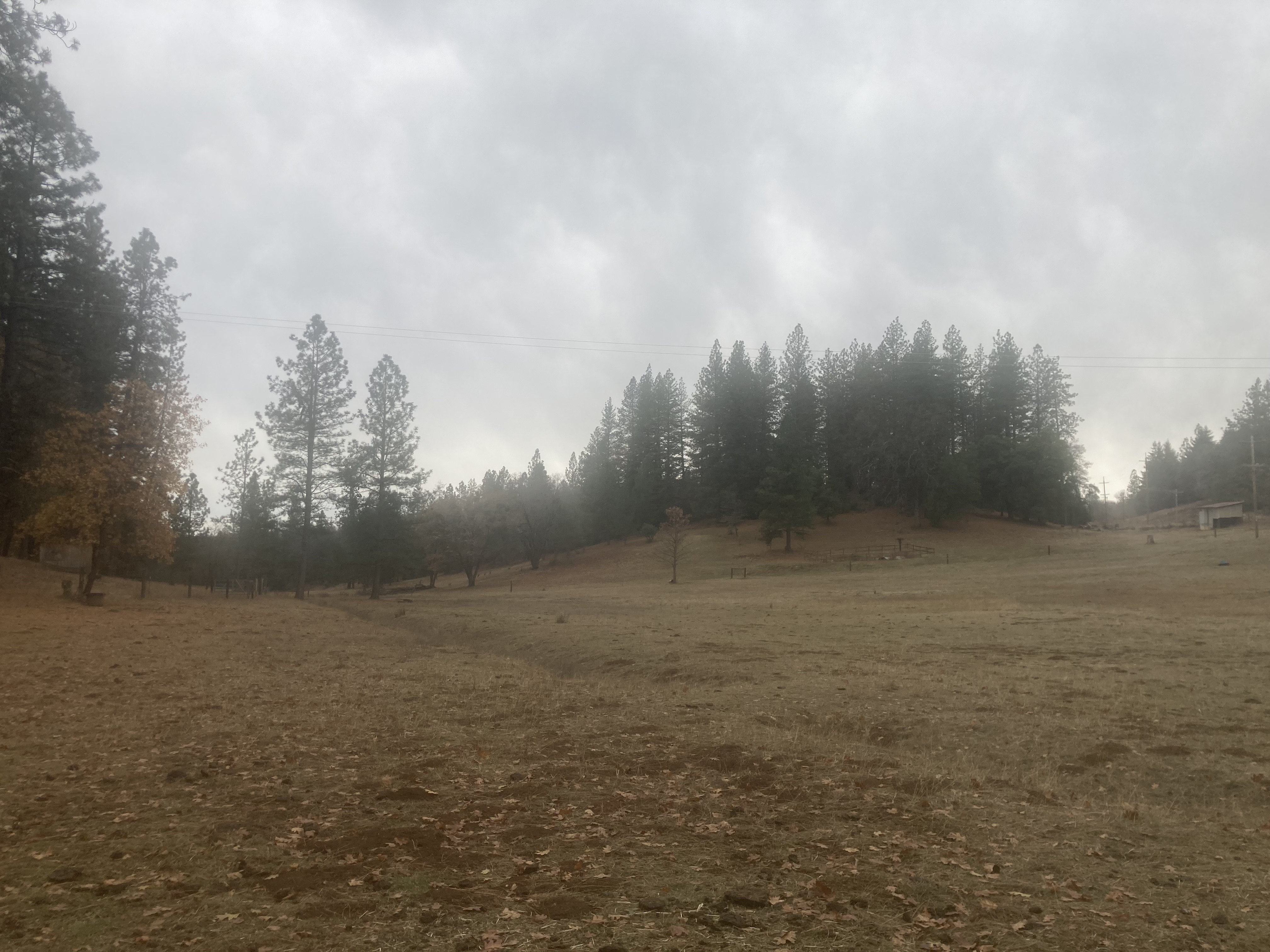
Down the Middle And Lower Meadow...
...and across the road to the Upper Meadow.
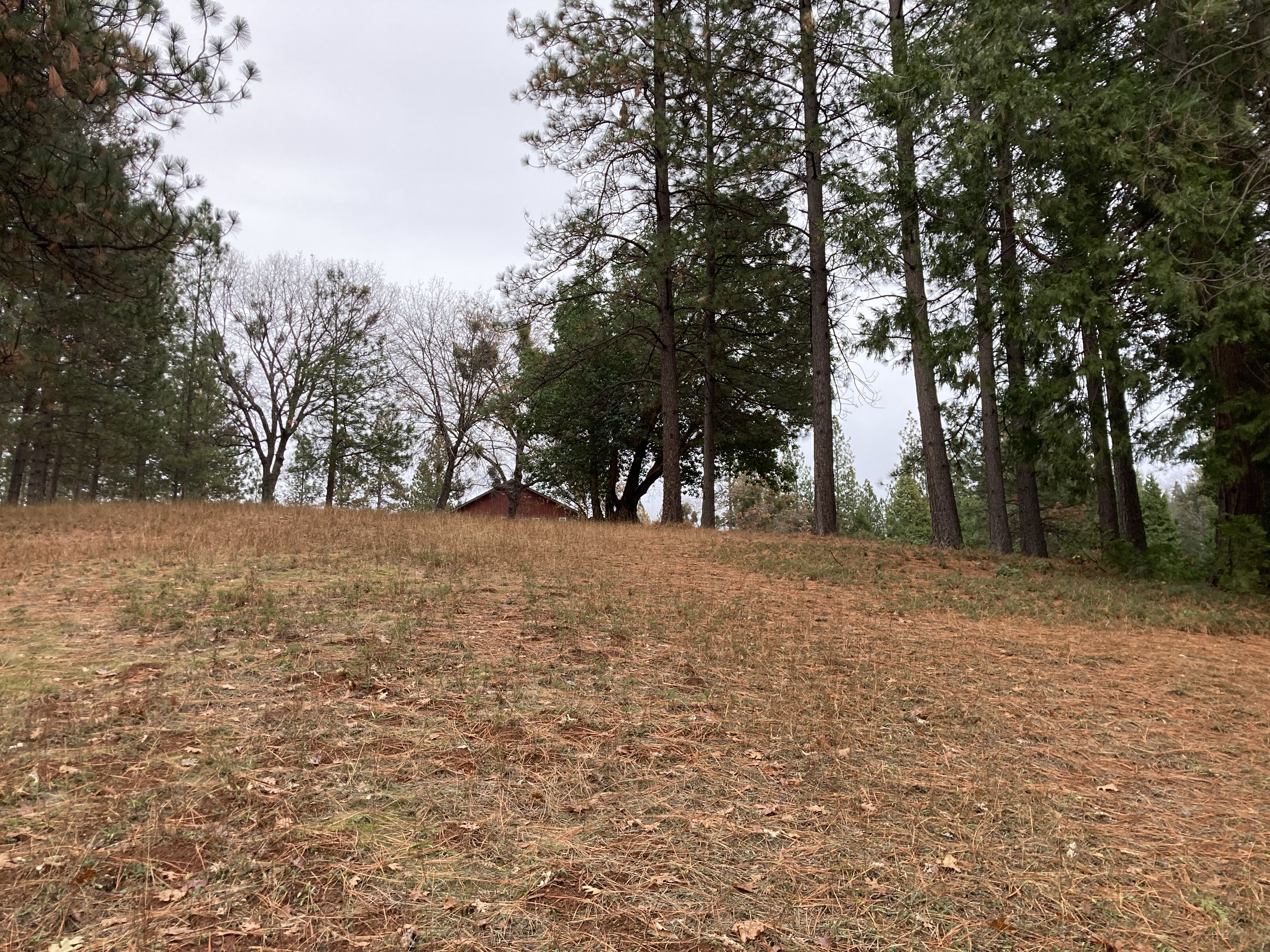
From the top of the Upper Meadow looking back towards...well, really an extension of the Upper Meadow:
The Woodlot: This is second parcel which somehow is almost a third of the value of the entire property (if subdivided). But why would a sensible person do that?
More of the Upper Meadow:
Along the Lower Meadow...
...down the Lower Meadow...
...and back towards the Middle Meadow:
The seasonal pond is filling up again:
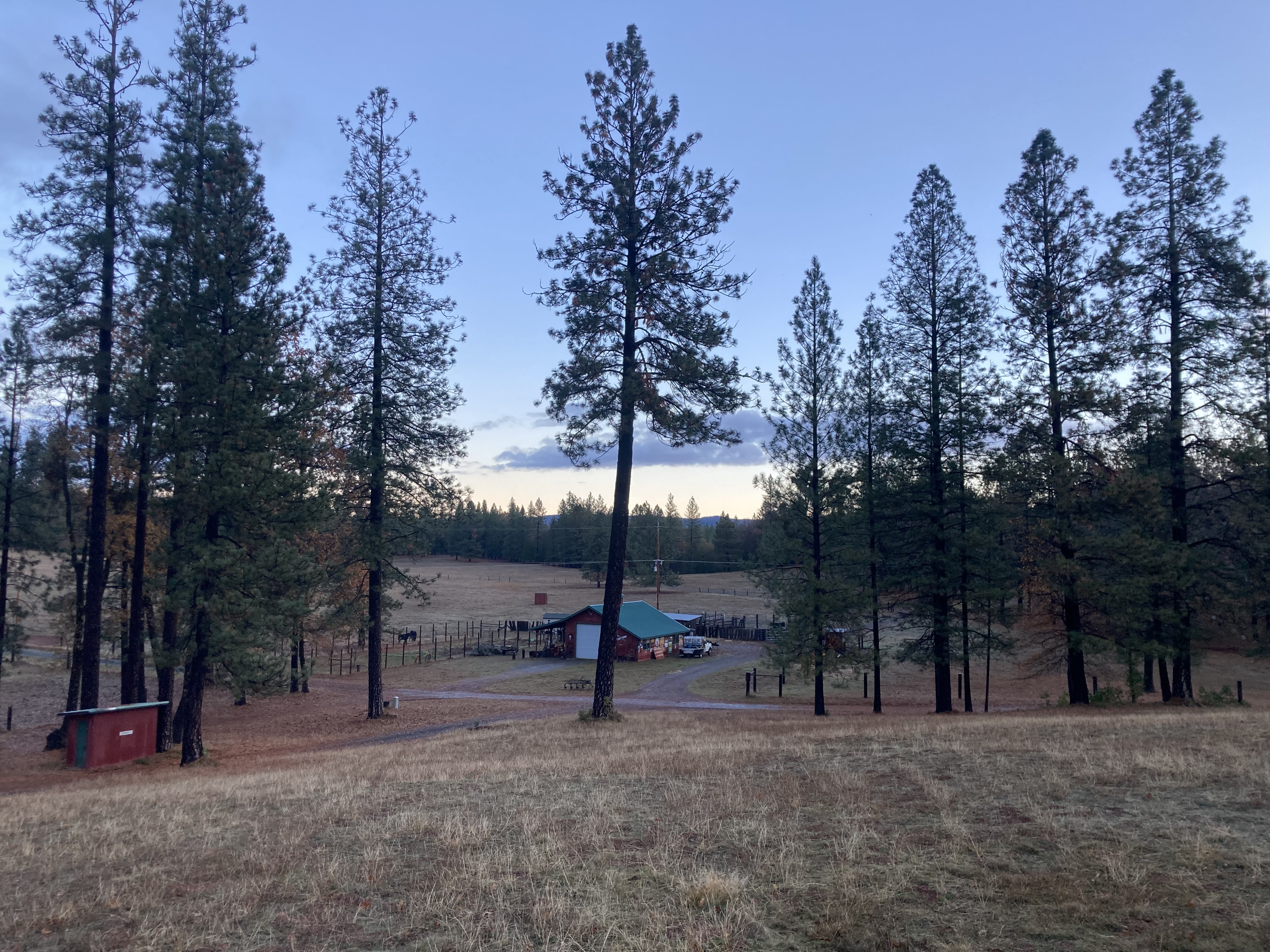
The road back. Technically, this longer way (2 miles or so) is the deeded access to the property:
Climbing Home:
Thursday, December 08, 2022
Assessment, And Best And Highest Use
The assessment of The Ranch is in.
Wednesday, December 07, 2022
Of Small Places And Agrarianism
Friend to this blog Leigh Tate made a comment in the post Of Small Towns and Small Cities that made me think a great deal more than perhaps is wise in the early morning upon reading it:
"It was the connectedness of today's reading list post that reminded me to comment. I sometimes mention agrarianism as a lifestyle, and it is interesting to me that the response is usually a variation of "yes but, not everybody wants to be a farmer." This post reminds me of what I am consistently unsuccessful at explaining, i.e. that agrarianism isn't farming, rather, it's a social and economic structure based on community and the land. The small town is the heart of such a structure because it's there that the community has the potential to to meet its needs. I would like to say that it has the potential to be self-reliant, but I get scolded for that term too, because it tends to be interpreted as isolationist.
Instead, I think I'll say, an agrarian community is more resilient, and able to weather whatever ups and downs happen in life. Of course, this will never happen because human nature strives against it. But I sincerely think it's the way things were designed to be.”
Well, that is a lot for 0500 wake call and cup of coffee, to be sure.
I believe I was originally introduced to the term of Agrarianism by Herrick Kimball (Formerly of The Deliberate Agrarian, now of HeavenStretch), although I really believe I came tor understand it earlier through the writing of the sadly now departed Gene Logsdon in The Contrary Farmer. Logsdon's book was in principle about farming and self-sufficiency, but really what it was about was way of life that both valued the land that enabled it and the small environments that it created and thrived in - the social and economic structure based on community and land that Leigh refers to. In a way, it was a call back to the small place that I had grown up - but really a call back to the small environment that I had grown up in, the place where I felt (and continue to feel) most connected to.
Small communities can be (but are not always) interdependent and resilient. It is not just in the sort of Hallmark-ish concept of "taking care of each other"; it is in the real human connections that come from living and doing business with people that live in the same community that you do. One comes to value that community because in a way, through its success comes one's own success - not measured necessarily in the wealth one possesses, but in the way one feels when one is finished with the day. One has done business - be it a retail enterprise, a farm, or some other interactive contribution - instead of just "commuting to a job".
Interdependence. Resilience. These are phrases we - or at least I - have heard a great deal in recent years. The surprising thing - or perhaps not so surprising - is what this terms have come to mean.
"Interdependence", in the modern parlance, has come to mean relying on the largest administrative body possible. Communities should not be interdependent, states should be. Interdependence is always facing up and outward, not down and inward. Not needing "The System" is seen as rebellious and a bit;ignorant: States need each other because that is the best and highest use of the individual, communities should not to the exclusion of the state but subservient to it.
Resilience is the same. States should be resilient, but not communities. Communities need to look to the state for their resilience and show there dependency on those outside, not generate their resilience internally.
Why is the concept of agrarianism - interdependent, strong communities generally (but not exclusively) practicing agriculture and the basics of living not embraced by those that mouth such words? Because such places are not reliant on the the state that exists above them, are not "plugged in" to the much larger urban units that they are expected somehow to support and defer to. Small communities in the modern world - agrarian communities - are places that should be dying or kitschy places where large urban entity dwellers can go to shop and stay and eat and be catered to, not communities which are not reliant on the larger whole for survival.
I perhaps sound a bit out of sorts by this disconnect between what the modern world says it wants - for example, interdependence and resilience - and what the modern world is willing to accept. My thought is that it is - again - based on the concept that there can be only one "right" answer, the one that is authorized by Our Political And Social Betters (OPASB). Interdependence and resilience must be exercised in the approved fashion, as specified by the experts and accepted by the social masses, not run willy-nilly by people who think they know what is best for themselves.
There is one thing I will say for state-sanctioned or state enforced interdependence and resilience: it is a fragile thing, a tropical flower sustained in an arctic environment only by the greenhouse of the state. Remove that greenhouse - remove the official requirement to make people be interdependent and resilient via laws - and much of those things, I posited, would blow away with the wind of reality. These sorts of things, to last, must come to fruition organically, not enforced.
We live today in a bifurcated world: those that are interdependent and resilient (and this is not always in the "classic" way) and those that believe they are because the state says they are. Let the requirements fall away, and I suspect that true agrarians among us will shine like stars in the sky.
Tuesday, December 06, 2022
Nexus, Thinking And Writing, Chess
In my trip out to The Ranch this month, I picked up a series of books, originally in a sort of random fashion but now, as I realized by unconscious choice:
A Christian Manifesto, Pollution and The Death of Man, The Great Evangelical Disaster, How Should We Then Live? - Francis Schaeffer
The One Straw Revolution - Masanobu Fukuoka
Micro-Eco Farming - Barbara Berst Adams
Atlas Shrugged - Ayn Rand
I am pretty sure my unconscious is done with my conscious and is moving on to resoultion
Clever readers (and frankly, those seem to be the ones that I have) will note a host of themes here: farming and agriculture, the environment, social decay and dissolution, the Christian World View, and effectively how one should live one's life. All things I have written about for years.
This is nexus in which I currently find myself. Or perhaps better to say, this is the nexus I perceive the world around me to be leading to.
-----
One of the things about traveling out to The Ranch once a month is the fact that it disrupts my schedule. On the one hand, it it ensures that I do not make progress in some areas that I regularly practice at New Home - my workouts are all bodyweight, and my iaijustu training is different. On the other hand, it does force my hand to do some things - like reading and thinking - that I somehow have convinced myself I do not have time for when I am back home.
It bothers me somewhat, as I do not read and ponder things nearly as much as I should - not that taking action is not important (it is, and I do not do enough of that either) as it is that without the raw material of thought and words and the time to process them back out into thoughts and words there are no actions. Just a frenzied busy-ness of the moment as I ricochet from one activity to another.
Being at The Ranch - with an almost enforced period of quiet and separation - makes excuses for these activities less acceptable. It is almost as if I have to give myself permission to do the hard work of reading and thinking - and the sort of thinking I need to do is, for me, hard work, the hard work of synthesizing, understanding, and then acting. And it certainly is rate limiting in my quest to understand things - myself, the world, my place in it - more deeply.
-----
I have recently taken up playing chess on-line.
I learned chess years ago - from now, I cannot remember from whom - but left it off not so much from a lack of playing partners as a lack of interest in the game (my interest at the time led far more to role playing and video games). One thing that this left me with was a dearth in being able to understand strategy and plan for the future - simply put, I played chess like I played a video game, thinking maybe one move ahead instead of five or ten, and thinking in terms of tactical instead of the strategic.
That is a problem that has cost me time and again in the real world.
Randomly in one of the advertisements that presented itself on Brave was a chess site. You can play against the computer or against real players. So far I am playing against the least challenging computer construct possible, with all the hints - and still not winning 100% of the time.
Part of the challenge is realizing that I need to see the board as a whole and understand things moves out into the future, not just "do" whatever the hint suggests. I have to understand for myself. As with sword training, the moves in chess are like kata in iaijutsu: the building blocks of which we construct true action.
-----
There is a sense - and I cannot define it fully in myself - that I am "holding back" for some reason. I have no idea why. I have written before of this sense that somehow I need "permission" from someone to take action, perhaps the outcome of many years of being in places where permission from others was required.
Perhaps this - all of this - is simply the unconscious forcing me into a position to give myself permission to act.
"The feeling of the steering wheel under his (Hank Rearden's) hands and of the smooth highway streaming past, as he sped to New York, had an oddly bracing quality. It was a sense of extreme precision and of relaxation together, a sense of action without strain, which seemed inexplicably youthful - until he realized that this was the way he had acted and had always expected to act in his youth - and what he now felt like was the simple question: Why should one have to act in any other manner?" -Atlas Shrugged (Ayn Rand)
Monday, December 05, 2022
December Rain
The rainy season has finally come.
I am grateful of course; we really need rain this year and a great deal of it, and we need it in manageable quantities that will not flood anything but allow it to soak in. The bushes and trees have been showing the stress of the lack of rain.
The rain matches my mood.
Sunday, December 04, 2022
Saturday, December 03, 2022
Redneck Raised Bed: Post-Game Edition
As some readers may recall from earlier this year, one experiment I tried was taking the area that I keep the used rabbit litter in and essentially setting it up as a planting bed as it was already container - The "Redneck Raised Bed":
It seemed like a logical use: good soil substitute, shaded, easy to water with a little ingenuity. I planted sweet potatoes - and they grew, luxuriously all Summer and into the Autumn.
Yesterday - as the cold is finally here - I finally went to dig them up:
Friday, December 02, 2022
A New Knife
I can count on one hand the number of times in my adult life where, walking into a store, an item called out to me with an intensity that was too loud to ignore. This was one of those times.
The manufacturer is Ken Richardson - which, as it turns, out is a real person and a real company. Mind you, his knives are also available in Bass Pro Shops and Cabela's, so the chances he personally worked on this one are rather remote.
The blade itself measures about 5" and it has a fine weight to it (one thing I have come to appreciate from Iaijutsu is balance and overall weight).
Thursday, December 01, 2022
December 2022
And just like that, we lurch into December.
December has come all too fast this year, helped not only by the fact that having a project at work that is consistently driven by "end of the year" dates (so one is always looking to the end of the year) as well as the fact that with an unplanned vacation last week and the expected post vacation catch up, the month suddenly shows up.
And it is already turning out to be busy.
I always think "This December feels busier than most", but I coming to believe that this is more of my memory slipping than anything else. They are all busy, now - perhaps with the different sorts of things than in previous years, but none the less busy.
I am largely convinced that any memories I have of Christmas being a time to slow down and and appreciate the season were somehow much earlier in my childhood and really just reflected a somewhat flawed view of how the world was actually functioning versus how it was functioning. With high school and college it became the season of finals, with work it became the season of completing projects for goals and year end reviews. Add to this our modern penchant of "24 hours a day/7 days a week/365 days a year", and it becomes much less of a season and much more of mad dash to December 25th for a brief rest - before trying to close out everything that was to be done by the end of the year.
I find myself poorer for it.
It is all to easy for me to make or write up a resolve for this year - "I will take it more slowly" or "I will listen to more Christmas music" or something like that, something with good intentions that will go precisely nowhere (even as I write this, vision of e-mails of December yet to come crowd out the sugarplums that should be dancing in my head). So perhaps this year I will try a slightly different tack and simply spend 5 minutes every day doing something related to the season, if it is just listening to a song (without doing anything else) or reading a short story or even looking at an ornament from the past.
It said that Scrooge ended up keeping Christmas in his heart of every day of the year. I could at least try to do for a few minutes in the season of Christmas and go from there.