Thursday, August 20, 2020
The Collapse LII: Seasons
Wednesday, August 19, 2020
Book Review: Gardening With Less Water
The second half of the book - Taking It To The Next Level - covers more extreme measures: Rainwater Harvesting, landscaping to maximize use of the environment to preserve water, and some potential layouts of gardens and farms to maximize water usage. It is all equally as clear, although probably beyond the scope of anything I could or would do at this time. He also has some interesting comments on older civilizations (The Nabateans at Petra and the Anasazi at Mesa Verde) who built thrived in the midst of limited water by ingenious usage of harvesting and targeted watering (I wish the author had spent more time on these. Ah well, a subject worthy of further research).
Frankly, I enjoyed the book. It is clear, well written, and the initial steps he recommends are things I could go out and do tomorrow with minimal cost. I intend to at least try the concept of clay pots in next year's spring and summer garden. He also (very correctly) calls out the rather foolish policy of Utah and Colorado that bans rainwater harvesting.
Of course, like any author, there are things I disagree with as well. He only sees solutions in terms of government action: cities or states offering rebates to perform things like changing to xeriscaping, promoting rainwater harvesting, etc. (that money has to come from somewhere and it is not the government that makes it). He also extends this to globally enacted solutions, something which (to my mind) seldom produces the results that are intended.
But those points are minor in comparison to the knowledge offered in the book - practical knowledge from a man who has done this and experimented with the concepts for years. It is between $10 and $14 online and well worth the price for practical solutions to improve one's gardening and reduces one's water usage and cost of water.
Tuesday, August 18, 2020
The Plague of 2020: A Travel Update
Monday, August 17, 2020
Working From Afar: An Update
I did not announce to my work that I was going (other than I had clearance from my manager to do so) as I wanted to give it a test run and demonstrate to them that this was a thing that could be done without any interruption in my ability to work or do my job.
How did it go? Great! There was absolutely no interruption of service. I responded to e-mails. I was on teleconference calls. I even took calls on my cell phone (turns out you can do that if you set your phone to WiFi). I will check with my manager to see if he noticed any difference in my performance. If not, I think the point is made.
(Also found out this week a coworker in my new department is leaving, so my value goes up a bit. This is also a helpful development.
It is really not all that inconvenient of a schedule either. I essentially go to bed and get up and the same time as when I do at home to keep my work schedule. It leaves me a little more time after work with sunlight - hopefully over time, this can become time to invest in some kind of project.
So Step One: Done. September Trip is already scheduled.
Here we go.
Sunday, August 16, 2020
Book Review: How Should We Then Live?
Saturday, August 15, 2020
Book Review: Retroculture
It was an interesting concept - as someone that has at least a passing interest in doing things with my hands instead of electronically and the sense that I am "out of time" with the current mores and practices, the idea inherently appealed to me. If only, I thought, there was a book on it.
Turns out there is.
The premise of Lind's book is simple: "Retroculture is the discovery of the past and the good things that it has to offer."
Why? "Conventional wisdom says we have no choice but to drive blindly onward into an undefined but increasingly threatening future. Retroculture says "Hold on a minute." We do have a choice. Through a dialogue with the past, we can shape that future. We can find ways, by looking back, to make the future promising than threatening. We can regain control of our destiny. And in the process, we can reunify the generations instead of pitting one age group against another."
(Before someone goes there with all the bad things that the past had in it such as slavery, Jim Crow Laws, etc., Lind explicitly states - multiple times - that those sorts of things are not the sorts of things that he is talking about. He could not state it more plainly. So just let us not have that conversation, shall we?)
Lind notes that World War II was the last era in the U.S. where all generations had the same interests and tastes (I laughed for a moment when I read this - then I thought about it. I think he is entirely correct, upon reflection.). What happened? We moved from a tradition of service and discipline and self mastery to a world of "the rapacious demands of the self". Lind posits that the youth culture of the 1960's brought self to the fore - and when "self-discovery, self -realization, and self-fulfillment" failed, it was replaced by possessions and image: "The 90s completed the work of the 60s".
Lind's book breaks down Retroculture into several areas: Retro-Homes, Retro-Families, Retro-Clothing, Retro-Entertainment, Retro-Manners, Retro-Travel, Retro-Business, Retro-Service, and Retro-America. In each section, he breaks down what a "Retro" life would look like. For homes, for example, the model of older homes (either original or designed as such) with smaller footprints, larger porches, and to the extent that one would desire, retro-appliances and decorations. The same concept applies across all of the section listed.
The implementation is simple enough: pick an era that interests you. Study it. Then begin to bring that era alive in your own life as much or as little as you like.
I have to admit that I enjoyed the book - partially, as I indicated, because I am wired that way. But I also enjoyed it because it is a hopeful book. It exudes almost a utopian appeal, something which I loved (and miss in so many social works). Lind really and truly believes that Retro-Culture can make the world a better place. Other than analyzing how we got here, he scarcely talks in negative tones about the present. His eye is on the past and how it can make the future better. I also loved that Lind does not push an "all or nothing" approach. He states start where you are, with what you have, and to the level that makes you comfortable.
There are parts that I found less appealing, as with any author: his love of mass transit (true, a huge element of the early and mid 20th century) is not something that would feasibly work, nor is his vision of trains as the preferred mode of travel (again, true once upon a time but not workable now with serious private investment). But I would not say that these predilections detracted from the whole; they made the book more authentic.
In the chapter names "Getting Started", Lind motes the following:
"As to the saying "You can't go back", it is a warning, not against trying to recover the good things from the past - which we can do - but against the people who keep telling us we can't go back. Very often, these people have selfish interests in present trends. Some are people whose lifestyles might face disapproval if most Americans return to traditional values. Some have financial interests in rampant consumerism, in selling '"upscale'" goods with "prestige labels". Some work in industries, such as entertainment, that might have trouble adjusting to Retroculture's recovery of good taste. Most of them fear the rejection of "selfism" inherent in Retroculture, because their own lives are very self-centered.
So, when you hear, "You can't go back", watch out. What the person who tells you that is really saying is, "You can go back, and I'm afraid of what might happen to my interests if you do." Be certain you recognize what that person's interests really are - what his hidden agenda is."
Like most such books, I believe the chances of it actually coming to pass are rather small. But as a thought provoking work, both for an analysis of what is wrong with society and how looking to earlier eras might address this, it is well worth your time.
Friday, August 14, 2020
Thursday, August 13, 2020
The Collapse LI: The Outside World
My Dear Lucilius:
Young Xerxes (you will remember him, the young man who had the ATV and the industrious ideas) appeared at my door this very day. It has been quite some time since we had a visitor of any kind, so of course I asked him to step in out of the cold for a while. Even I, from time to time, enjoy conversation.
After settling in and discussing a bit of news about the town - not a great deal you can imagine, as it is Winter: no deaths yet, but potentially a new life which is welcome in this age of hardship - he mentioned that someone in our small burg had a home radio set up and was, at some level, getting some news from the outside world.
As I am sure you are living right now, the news from the outside world is not good.
Most of the communication, Xerxes related, comes from other small operators scattered here and about and the occasional emergency channel. The small operators are scattered away from the urban areas but at least one person continues to operate in the nearest large city.
It is the sort of thing that you are undoubtedly familiar with as well: Starvation. Destruction. Burned out shells of buildings with the population dead or fled. Here, in the heart of Winter, our average temperature is in the mid twenties Fahrenheit so there is little enough movement: people either have enough and hunker down or, sadly, expire. There is no marginal existence here. I remember reading in the histories of Sitting Bull and Crazy Horse of the hunkered down existence the Sioux had during the Winters and how a bad year of buffalo meant a meager existence in the Winter.
In discussing this with young Xerxes, it made me think of one of the fundamental weakness the economy - can we call it our previous economy now? - had, that most all localities were completely dependent on everything coming from somewhere else. Everyone came to assume, of course, that the trucks would always run, the ships would always sail, the trains would always arrive, bringing with them their cargoes of food and fuel and essentials. Most places had a few specialties or things that they produced in sufficient quantities to export, but not enough variety to support a civilization.
But everything did stop. And now, it appears, it will be a great while before comes back.
I thanked young Xerxes and told him to stop by again any time - even this old hermit has come to need a little companionship. I sent him off with some dried fruit for himself and some for the family that had a new life coming - we can all use the calories now, I am sure.
It strikes me as a bit odd that in such a short time, our supply lines have collapsed to our locales. On the other hand, I am sure the citizens of the Roman Empire in 477 felt the same way.
Your Obedient Servant, Seneca
Wednesday, August 12, 2020
Tuesday, August 11, 2020
Book Review: Between Shades of Gray
Monday, August 10, 2020
On Tribes
As a preface to this consideration, she laments how the tribes in her own life have been breaking down over the last few months - and how rather surprised and saddened she is by this.
It is certainly a thought that has been on my own mind of late as well.
It is interesting - when we moved here 11 years ago I do not know that I would have said I had a "tribe". I had a few friends, not as a collective whole group but a series of individuals I did things with. Moving to New Home, as I slowly found activities that I became involved in - Iai, Highland Games - I thought I had found my tribe, both in the physical sense with the individuals I saw physically as well as the connections I made online. Life felt good: I had friends, I had support, I had a bulwark to weather the storm.
But that feels that it has slipped away over the last few months.
The Plague of 2020 has helped nothing, of course. I have not thrown since November of last year and it is quite possible I will not throw again until next year. Iai continues, but due to the Plague we train and then get out as quickly as possible from the Dojo. And online social media connections have become fraught with the danger of the modern era: on the one hand, saying anything is likely to lead to issues; on the other, many people do make comments and suddenly the 10% of things you shared in common becomes buried beneath the 90% that you realize you do not agree on.
Suddenly, those tribes you built have essentially evaporated.
My choices are threefold. The first is simply to continue on as if nothing has happened, that those tribes still exist as they did - difficult, because I know that to not be true. The second option is to let those tribes go and possibly build another one based on actual needs and interests, not the perceived ones - although I question how much more successful this would be than before. The third, of course, is simply accept the isolation and prepare to go it alone.
I am not yet clear on which makes the most sense.
The one thing that I can come out of this with that makes me a bit happy is that I have discovered a tribe of sorts - you, gentle readers, and those that write the blogs that read and follow. We are certainly much more of the same mindset than many others in the past, and although all of you are far away, we still manage to give some form of moral support and practical advice.
So maybe the choice is a bit easier: a form of going it alone in the immediate vicinity but knowing that there is a community, out there, backing me up.
In a world of dissolution and abandonment, maybe this is the best we can do.
Sunday, August 09, 2020
Do Not Wish (And An Apology)
Saturday, August 08, 2020
Reaping And Planting
Friday, August 07, 2020
Meet A
A quick trip to the store for litter and food later, he was crouched behind the bathroom door, hissing and growling at every opportunity. The food I brought was devoured when I was safely out of the room; the litter box was used. He had poop on his back legs and an obviously prolapsed rectum.
This went on over the weekend: we went in, he hissed and growled, but would let himself be pet. Nighean Dhonn went in to read to him to get him used to a human voice.
Over the weekend we kept trying - at one point he completely disappeared from bathroom and we tore the house apart looking for him (turns out he climbed under the bottom drawer of our bathroom sinks and drawers where there was a space; we would not have found him but Poppy the Great did).
Suddenly, he started purring.
After that, he never growled again. Only purring, only ever so happy to see anyone - so happy that he won the heart of The Ravishing Mrs TB (who apparently was looking at kittens unbeknownst to me).
A small investment at the vet, two time medication applications daily, and multiple butt washings later, he has moved his way into our home. Poppy The Great is almost overwhelming in her eagerness to meet him (mostly she just licks him over and over). Every time we go into the bathroom, he is always there, purring and ready for a pet (or, more recently, to attack your leg).
Thursday, August 06, 2020
The Collapse L: The Coming Of December
01 December 20XX
My Dear Lucilius:
And just like that, December has arrived. Or at least has arrived chronologically, if not quite in my heart.
I find myself torn over this. December holds a great deal of religious importance to me as well as personal nostalgia, yet both aspects have been downplayed in the last several years to the point that I am surprised how I feel about them this year.
Like so many other families, we had bins and bins of Christmas related items. Every post Thanksgiving I would march up on the roof and festoon Christmas lights over the edges of the front of the house; every post Thanksgiving Day when the tree arrived I would wrap it in the lights that were decided upon for that year. My wife and my daughters would follow with the ornaments on the tree and decorations throughout the house.
After my daughters moved out on their own and (even more so) when my wife passed away, all of that ended, of course. My daughters came and took the items that meant something to them; I purged myself of lights that would no longer wrap trees or garnish roofs. I kept two sets of things: the first was a set of homemade plaid ornaments strung on jute twine my wife had made when we were first married and had cats which would attack the Christmas trees; the second were her collection of crèches (Nativity scenes).
Over the years, she had collected any number of them from all over the world. There were simple ones carved of wood and fancy ones elaborately painted. There were ceramic ones and a fired clay one and two that were children’s displays. There were very traditional ones based on the cultures they came from and what one would consider a “classic” one from when we were growing up. There was even a metal one with pieces three feet high.
These, I kept.
Part of it, of course, was simply that the religious aspects of Christmas have been so downplayed in recent years that they were just as likely to be thrown away or destroyed as they were to be used (and some of them were very fragile, of course). The other is that these were the Christmas items my wife treasured and always made sure were prominently displayed as anyone entered our home.
I have put them up every year at Christmas since I moved here, scattering them around the house on the bookshelves and hanging the plaid ornaments from shelf to shelf as well. It was never a full Christmas of course – it is not as if anyone has come here for the Holidays since I moved – but it did bring a little bit of the holiday spirit into my December.
It is odd to me, Lucilius, how the traditions get started and once they are started, how hard they are to let go. There are no stockings to be ransacked early Christmas morning; Christmas cards have in general become things of the past let alone the dwindling contact list of a widower; and the only presents that are under anything are the small snacks I buy for the rabbits and whatever I have purchased for myself.
I suppose there is a fair case to be made that this pushes me back towards the original importance of Christmas as the celebrated date of the birth of the Savior, stripped of every sense of commercialism and popular culture. If you think about it, the greatest shopping day of the year – Black Friday – did not happen this year and may likely never again happen in our lifetimes.
The Nativity Scenes, of course, help to keep me grounded in the reality of why we as Christians celebrate Christmas. Each one is an interpretation of that event, still here after the crass commercialism that had become the modern world has collapsed and blown away. The stars that shown over Bethlehem still shine over us today, even if the entire human culture and structure around it have collapsed.
The plaid stars, of course, just hang and any light that they shine is in my heart and memory.
Your Obedient Servant, Seneca
Wednesday, August 05, 2020
Tuesday, August 04, 2020
On Steel and Social Internets
What a strange and wonderful sensation that decision was.
Strange, in that I did not get the usual "Thumbs Up" and supportive commentary that I had in the past when I posted such things. There was no instant feedback loop telling me that I had done something good.
Wonderful, in that I found that I was reclaiming a very small piece of my privacy and independence back.
That small spark - of doing a thing and not essentially advertising it to the world - meant as much as actually completing the works themselves. I had done something and the world did not immediately know about it.
It brings up the actual idea of having a private life, a life which belongs to the individual and is not demonstrated to the world at large (just as it is not tracked, monitored, or surveyed). The doing of things, the making of things, the sharing of experiences which is either kept or shared as one wills, not as a demand or an expectation.
I have blogs I follow that share a great deal about their lives and their activities. I have blogs that share almost nothing beyond what they are writing about. In either case this is okay as the individual is making the choice to share what they wish, not because they are driven to by some neurological need for approval or demand of a larger media, audience, or authority that says "You must".
The idea is not original with me, but I would argue that the true wealth of the "Brave New World" will be the ability to which one is able to have a life which is private, where one can do and go and be without having to navigate the social pressure of "posting everything" nor of the tracking of what one does. Like all other things in the modern world, this is much more difficult than it used to be. But one does not have to make easier by simply acting without thought.
Perhaps not posting pictures of coal, fire, and steel represents no great act of civil disobedience. On the other hand, at least for me, perhaps it does.
Monday, August 03, 2020
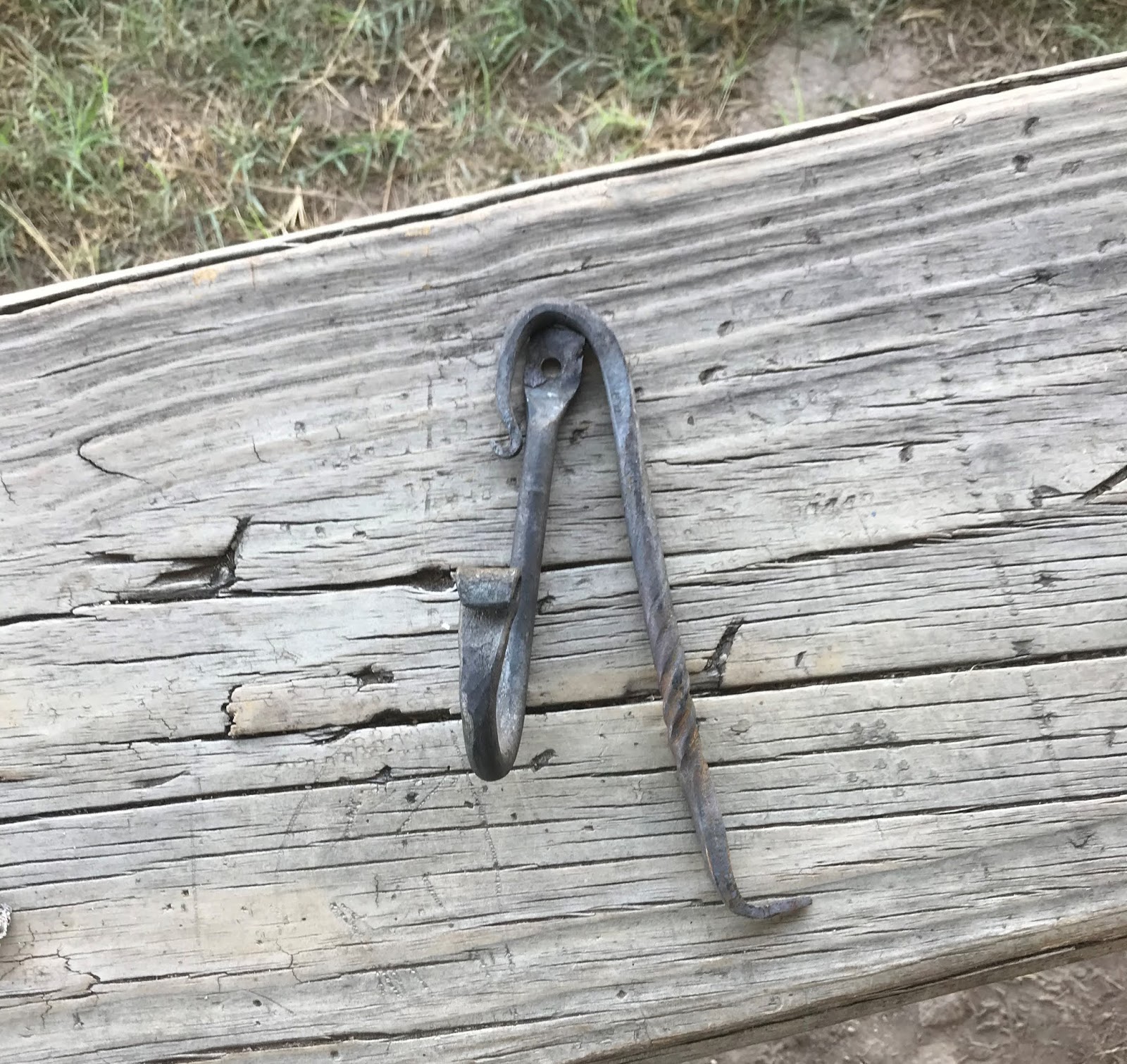
A Weekend Of Blacksmithing
Sunday, August 02, 2020
The Great Day Of Failure 2020
Today is August 2nd, or Failure Day - hereafter known as The Great Day of Failure (sounds more majestic, does it not?).
The Great Day of Failure commemorates the day in 2005 when The Firm, the real estate company that I and a friend had founded, was dissolved due to the fact that we were not at all successful financially and needed to do something else.
If you have never failed a business, or had the exquisite pleasure of realizing that your financial decisions have put you and your family at significant risk and that if you are extremely lucky, you can find a position in an industry you swore you would never go back to - well, I will not tell you that you have not lived, but I will say that you have spared yourself a very peculiar type of humiliation.
So once a year, I celebrate not only this failure, but all the failures of the past year - not because of the failures themselves per se, but because in many cases failures in fact represent the willingness to try something different and new and it did not go as well as intended.
This year, of course, we celebrate my failure in my work position which led me to a whole new side of my industry and, from what I can see right now, ultimately a very different way of life. We also have at least one yogurt failure, two cheese failures, a rather lackluster response to my lawn restoration attempts, my (in process but most likely) continued attempt to try to grow corn and most beans when really I should be growing black eyed peas and sweet potatoes, my on-line attempt to do Italian, and (through no fault of our own) our failure to go to Italy due to The Plague of 2020.
For me, this has become a helpful exercise in looking back over the past year, realizing that failures do happen, and rather than letting them collect all through the year and become something I gnaw over in my mind time and again, just let everything come together on one day, look at it, catalog it away, and then move on for the following year.
So Happy Great Day of Failure, friends. May your failures be massive but not harmful, and may the failure in everything new you tried be a badge of honor for you as you enter the next year.
Trust me, there are plenty of new ways to fail.