The Fairy Chimneys of Kapadokya (Paşabağlari Örenyeri) refer to a unique landscape found in Kapaokya.


An excellent picture showing the various layers of rock:


Balancing act:


Oftentimes these reminded me of mushrooms:

The Fairy Chimneys of Kapadokya (Paşabağlari Örenyeri) refer to a unique landscape found in Kapaokya.
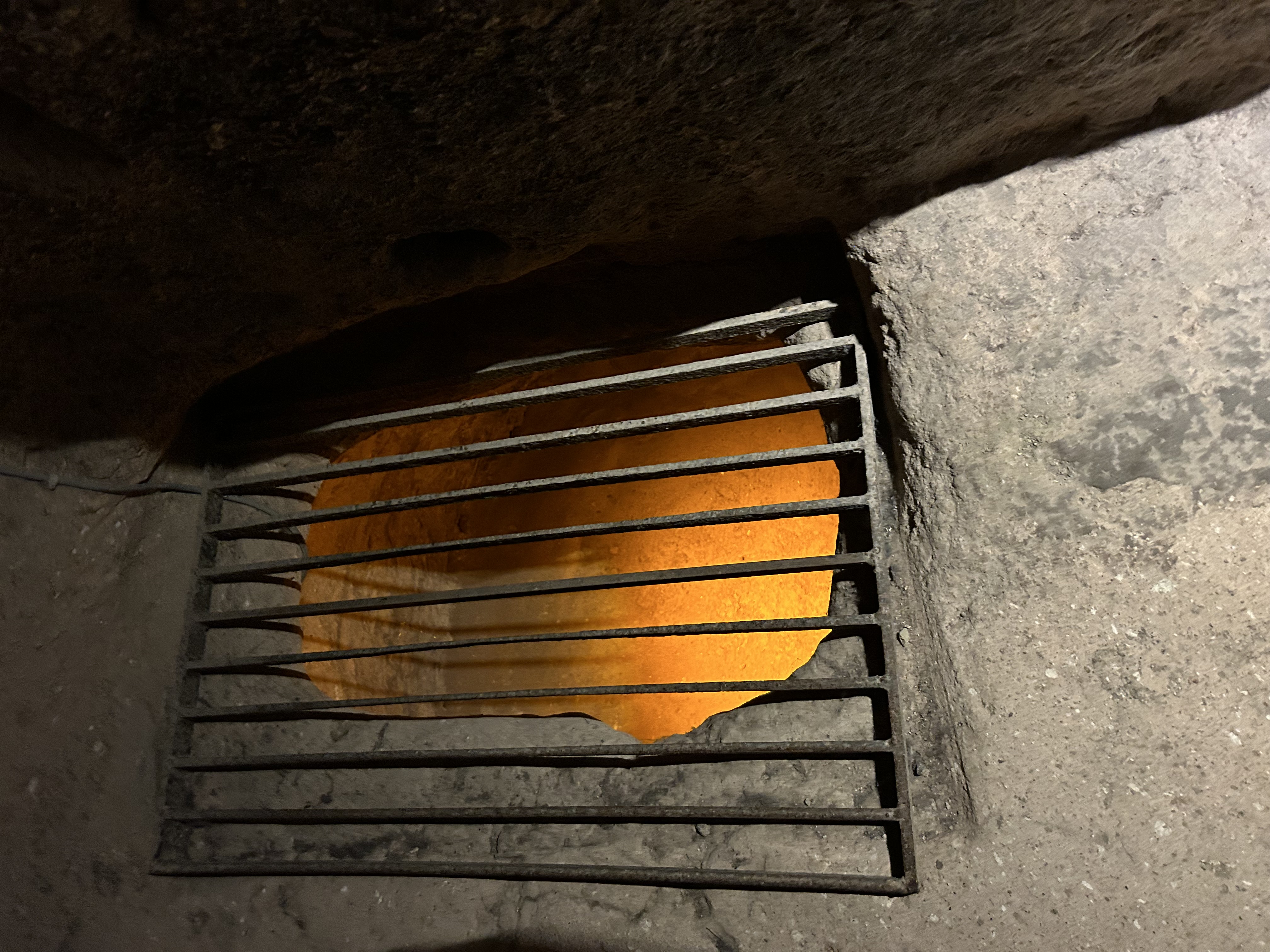
In 1972 a local farmer in Kapadokya, Latif Acar, noticed that excess water from his fields was disappearing. He was curious and followed the runoff to an underground room. That discovery led to an archaeological expedition, which rediscovered the city of Özkonak.




(Author's note: As part of this visit to The Ranch, I stopped by to see my Aunt Pat, whom you have very kindly been praying for/thinking good thoughts for. Imagine my surprise when she opened the door! She is doing much better, to the point they are thinking of moving her off hospice. Thank you for all of your kind thoughts and prayers.)
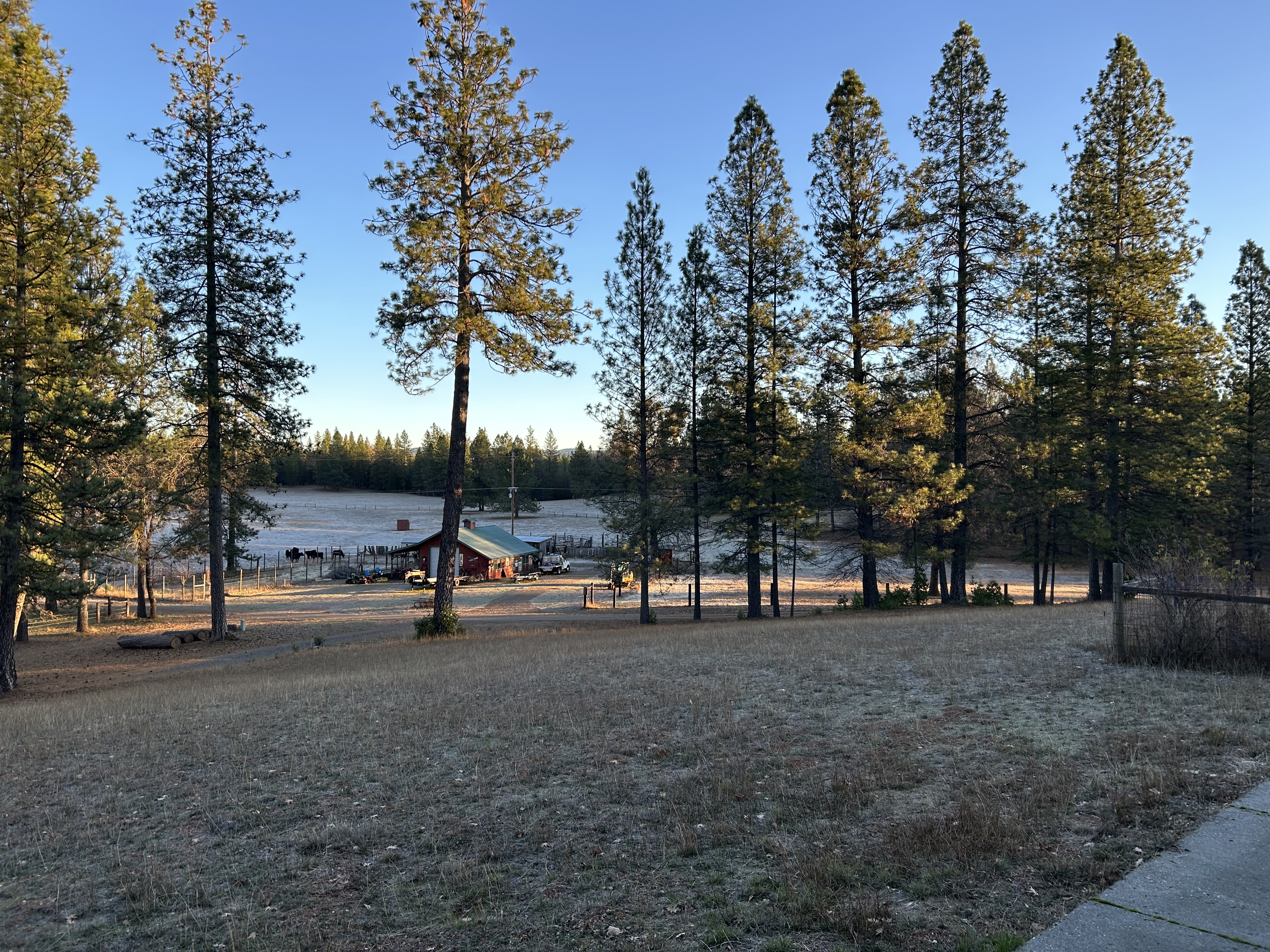
Two weeks ago, I completed the sorting of the last of the materials at The Ranch.


And somehow, suddenly find ourselves at peace.
Were you to reach for your New Strong's Concise Concordance of the Bible (King James Version) and turn to page 311 (1985 edition), you would find that the words humility and humble and their various forms (humbled, humbldest, humbleness, and humbly) appears around 70 times. For reference the King James version (1769 edition) has 31,202 (or so) verses.
Were you to sit and count the references, you also find that of the 70 listed, only 15 of them appear in the New Testament. Matthew 18:14, Matthew 23:12, Luke 14:11, Luke 18:14, Acts 20:19, 2nd Corinthians 12:21, Philippians 2:8,. Colossians 2:18, 2:23, 3:12, and 3:18, James 4:10, 1 Peter 5:3, 5:5, and 5:6.
Even if you allow for different translations using the word "humility" and humble" more or less based on the translator, that seems like an incredibly small number for something that has become such an important part of Christianity.
John MacArthur, in his "Topical Index" in the MacArthur Study Bible, gives a hint of might lie underneath the difference between what appears as text and what is an integral part of Christianity.
Beyond just references to the appearance of the word (as presented above), he also has a category named "exemplified by", and then lists various people of the Old and New Testament which demonstrated the concepts of humility, even if the word "humility" or "humble" was not specifically mentioned - and Christ gets His own section on this.
Suddenly for me, this changed how I viewed humility in terms of Scripture. While there are many admonitions - do this, do not do that - humility is a virtue that is just as much lived out and demonstrated as it is defined. And perhaps this is the reason that it does not appear so often yet permeates Scripture: the examples of humility are so present (especially in Christ) that the writers of Scripture did not feel the need to mention it all the time.
Humility, then, is as much a thing that we live and are defined by as it is a quality that we have.
Friends - As you read this missive, I am either getting ready for or on my way (via ground transport or air) to Japan for martial arts training.

The training venue, as in years past, will be in Katsuura, a town located on the southeastern coast of Japan about 1.5 hours from Tokyo via train in Chiba Province (also, apparently, the home of the second largest fish catch in Japan). We will be there for 4 days, after which we will move back to Tokyo for the remainder of our training.
I know what you are thinking: "Given the year you have had - moving, re-orienting your life, already taking a pretty big vacation last year to Turkey, and (frankly) a drop in income - is this really the best idea right now?" The sensible answer, of course, is "no" - but sensibility seems to have abandoned this vessel some months ago (if it helps, the flight was purchased with points).
I had not necessarily planned to go this year, given all of the items that above. But then the e-mail came out and thinking through, the answer became "Why would you not?" For all of the reasons that I listed, the facts remain that my Headmaster is growing older and opportunities to train with him are rare enough that any opportunity to train directly with him should be sought out as much as possible.
When I say "train", it is exactly that: we will training 7-8 hours a day Monday through Wednesday, likely Thursday morning and afternoon (after the training ride to Tokyo), 6-8 hours on Friday and Saturday, and a trip on Sunday to the Japanese Old Martial Arts demonstration (Old in the sense of being founded before A.D. 1600) . I reliably get a little "free time" on Monday in the morning following, before we have to fly back.
I say we. The Ravishing Mrs. TB, finding herself between jobs, is flying out with me. She will meet Nighean Gheal who is coming in from South Korea (it is the equivalent of their "Summer Break" and they will spend the week in Tokyo.
As per usual on these things, I have provided a series of posts but responses will likely be delayed.
Enjoy life, and be good to one another. See you on the other side.
Your Obedient Servant, Toirdhealbheach Beucail
If there is such a thing as an Essentialist, there must be a thing as a Nonessentialist.
There is, says McKeown, and he knows too well of it. He has a story in his book to tell.
In his case it was a choice between staying with his wife a few hours after the birth of their child and attending a meeting with a client. He attended the meeting. His colleague told him "They will respect you for this". The clients' reaction at his presence suggested that they did not. What was worse is that the meeting ended up mattering for nothing at all. The once in a lifetime moment was gone and would never return and what had replaced it was without consequence.
In thinking about this, McKeown realized a truth that has been said many times and many ways: If you do not prioritize your life, someone else will.
Why is this? This became a core of his thought, and how people succeed - Essentialism - his life's work.
In working with his clients, he realized a second truth: Pursuing success can become a catalyst for failure, because our pursuit of success can blind us to our real priorities.
The progression is easy enough to imagine; I am sure it has happened to many. We do a good job and are successful. In our success, we are given more options and opportunities. We take those options and opportunities and spread ourselves thinner and thinner. In the end, we are working on everything but our priorites.
There are three elements in the world, suggests McKeown, that lead to Nonessentialism:
1) Too many choices - "We have all observed the exponential increase in choices over the last decade. Yet even the midst of it, and perhaps because of it, we have lost sight of the most important ones". The growth in choices, he says (quoting Peter Drucker), has created the situation where more and more people have choices. And by having choices, they have to manage themselves. And society is not at all prepared for it. We are unprepared because..."for the first time, the preponderance of choice has overwhelmed our ability to manage it." We become so overwhelmed that we develop "decision fatigue", the inability to filter out what is important and what is not.
2) Too much social pressure - Simply put, it is not just that we have more choices, it is that thanks to technology we are now more exposed to more decisions and outside influences. We therefore suffer not just from an information overload, but an opinion overload as well.
3) The idea that "You can have it all" - It is not a new idea of course; Western business and corporations have been peddling it for years. The idea that you can do everything: career, family, hobbies, religion - everything. We write job descriptions this way, our advertising is aimed at people this way. Our technology enables this by 24 hour/7 day/365 day a year access to information. We no longer talk about a priority (as we did from the time the word entered the English language in the 1400's) but we speak (since the 1900's) of priorities. The "one big thing" became "the several big things".
And so we try to do it all, making trades at the edges. When we do not choose purposefully and directly, says McKeown, other people will choose for us. And since we have lost the idea of what is a priority, everything - the important, the unimportant, the trivial - all become mixed together.
He closes this section with a quote from an Australian nurse, Bonnie Ware, who cared for people in the last twelve weeks of their lives. The biggest regret people had: "I wish I'd had the courage to life a life true to myself, not the life others expected of me."
This, suggests McKeown, does not happy naturally. We will have to choose.
---
Thoughts and Application:
It is not just life that causes us to be overwhelmed by choices, it is the very culture we live in. Capitalism abounds in the idea that we can have almost everything we want. We are given a hundred choices for the simplest of things.
Take shoes. When I was growing up, I had such large feet I only ever had one choice through the 8th grade: Keds. The years New Balance started making wide shoes was the year my life changed. Now, just with a quick look on The Large InterWeb Retalier, the search term "men's sports' shoes" draws in over 20,000 results.
As noted above as well, society serenely tells us we can have it all. Our employers do. Our government does. Often, much of our religion does. In every way, we "live" in a world of "we can do it all".
We cannot of course - something that I have to learn time and time again. And what is worse, the precious time and energy wasted on those choices that went nowhere - the sacrificial after hours work for projects that failed, the time and effort spent impressing people that did not matter, the hard coin spent on things that we thought would matter - is gone and can never be recovered.
We cannot do it all. We simply have to choose, not matter who or what entity tells us otherwise.
10 October 20XX+1
My Dear Lucilius:
A saying that I do not think I ever recall being explicitly spelled out in any book but underlying so many of them that I read in history and philosophy is that you can tell the nature of a state or nation by its system of justice.
That is, if you can understand or even recall it.
The details of the immediate future were set out yesterday with relative ease. I asked for (may I say “decreed” now, as I am acting in a legal capacity) a day to review the structure that needed to be in place, then the trial would start the following day. By that time I would have figured out the nature of the trial.
The accused needed to be held until trial, of course. This in itself created a bit of a stir, as one sided wanted him clapped in handcuffs while the other wanted him free on promise to appear. I struck a compromise, having him stay – uncuffed in the now empty post office. It seems that Young Xerxes had arranged a guard of sorts by cleverly having one representative from each “side” be on watch together. Perhaps not ideal, but it was likely for a short time only.
Today, then, was the structuring of the trial.
It is an odd thing, Lucilius: in all of my books I have few on the former justice system as it existed a little over a year ago: a smattering of American history and one on state legislative procedures. The rest of my works which have any sort of relation to legal systems are the histories and speeches and writings of the Greco-Roman era – which while interesting, do not provide a great deal of idea of structure as the writers assumed that the readers knew the structure. Helpful I guess, although how to declaim in the Athenian Assembly was not really what I was hoping for.
Which leaves me to my memory, which seems to be a spotty guide at best.
There is no “corpus of law” here now, no decisions with precedent – the older records remain locked away in courthouses or on dead servers. Kentucky City, being the county seat and relatively close, could be a touch point for law – if I could get there and back and again and know exactly what I was looking for in the law books.
At best I can come up with a structure of the accuser and the accused, an advocate for each, the calling of witnesses, a bailiff or two to manage the court, and a note taker. I had Young Xerxes carry word to each side of their need for an advocate. The bailiffs...I asked Young Xerxes to find one or two of the men that had gone to McAdams. There was no sense in him carrying the whole load.
Beyond that basic structure, Lucilius, I only trust to common sense, common decency, and what I believe to be the point of The Great Lawgiver in His book.
None of this comforts me that right decision will be reached – but at least, perhaps, we can avoid some level of vigilante justice borne of passion and anger and no other alternative.
Your Obedient Servant, Seneca


We then walked through their workshop. The gentleman below is decorating the piece - by hand. He has done this kind of work for 40 years; this was to be one of his last pieces. Due to the concentration and detail, he can only work two to three hours a day on it.


Along with rug weaving, I gained a new appreciation of ceramics and how they are made.
During our trip to Kapadokya, we stopped a rest stop which had both a view and a lot of tourist shops. Such things are not, I suppose, uncommon in most tourist based countries. But the view from here was really spectacular.


