One of the reconstructed portions is the consultation rooms. Patients would go down these stairs
and through this tunnel
Remains of the main part of the temple:
One of the reconstructed portions is the consultation rooms. Patients would go down these stairs
and through this tunnel
The Kingdom of Pergamon (Pergamum) originated as the city of Pergamos, which we have attestation to in Classical Greek times through Xenophon's Anabasis. Its rise as a kingdom dates to the period following the Wars of the Diadochi (The successors of Alexander the Great), when a lieutenant of the general Lysimachus founded the Attalid dynasty, which declared itself a kingdom after the victory of Attalus I in 238 B.C. over the Galatians, a Celtic force that had made its way all the way to central Anatolia (and, by the way, gave us the book of Galatians in The Bible).
![]() |
| Kingdom of Pergamon circa 188 B.C. (Source) |
Working on updating my 2024 "Books read" list (currently sitting at 93 books), I came across my 2024 goals created last year in December and January.
I had a pretty good laugh about it.
Every year I create a file on my computers entitled "20XX Goals". It becomes the repository for the initial goal planning for the year, which then gets printed out and pasted into my notebook and can then be updated as needed based on "changes" - for example, in 2024 I the initial writing and then 5 separate updates following that.
Most of the goals tend to be the same over the years - perhaps a note of the fact that I do not make progress in them as I should or I am not good at making them. I note under the "Career" aspect, it simply says "Find a Job."
The real hilarity comes in when I review my 2023 goals, made in the December/January time period of 2022. These have some of the lofty and expansive goals of the halcyon days, prior to everything completely changing. I have multiple-year study programs and big projects and the completion of all kinds of things on there.
The reality of all of this, of course, has turned out to be far different than I could have imagined.
This is true if I continue to go back and re-read previous goal setting as well (on this computer I have them all the way back to 2015; in my analog notebooks I suspect they go back to the mid 2000's). Were I to look at them again, there would undoubtedly be some in there that are more or less consistent through the years and some that were new based on completely moving in 2009. In a way, they are a testimony to how highly one can think about one's self: I am pretty sure that "Attending World Highland Master's Games" is on there, as is "Being wildly successful and retiring" and "Being a best selling author" as well as more prosaic goals such as "weighing less" and "being great" - after all, according to experts if you do not set those Big Hairy Terrifying Goals, you are not really going to do anything of worth.
The reality, as you who have been on this journey with me (sometimes for many years), has been completely different.
One of the things I have come to realize is that whether from years of being uptalked or simply having a "greater than I should have " self confidence, I somehow managed to adopt feelings of grandeur. Part of this, I suspect, is due to the fact that learning and reading came very easy for me - and I knew it. The other part is the fact that, whether by people looking out for me, design, or simply dumb luck I often managed to avoid the impact of bad decisions until later in life. The combination of these factors gives one a skewed view of the world and one's place in it: not everything in life comes easily and simply put, we really cannot just "be" anything that we want to be, at least without real costs that sometimes manifest themselves years later. Nor do we have the ability to plan our lives based on the outcomes and actions of others, who have their own plans and agendas which may or may not coincide with ours.
Too often we believe ourselves to be the main characters in the play, not realizing that we are just as likely parts in the plays of others.
I will go through the exercise of goal setting again in December - I always do and at least for me, it helps me to focus my direction and intentionality somewhat. The difference this year will be knowing what I know now - mostly the fact that life really can change on a dime and at best at this point I really am a supporting cast in the plays of others - I can perhaps set goals more in line with my actual position and station in life.
Aiming at the stars to hit the moon is good, I suppose. But sometimes walking under the moon and stars gives a perspective that hurling through the sky can never provide.
(Editor's note: Prayer ask, please. I received a call from my cousin today. My aunt (my mother's brother's life) went to the hospital yesterday for jaundice. They diagnosed her today with Pancreatic cancer, stage unknown at this point. Prayers and good thoughts for Pat would be deeply appreciated.)
As I continued to sit and think about the cost of how much I spent to feed myself, it ran in some interesting questions. In fact, in made me realize how little I tend to buy at all at this point.
For example, clothing. I likely have enough clothes to last me the rest of my life - for almost every situation. Other than those things that tend to wear - socks, underwear, even jeans - the only sorts of clothes I would buy are those sorts of things that tickle my fancy (vests and vintage Japanese kimonos fall into this category).
Books? I am always up for another book, but in point of fact I am always up for another book. Can I make a solid case for needing another? Errr.....
The rest of the things I might purchase fall into the category of occasional needs: the unfun things of life like household cleaners or an oil change or new tires or pet food (and a surprising amount of pet snacks) - at some level things I must have to accomplish a task.
A reduced income helps with all of this prioritization of course, both in determining what can truly be afforded as well as making a sincere effort to extend whatever one has to the maximum extent possible.
For myself of course, there is little "concern": I am perfectly happy living this relatively simple version of reality. But what, I wondered, are the economic impacts of such a lifestyle. What would the impact of hundreds of thousands or even millions living this sort of lifestyle be on the economy?
The best figure I could find at the time of this was that 80.2% of the US Labor force is in Services and 18% are in Manufacturing (Thanks, Wikipedia). I am not quite sure what that actually breaks down to in real life, but the old saw of 70% of the American public working in retail or services may not be too far off the mark. So what happens if the American public seized up on their spending?
We have seen an example of this in the past, of course: The Plague and its results. I do not have a lot hard data on the total loss of jobs and industries (it seems a bit hard to locate on a quick search, oddly), but colloquially we all know of people who lost their jobs or even their businesses. In that case it was because of government mandates; what would it look like if it was a voluntary action?
I have no idea, of course - but I can imagine. Businesses would close - those that were totally discretionary in nature first (restaurants and entertainment venues come to mind here), with escalations from there based on need: most need a haircut at some point and places that supply basic parts or materials like auto parts stores, grocery stores, or farm supply will likely be higher up on the list than designer clothes stores (or malls in general). And likely the government at some point would get involved as well - after all, those tax dollars do not generate themselves. I can see our political critters as well as "key influencers" out there telling us that spending money is the patriotic thing to do.
Is it? I am not sure. I suppose it depends on the definition of that sort of "patriotism"; to me more and more, it seems much closer to home.
Last month I decide to make mercimek köftesi, those delightful little lentil and bulgur appetizers from Turkey. The pictures below is how the actually appeared.
The picture below is how mine turned out.
While the flavor was not, so far as I remember, like what we had in Turkey (Mine had bit too much onion I think) it was none the less more or less on the mark.
I ended up making 28 of them. 4 of them is enough for a meal. On a bit a of a lark, I wondered how much the meal cost me. I added up the cost of the ingredients - lentils, bulgur, tomato paste, onion, green onion, a few spices - a total of $4.67. Divide by 7 (the numbers of meals I got out it) and that was $0.67 per meal.
What an interesting thought exercise, I thought to myself. I wonder how much I spend on meals. overall.
My diet has changed somewhat since I start fully living here in New Home 2.0, partially because of the fact that I am an inherently lazy cook that opts for the least amount of time and energy cooking and partly because of the fact that by accident or design (or both), I am trying to lose some weight for health reasons - and, of course, with money being a bit tight, being sensible about my meal planning is helpful. As a result, I tend to now eat a lot of dairy (I always did, of course) and more vegetables and fruits - and less meat. In fact, outside of some salmon last Friday, I do not think I have had meat in almost a month.
Breakfasts remain the same for me five of seven days a week: oatmeal, yogurt, coffee, protein powder, and vitamins. The other two days are dairy free so no yogurt or whey with more oatmeal. Cost of these meals is $3.05 a serving ($1.75 on dairy free days). The protein powder is my big extravagance (almost half the cost of breakfast), but worth the amount of protein it has for the calories.
Lunch is almost always the same now as well: spinach, homemade bread, homemade cheese, apple, fruit (currently mandarins as they are on sale), carrots, and almonds. Cost is $1.69 with dairy and $1.43 without dairy.
Dinner always has romaine lettuce, croutons (one serving, or five croutons) and a tablespoon of red wine vinegar. The main dish varies: it can be mercimek köftesi as above or eggs (2-3) or lentils and rice or pan fried tofu. The cost runs anywhere from $1.18 (mercimek köftesi) to $2.02 for eggs. Were I to "level up" with chicken breasts, the cost is $1.38.
Bottom line? I can eat between $5.92 and $6.76 a day (interestingly to me, eggs are the most expensive dinner). Average cost a day for 3 meals and two snacks is $6.26 a day, or $43.87 a week. A meal like that is easily 1700-1800 calories per day without trying hard at all - and most days, I now find myself filled up after dinner.
The cost, mind you, is not linear: I can get oatmeal at Costco for $7.99 per 113 half cup servings and 48 eggs for $5.69. Milk is $3.64 a gallon - but from that I can easy get two weeks worth of yogurt or two weeks worth of cheese, plus a week's worth of whey to drink. Things like spinach and romaine lettuce have to be purchased a bit more regularly, or course. And I am not truly accounting for things like homemade bread and coffee, other than in a very generalized cost given the volume I have to buy the raw materials to make them.
A couple of points to keep in mind:
1) I live 100% in an urban area and do not grow anything, therefore I have to purchase everything. That said, I can take some raw materials like milk or flour and forward process them.
2) I am not a very original cook and I am not trying very hard.
For comparison (if you have not been out of late), a "reasonable" meal for two perhaps including a non-water beverage and entrée will run you at least $40 or more, before the tip. For that amount, I can basically feed myself for a week.
Do I consider myself particularly meritorious for doing this? Not really, no - although it has been a great exercise in minimalist eating, has allowed me to shed some pounds, and saved me some money. But it has taught me at least one thing: I can cut costs with the best of them.
08 September 20XX+1
My Dear Lucilius:
Somewhat to my surprise, the Colonel and the Leftenant stopped by with Young Xerxes this afternoon as Pompeia Paulina and I were out gardening and harvesting. The last bit of the outer garden is starting to finish and the wheat – our wheat, unburned – is in its final cutting and drying.
(I say surprised. It a nine mile walk – not a morning stroll of course, but not completely impossible.)
After the initial round of greetings – it is always so pleasant to see them – I asked after the reason for their visit. After all, these days there are few visits without reasons.
The fire – The Great Fire – is already starting to have repercussions.
You may remember Little City, the largest city just over the hill from Kentucky City. It was the effective commercial capital of this entire area before The Collapse. You might also remember that both times we were there, they were a bit stand-offish at best – supportive in the way of material aid, but we never spoke to a single inhabitant that was not an actual volunteer for McAdams. There is no reason anyone knows that this is the case or should be the case, only that it was.
Apparently, that has continued to manifest itself.
The Colonel – really Kentucky City – was notified by the leadership of Little City that they were closing themselves off from everyone. The road down the mountain and to the southwest of the city could be used, but no admittance would be allowed. Anyone venturing in would be considered an intruder – and shot. The new “border” was the pass above Kentucky City, before it started to descend down the hill.
The Colonel and the Leftenant were here to both inform people and – frankly – to check in. Birch is smaller than Little City of course, but would we cast ourselves off as well?
Young Xerxes piped in at that point. He had talked to others, as many as he could, and there would be a vote.
The Colonel and the Leftenant were bound for the two towns beyond us to spread the word there as well and get a read and plead for unity in fact of what is rapidly promising to be a Long Winter and uncertain Spring.
After their departure – all too soon, given the company – Young Xerxes let us know the vote would likely be tomorrow. He had reached out to as many of his acquaintances as he could; likely he could count on an almost full house for the vote.
I say full house. If we hit 80 people at that meeting, that would virtually the entire adult population of the town along with some of the outlying farms and ranches.
Am I surprised by this? I do not know that I can say yes, Lucilius. You will remember I commented even at the time how distant the place seemed, even though in the first case we were there to fight for them. And they had near to them the remainder of the vacation housing development, a resource to be tapped. Perhaps it really was because of the fire – or perhaps it was because the fire simply gave a good excuse.
I find it both frightening and bemusing that we find ourselves looking at a vote for unity – perhaps, given the promise of a cold Winter and uncertain Spring, the last vote we will have.
I see nothing but bleakness no matter where I look.
Your Obedient Servant, Seneca
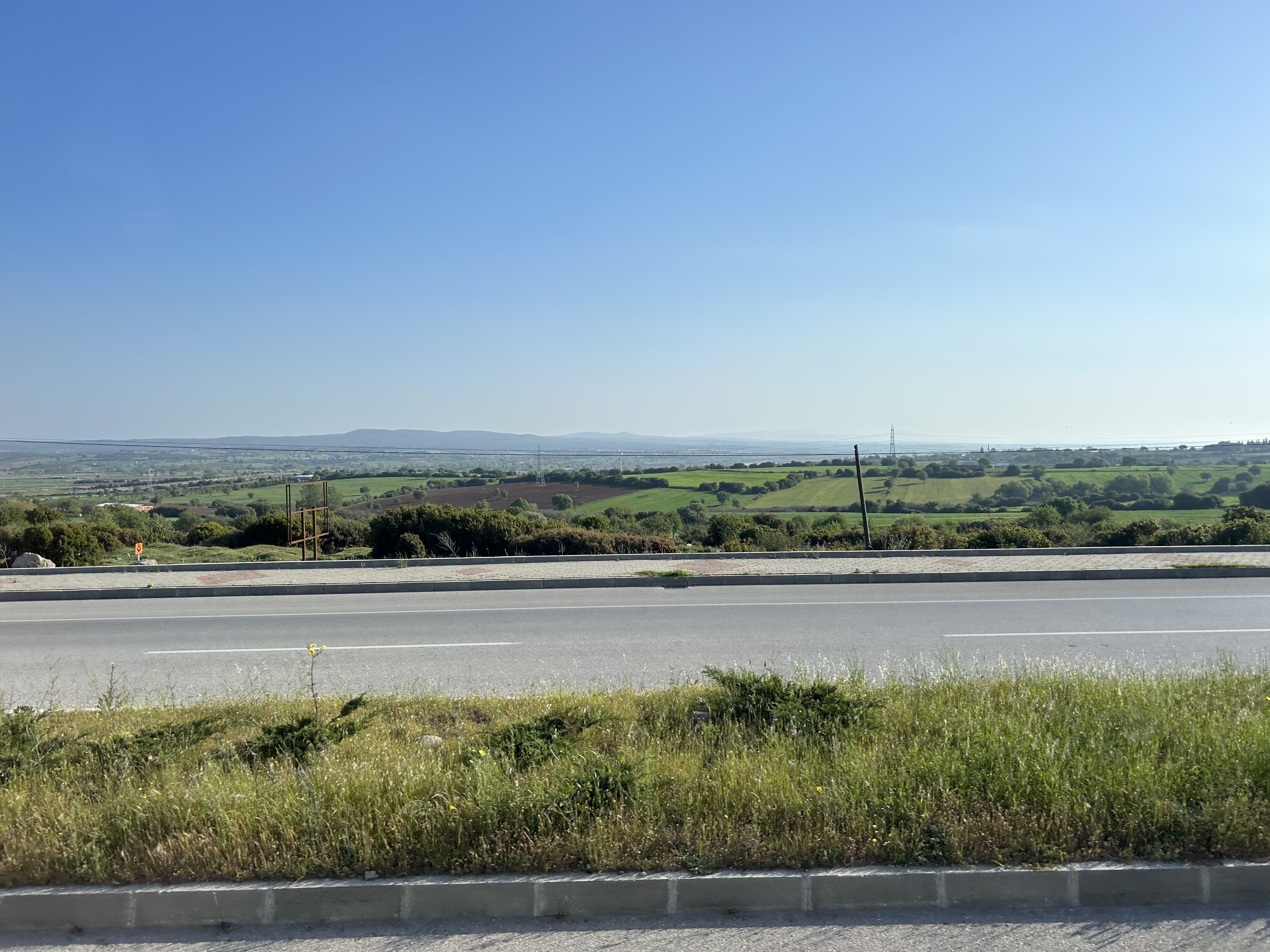
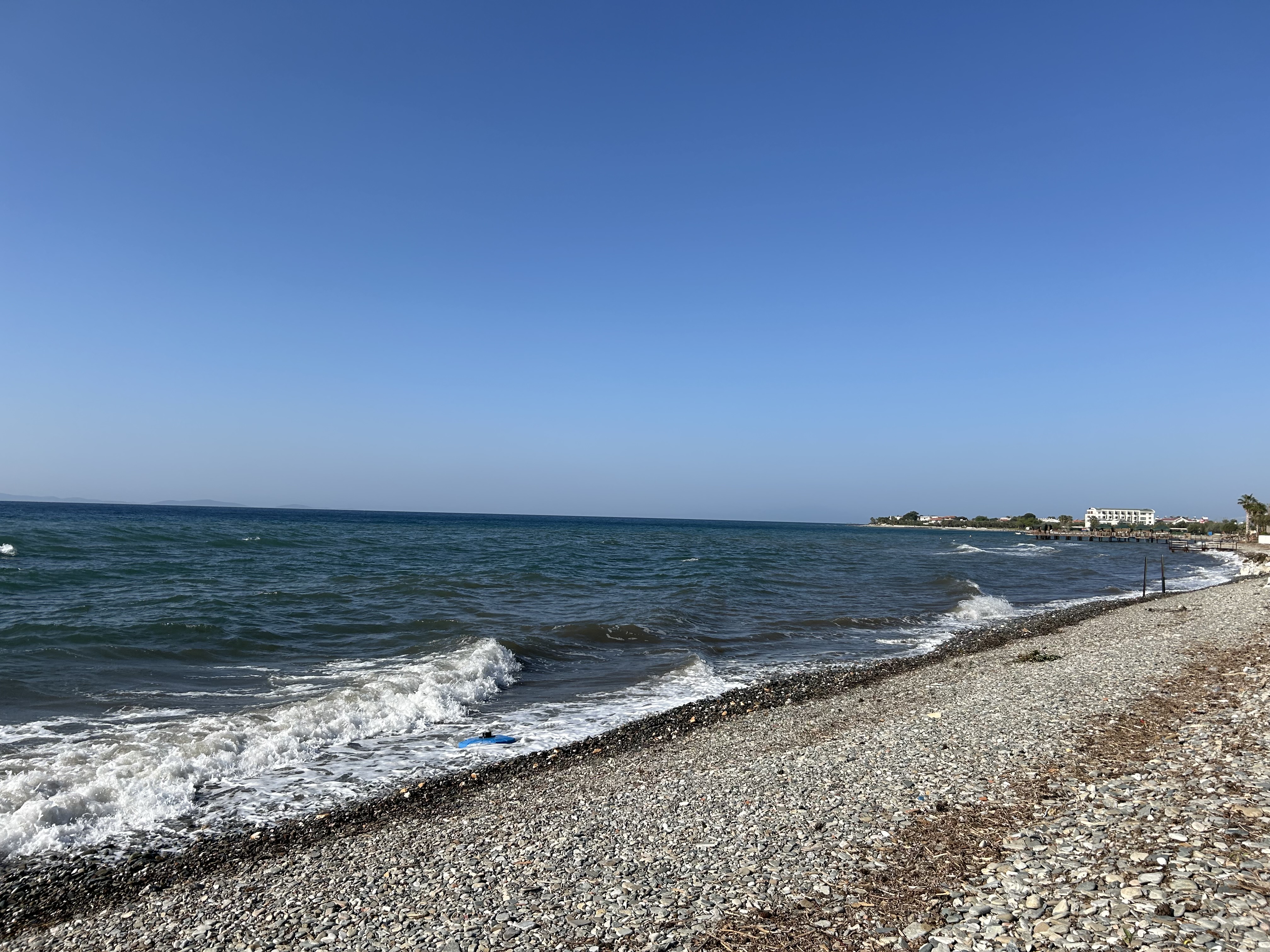
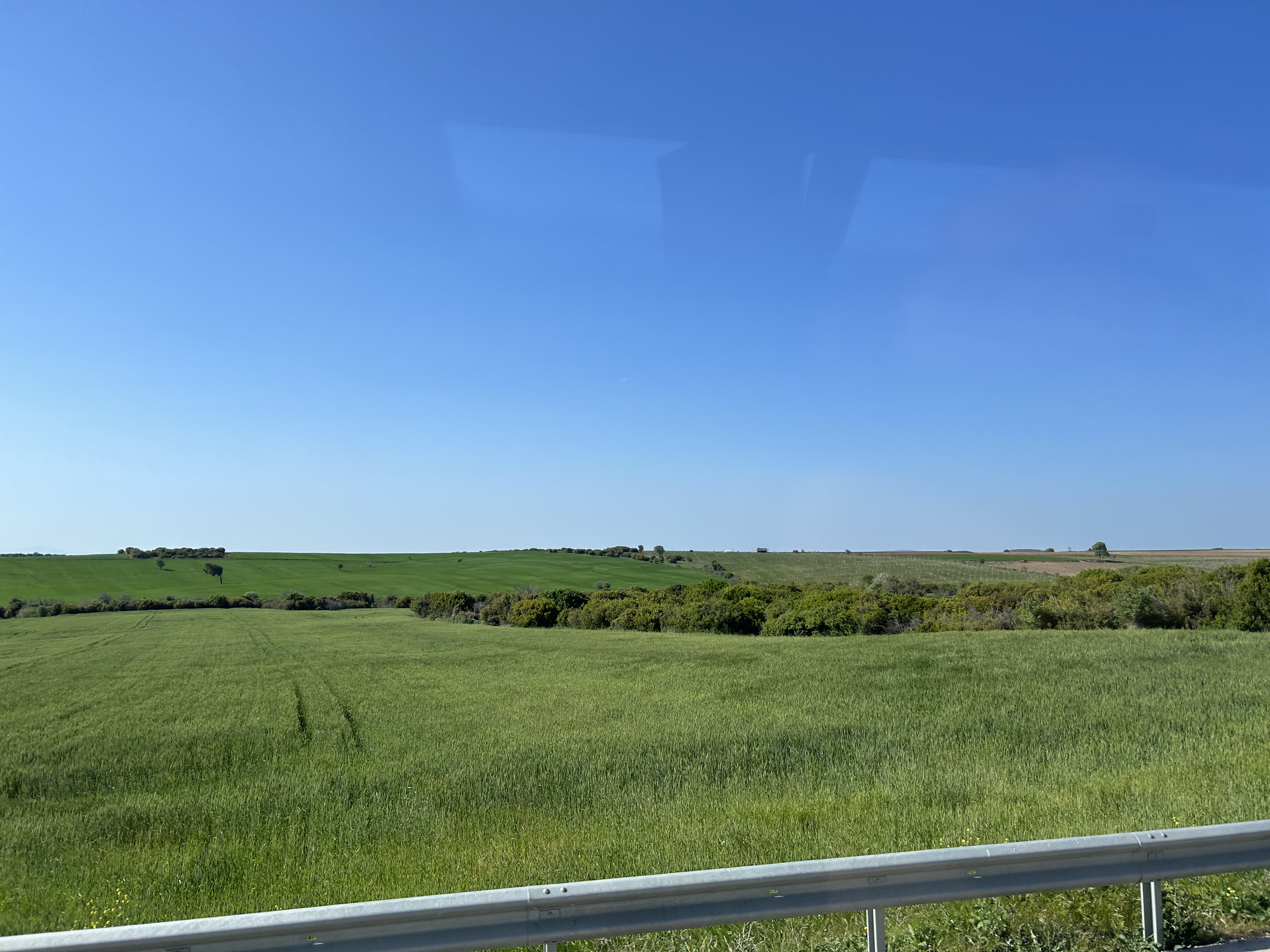
The morning after our stay in Çanakkale, we left the hotel. Our destination was Pergamon, the ancient capital of the kingdom of Pergamon (or "Pergamum", as we often know it at least in the U.S.). There is not a great deal to this post, just pictures of the countryside of Turkey as we drove - the kind of thing that never makes its way into actual travel videos or programs.
After leaving Troy, we continued down the road to our evening stay at the town of Çanakkale (pronounced "Cha-naka-le"; the Ç has a "ch" sound).