As I have continued my wandering through my used book store, I have found more and more that my non-reality readings tend more towards fantasy and less and less towards science fiction (also known as "speculative fiction" for reasons that I have no knowledge of and, frankly, am now too old to care).
Why is this? As I pondered the fact more and more, I came to a two sided conclusion.
On the one hand, I have read and followed enough science fiction through the first 50 odd years of my life to determine that what people think the future will be like and what the future will actually be like are two entirely different things. Read Andre Norton, one of my favorite fantasy and science fiction writers: paper is still used are rockets still have three fins in the 24th Century and beyond. What we thought the future would be like 60 years ago and what it is like now are very very different things. On the other side, more recent writers make the future more like today, just with fancier weapons and slightly upgraded technology - which is just a slightly modified version of the modern world, which hardly makes it science fiction.
On the other hand, the older I get, the less and less I find myself interested in "the future". The future - certainly the far future and even the future 50 years from now - is an undiscovered country that I will never reach. It may be occasionally interesting to ponder or to reach a book or watch a two hour movie on, but that is about it. That future now belongs to others.
Of course, the future I find myself most concerned about at this point in the program is my future beyond life. Because that has a reality that eclipses all others. And that is the reality which remains most in my control, at least in the part where I can know where that future is and Who it is with (I have written about it before here of course; check your local Bible for more details).
As to science fiction for entertainment? At best I look to my old reliable stable of authors for what the far future looked like 60 years ago. At worst, I look for the apocalyptic fiction. Those two extremes, a world that will never be or a world in which we will destroy ourselves, truly seem like the most likely options at this point.
Monday, April 29, 2019

Sunday, April 28, 2019
Praise
"Lord, be it thine,
Unfaltering praise of mine!
And, O pure prince! Make clear my way
To serve and pray at thy sole shrine!
Lord, be it thine,
Unfaltering praise of mine!
O father of souls that long,
Take this my song and make it thine!
- O' Laoghaire, 12th Century
Saturday, April 27, 2019

Friday, April 26, 2019

Thursday, April 25, 2019
The Collapse XXI: Remodeling
03
August 20XX
My
Dear Lucilius:
My
last missive was depressing: depressing for me to author and
undoubtedly depressing for you to read. To perhaps lighten the mood,
let me tell you something I promised in an earlier letter: the
remodel.
The
Cabin, as you might recall, had been in my family since before my
birth, an initially unfinished fishing cabin that my grandfather and
grandmother finished. It was primitive at the time – originally
there was only water for the kitchen and even in my own memory I can
remember the outhouse being the only bathroom at the time – but was
slowly upgraded to include an actual bathroom (complete with shower
and bathtub AND toilet) and a hot water heater. The only thing it
lacked was the ability to live in it in any time other than summer –
as it was only built as a summer cabin, it was never prepared for
winter and thus a rather complex set of instructions (known for years
in the family as The List) had to completed by whomever closed it
down for the season.
As
my wife and I were speaking of what we wanted to do after we retired
(how long ago that all seems now), I wanted to try living there for
greater parts of the year. She was not initially keen, but insisted
if we were going to do anything the Cabin would have to be made ready
for some kind of winter.
And so, The Remodel started.
My
conditions when I met with contractor was that the Cabin had to be
winterized, had to be firmly insulated, had to have a small wood
stove installed (a very small one), and that the outer shell of the
building was to remain intact. And if I could get it, slightly
higher ceilings (to prevent my practice swords from digging in).
Plans were drawn and redrawn based on what could be seen without
entering the walls, and approved. One day a large “Pod” showed
up in the middle of nowhere, where everything inside was carefully
packaged and packed inside.
And
then, the adventures began.
The
piping in the house was simple (one run to the kitchen, one to the
hot water tank, one to the bathroom) and so insulating it proved to
be not a serious issue. The water from the pump approximately 10
feet from the house proved to another matter, of course: The pipe was
excavated, pulled out, dropped down to a three foot depth, and then
brought up to the house (insulated as it came to the more shallower
regions).
The
electric was all run by my grandfather many, many years ago and
(perhaps not surprisingly) not up to code. This was all discovered
after all the walls had been torn out of course (to add insulation),
so that had to be completely redone. I had them add a few more
outlets as we are now much more dependent on electricity than we
were. As you can imagine, that was a great deal more than I had
intended to spend.
Insulation
of the walls and replacement of the windows was planned for. I
perhaps insulated more than I needed to as I insisted that the
highest level they could find be used both in the walls and in the
attic, but I would rather pay now than freeze later.
The
additional wood stove was a bit of an adventure as finding the
smallest one I could turned out to be a bigger one than I had
anticipated, both for heat output as well as footprint. I ended up
with a very small soapstone and cast iron unit with a minimal loss of
floor space.
The
floor was left as was, a combination of the tile squares of colors
from last mid century and unfinished boards. It gave the continuity
I needed to the project. The ceiling, unfortunately, could not be
lifted up so I was left with figuring out another way to complete my
Iai practice.
The
water pump was an issue, as the pressure tank that lived in the shed
where the mower and some tools were stored. The resolution here was
to tear down the shed and build an insulated pump house to house the
pressure tank. The shed was relocated and slightly modified to
become a very small workshop.
The
only new addition I requested was a water and power line run out to
where I anticipated putting another building (it was going to be a
shop, but ended up being the greenhouse and the quail run). They
were each trenched down to three feet and then brought over.
At
the end of the process, we ended up with a cabin that looked (from
the outside) exactly as it always had. The inside appeared much as
it had always looked, except the temperature was much better
controlled and overall our power bill dropped.
Did
we overspend? Perhaps. It was certainly more than I had
anticipated. But I was certain that we had many wonderful years of
spending time into the early Autumn there to observe the changing of
the scenery.
Of
course, this discounted my wife's passing a few years later. Our
summer and fall home suddenly turned into a place to retreat from the
world and, initially, to prepare the next steps. What I found was
the next steps led here and then the trail died off.
Your
Obedient Servant, Seneca
Wednesday, April 24, 2019
Home for Easter: 2019
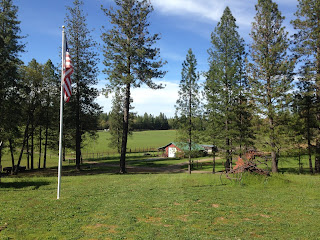
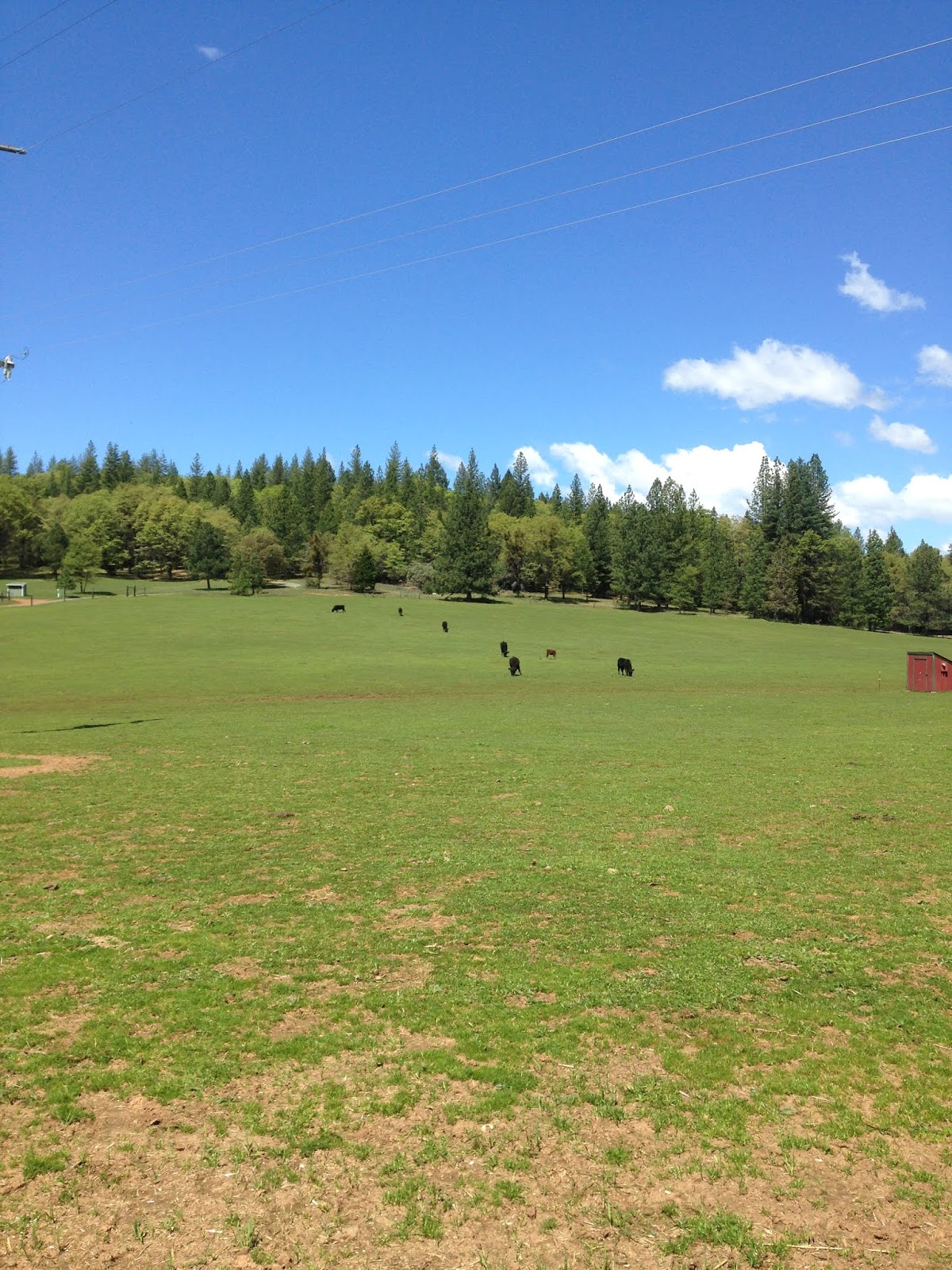
Easter was lovely at The Ranch. The spring made everything so beautifully green. Posted without comment, as the pictures speak for themselves:



Tuesday, April 23, 2019
The Contrariness Of The Mad Farmer
I am done with
apologies. If contrariness is my
inheritance and destiny, so be
it. If it is my mission
to go in at exits and come out at
entrances, so be it.
I have planted by the stars in defiance of
the experts,
and tilled somewhat by incantation and by
singing,
and reaped, as I knew, by luck and Heaven’s favor,
in
spite of the best advice. If I have been caught
so often
laughing at funerals, that was because
I knew the dead were
already slipping away,
preparing a comeback, and can I help
it?
And if at weddings I have gritted and gnashed
my teeth,
it was because I knew where the bridegroom
had sunk his manhood,
and knew it would not
be resurrected by a piece of cake.
‘Dance,’ they told me,
and I stood still, and while they
stood
quiet in line at the gate of the Kingdom, I
danced.
‘Pray,’ they said, and I laughed, covering myself
in
the earth’s brightnesses, and then stole off gray
into the
midst of a revel, and prayed like an orphan.
When they said, ‘I
know my Redeemer liveth,’
I told them, ‘He’s dead.’ And
when they told me
‘God is dead,’ I answered, ‘He goes
fishing every day
in the Kentucky River. I see Him often.’
When
they asked me would I like to contribute
I said no, and when
they had collected
more than they needed, I gave them as much as
I had.
When they asked me to join them I wouldn’t,
and
then went off by myself and did more
than they would have asked.
‘Well, then,’ they said
‘go and organize the International
Brotherhood
of Contraries,’ and I said, ‘Did you finish
killing
everybody who was against peace?’ So be it.
Going
against men, I have heard at times a deep harmony
thrumming in
the mixture, and when they ask me what
I say I don’t know. It
is not the only or the easiest
way to come to the truth. It is
one way.
- Wendell Berry
Monday, April 22, 2019
My Lent Fast: A Perspective
So now that Lent is over and Easter has come and gone, some thoughts on my fast from media, a limited social media presence, and controlling what audio media I listened to:
1) Media is incredibly hard to escape. It is made a little easier by the fact I have no cable and do not subscribe to any daily or periodical publications, but people still talked.
2) The biggest difference I found (beyond a decreased concern level about events) is completely falling out of the 24 hours news cycle. It is freeing. I imagine in some small way, this is what retirement is like.
3) The social media experiment was not as successful as I had hoped - I need more work there and it was a busy 40 days - but in terms of keeping up with my family (at least), Telegram is far superior to FaceTome if for no other reason it is not filled with all other kinds of posts (see item 1 above).
4) For me, music is most largely driven by how far I have to drive. The less I drive, the less I tend to listen to more modern music except for background noise (for which classical is great). I did not suffer by not listening to it.
5) I need to figure out a more useful way to use this time for thought and meditation. But now I know that I can find it.
Overall, I was very pleased by this experiment. I do not know that I will fully continue in this mode, but it has demonstrated great advantages to me.
1) Media is incredibly hard to escape. It is made a little easier by the fact I have no cable and do not subscribe to any daily or periodical publications, but people still talked.
2) The biggest difference I found (beyond a decreased concern level about events) is completely falling out of the 24 hours news cycle. It is freeing. I imagine in some small way, this is what retirement is like.
3) The social media experiment was not as successful as I had hoped - I need more work there and it was a busy 40 days - but in terms of keeping up with my family (at least), Telegram is far superior to FaceTome if for no other reason it is not filled with all other kinds of posts (see item 1 above).
4) For me, music is most largely driven by how far I have to drive. The less I drive, the less I tend to listen to more modern music except for background noise (for which classical is great). I did not suffer by not listening to it.
5) I need to figure out a more useful way to use this time for thought and meditation. But now I know that I can find it.
Overall, I was very pleased by this experiment. I do not know that I will fully continue in this mode, but it has demonstrated great advantages to me.
Sunday, April 21, 2019
Happy Easter 2019!
Now Mark 16:1–8; Luke 24:1–10; John 20:1–8after the Sabbath, as the first day of the week began to dawn, Mary Magdalene Matt. 27:56, 61and the other Mary came to see the tomb. And behold, there was a great earthquake; for Mark 16:5; Luke 24:4; John 20:12an angel of the Lord descended from heaven, and came and rolled back the stone from the door, and sat on it. Dan. 7:9; 10:6; Mark 9:3; John 20:12; Acts 1:10His countenance was like lightning, and his clothing as white as snow. And the guards shook for fear of him, and became like Rev. 1:17dead men.
But the angel answered and said to the women, “Do not be afraid, for I know that you seek Jesus who was crucified. He is not here; for He is risen, Hos. 6:2; Ps. 16:10; 49:15; Matt. 12:40; 16:21; 17:23; 20:19as He said. Come, see the place where the Lord lay. And go quickly and tell His disciples that He is risen from the dead, and indeed Matt. 26:32; 28:10, 16; Mark 16:7He is going before you into Galilee; there you will see Him. Behold, I have told you.”
So they went out quickly from the tomb with fear and great joy, and ran to bring His disciples word.
And as they went to tell His disciples, behold, Mark 16:9; John 20:14Jesus met them, saying, “Rejoice!” So they came and held Him by the feet and worshiped Him. Then Jesus said to them, “Do not be afraid. Go and tell Ps. 22:22; John 20:17; Rom. 8:29; (Heb. 2:11)My brethren to go to Galilee, and there they will see Me.”
- Matthew 28: 1-10, NKJV
Saturday, April 20, 2019
A Few Words From...Carson Napier of Venus
"I was in a quandary. Death lay all about me; it but remained but for me to choose the place and and manner of the assignation; I could drown where I was, or I could permit myself to be dashed to pieces on the rocks. Neither eventuality aroused any considerable enthusiasm in my breast. As a mistress, Death seemed lacking in many essentials. Therefore, I decided not to die."
- Pirates of Venus (Edgar Rice Burroughs)
- Pirates of Venus (Edgar Rice Burroughs)
Friday, April 19, 2019
Home For Easter
Good Morning Friends! As you read this, I am on a plane flying home to spend Easter with our families.
In a point of passing interest, it will be 10 years since this has happened. That strikes me as significant for some reason that I cannot fully comprehend.
It will be a very short trip - out today, back home very early on Monday morning. But it has been a very long time since I have been home in the spring, when everything is green and growing. So in a very real sense, it makes a perfect backdrop for the message of the Resurrection.
I will be enjoying time with family. I hope you are able to do the same.
In a point of passing interest, it will be 10 years since this has happened. That strikes me as significant for some reason that I cannot fully comprehend.
It will be a very short trip - out today, back home very early on Monday morning. But it has been a very long time since I have been home in the spring, when everything is green and growing. So in a very real sense, it makes a perfect backdrop for the message of the Resurrection.
I will be enjoying time with family. I hope you are able to do the same.
Thursday, April 18, 2019
The Collapse XX: Last Shopping Day
01
August 20XX
My
Dear Lucilius:
My
pardon for the lateness of this missive – you will find by the time
stamp of this e-mail is late. But today was a day worth speaking to
you about now, in the event that there is anything else that you need
do as well.
I
left early for my monthly shopping trip a little earlier in the month
than I typical do, based on last month's experience – my standard
Big Box store opens at 0830 and I endeavor to be there as close to
the opening time as possible. The only compensation as I leave this
early is that the sky goes through all the transitions of the morning
as I am on my way. I arrived on time – early enough, in fact, to
start with my fuel purchases – only to find men and women with guns
there.
The
parking lot was already almost full – not just with the cars of
shoppers but with the trucks and vehicles of what I assume was the
National Guard, escorting traffic, directing people.
I
pulled into a line where I waited until I pulled up to a young man,
who requested my “Government Issued ID” and my card, both of
which he ran through scanner, then returned them with a perfunctory
“Thanks” and motioned me on, where I was directed into a parking
place and then again directed to what a growing line along the side
of the building, pegged out by cones and the occasional soldier –
with a gun.
The
mood of the line as I got into it was frightened, more than anything
else. The conversations were hushed, falling away as the men and
women in uniform walked up and down the line. We stood there for
twenty minutes or more, watching the parking lot slowly fill up and
the line increase.
Finally,
the doors on the main entrance rolled up. The crowd started to surge
– only to be pushed back by the soldiers. The line then very
slowly started moving – by the time I got up to the front I could
see why: again, present your ID and your card to a Big Box employee
who ran it through the computer while soldiers paced up and down the
back. Card and ID handed back, I was informed that I had thirty
minutes to shop, starting now. My spending limit was $150, based on
the fact that (according to the database) I was a single older man.
Go.
As
before, the signs were in place on virtually every item for
quantities of purchase– although to my mind, they were even more
restrictive than the last time I was here. Most things were only an
“each” purchase, which in my case made it a little more difficult
than usual to reach my “quota.”
The
shopping crowd was frenzied – and quiet. Employees stood quietly
to the side while more soldiers stood at almost every other
intersection, scanning the crowd. There was no conversation except
for muttered voices and the occasional apology when carts collided.
What
did I buy? Vitamins and Fish Oil A 25 lb bag of rice. A 10 lb box
of Oatmeal. A bag of craisins. Toothpaste. Dental Floss. Toilet
paper (definitely one each there). And perhaps against my better
judgment, a bag of coffee beans – because even if this was the end,
I intended to go out with coffee in hand.
The
food court, my last usual stop, was closed – I suppose to help
enforce the thirty minute time frame. Oddly enough, this is what
saddened me the most and perhaps more than anything else, brought the
entire alarming nature of the situation to reality – not only
because of the tradition, but because of the fact that I had many
happy family memories, once upon a time, of going out for hot dogs
and pizza as a “big deal” dinner. Those, like so many other
things, were suddenly gone.
The
line in front of the store was even longer when I left.
Securing
fuel was a similar exercise which I will not bore you with: Long
lines, ID checks, limited purchase amounts (I managed to fill up my
truck but again, no fuel cans).
And
suddenly it hit me: This might be the last time ever I came to a city
of this size for a very long time.
I
found an ATM for my banking consortium. Posed in a handmade sign
above the ATM and next to the entrance was sign that withdrawals were
limited that day. $200. I was early enough for not a long line,
but I still had to wait.
With
cash in hand, I went through the thought exercise I had often done
many times: What would I buy if I only had one more trip into town?
Now, I had to work that exercise out.
The
first grocery store I was able to locate, I bought fruit: apples,
strawberries, blueberries, anything I could dehydrate. More
toothpaste and more dental floss, more vitamins and fish oil. More
toilet paper. Dried beans. And two gallons of milk – this might
very well be my last cheese making activity.
Down
under my driver's seat is my emergency cash for trips. I dug into
that and kept going.
Next
stop, a feed store. Two bags of pellets for the rabbits, poultry
feed for the quail, wood pellets for litter, and whatever hay I could
buy. You could tell that there was something up by those that were
sensitive to such things (and shopped at these types of stores):
seeds, animal feed, tools – all were in short supply.
At
this point you may wonder that I have not mentioned anyone else
around me. In part that is simply because at this point in the
program I was very focused on making sure that I accomplished
everything I needed to. But yes, there were many people out in
force. The first grocery store I stopped in was not bad, but the
second one was a whirlwind of people and purchases and empty shelves.
I walked out.
The
sporting goods store was a sea of flashing law enforcement lights and
people out in front – I debated going in but it simply looked too
complex to try to do so – and frankly, with a truck cab full of
items I was beginning to become a bit nervous about leaving it for
too long. A note to myself to try a store in a smaller town in the
next few days.
Perhaps
somewhat surprisingly, the oil change I stopped for took no time at
all – the lines were virtually non-extant. And at 5,000 miles
between changes, it might be a very long time before I needed another
one.
My
last stop – you will mock me – was the used book store. They
were only accepting cash at this point, so my options were limited.
They had all the works of Dostoevsky in those cheap paperback Penguin
versions. I bought them all.
One
more stop at a second fuel station farther out of town that was still
accepting cards (with limits on amounts spent) to fill up the truck
again and the other fuel can. And in a splurge to myself – perhaps
the last one – I stopped at my favorite Chicken restaurant and
ordered my favorite chicken sandwich, with the fries and the sweet
tea.
The
drive home was surreal. Listening to the radio as I drove into the
sunset – it had literally taken all day to accomplish this – the
voices droned on about some kind of economic crisis, fuel shortage, a
possible “banking holiday” based on economic disruptions and
national debt. The very sorts of things I gave up thinking about and
listening to years ago because I believed I knew where we were
headed.
History
does not always repeat, but it can rhyme.
The
one major town I pass through on my way home was already largely
closed when I drove through, although the parking on the main little
street was a full as it ever was. The night was still warm when I
opened the window. You would hardly have known the day was unlike
any other I have seen in all my years.
Arriving
home, I did something which was atypical for me in all my years:
almost to dark, I knocked on my neighbors door and let them know my
experiences. Thankfully I had met them not a month before so they at
least remembered me; they thanked me and said they would themselves
make a trip tomorrow and spread the word.
And
then to home. Everything was unpacked and placed into its storage.
Rabbits and quail were looked after (the rabbits received an extra
treat for their patience for the day). The dehydrator came out and I
sliced all the fruit I had purchased. The milk for the cheese
would have to wait for tomorrow.
But
I was not yet done.
On
to the InterWeb. I checked the balance of my bank account, then went
on line and did another round of ordering: Seeds, a few more books,
ammunition. On the one hand it drove my thrifty heart mad to spend
the funds; on the other, I would rather try now and fail than lose
the money without even making the attempt.
And
finally, my letter to you.
As I
write this, the refrigerator hums on and off. The rabbits quietly
eat or lie down, a little confused by this late night light but not
unduly disturbed by it. The cup of tea to my right steams and curls,
smelling of far off fragrances that I am suddenly questioning if I
will ever taste - or even hear of – again.
For
all appearances, it is another ordinary (although rather late) night.
But
for me, Lucilius, my world has changed. The new range of my travels
has become 25 miles or so, which will easily get me to the two next
largest towns. That is a 50 mile round trip. I can do the math and
figure out how much fuel that will mean and how many trips that is.
Before long, that will change to 20 miles round trip – about as far
as the Roman legions considered a good march in a day.
My
personal horizons collapsed years ago, Lucilius. Now I find that the
world's horizons are collapsing as well.
Do
what you can now, friend. I will write as long as power and InterWeb
exists.
Your
Obedient Servant, Seneca
Wednesday, April 17, 2019

Tuesday, April 16, 2019
Truly Preaching About Sin
The current vogue of the American church, if you follow such things as social media, are such things as "Social Justice", which is now becoming a pillar of something called "New Christian Politics". I have certainly commented on such things before - as have others, far more eloquently than myself. The great - and very self-satisfying thing - to most people is the fact that the such things are confined sins, impacting only a portion of the populations. Those who are not impacted by such things can sit smugly in their chairs or pews, feeling the message is always for others, never themselves. Add it off with a dollop of worship and prayer, and they go off on their way happy with the fact they attended church and God "spoke" through the preacher to the worldly situations around them.
If Christ came only to save us from social injustice or bad politics, He is merely another human teacher mired in the human experience. But if in fact Christ came to save us from our individual sin, it is perhaps worthwhile to examine the sins which He actually came to save us from.
If I really look inside at myself (always the most accessible of sinners I am acquainted with), what I find undergirding my every sin is selfishness. I am selfish in the truest sense of the word: I seek to make the world about myself, to put myself in the throne of my life. This does not just impact how I view people different from myself or of a different economic class than myself but even the parts of things I do for myself: how I eat, what I watch, how I act in everyday situations, how I treat my body and my mind. Every moment of every day, I have a choice in every situation: choose myself, or choose God's word about the situation.
I have written about it before, but I would pay good money to see the reaction of a congregation to a sermon on gluttony, for example (the idea of our bodies being the temple of the Holy Spirit extends not only to sexual desires but to all aspects of the physical experience). Or a sermon on the feeding of our minds with wholesome things ("Do you watch current media, brothers and sisters? When there is uncalled for language or sexual overtones, do you turn away or just regard it as a reflection of the culture around you - no big deal?")? And any sermon on lust which challenges just not our thoughts (which is, typically, directed at men) but everything we do as a people to enable and support that culture ("What movies are you watching? What books are you reading? Why are you supporting this?")?
More and more churches will not do this, I suspect, because they have become so intertwined with the culture that rather than become lights shining out to the culture they have merely become mirrors reflecting it. And it will challenge all the congregation in all manners of sin, not just in the ones that they feel comfortable applies "to other people." And most importantly - and thus perhaps, most dangerously - it will constantly remind people not that they are good or justified but rather that they are all sinners in need of a Savior, without which there is only one outcome.
That, friends, is the good news of the Gospel - not that Jesus came to fix our social and political systems (although that is an outcome) but rather than Jesus came to save us from our sins, from Hell and eternal separation from God. That is the good news that really changes lives - but it only comes when the Church is willing to treat the totality of sin for what it truly is, not for what we think it should be.
If Christ came only to save us from social injustice or bad politics, He is merely another human teacher mired in the human experience. But if in fact Christ came to save us from our individual sin, it is perhaps worthwhile to examine the sins which He actually came to save us from.
If I really look inside at myself (always the most accessible of sinners I am acquainted with), what I find undergirding my every sin is selfishness. I am selfish in the truest sense of the word: I seek to make the world about myself, to put myself in the throne of my life. This does not just impact how I view people different from myself or of a different economic class than myself but even the parts of things I do for myself: how I eat, what I watch, how I act in everyday situations, how I treat my body and my mind. Every moment of every day, I have a choice in every situation: choose myself, or choose God's word about the situation.
I have written about it before, but I would pay good money to see the reaction of a congregation to a sermon on gluttony, for example (the idea of our bodies being the temple of the Holy Spirit extends not only to sexual desires but to all aspects of the physical experience). Or a sermon on the feeding of our minds with wholesome things ("Do you watch current media, brothers and sisters? When there is uncalled for language or sexual overtones, do you turn away or just regard it as a reflection of the culture around you - no big deal?")? And any sermon on lust which challenges just not our thoughts (which is, typically, directed at men) but everything we do as a people to enable and support that culture ("What movies are you watching? What books are you reading? Why are you supporting this?")?
More and more churches will not do this, I suspect, because they have become so intertwined with the culture that rather than become lights shining out to the culture they have merely become mirrors reflecting it. And it will challenge all the congregation in all manners of sin, not just in the ones that they feel comfortable applies "to other people." And most importantly - and thus perhaps, most dangerously - it will constantly remind people not that they are good or justified but rather that they are all sinners in need of a Savior, without which there is only one outcome.
That, friends, is the good news of the Gospel - not that Jesus came to fix our social and political systems (although that is an outcome) but rather than Jesus came to save us from our sins, from Hell and eternal separation from God. That is the good news that really changes lives - but it only comes when the Church is willing to treat the totality of sin for what it truly is, not for what we think it should be.
Monday, April 15, 2019
Artifacthood
Last week on the comments for Reality Breaks Into Fantasy, Glen had one of those remarks that the longer you pondered it, the more profound it became:
"Perhaps we are much the same to the pozzed, the woke and the enlightenment...we are dangerous artifacts being pushed to act in dangerous ways by matters of conscience?"
It got me to thinking about the nature of being an artifact.
The phrase "Things were different back in my day" is probably the most overused phrase in the history of mankind, followed only by various versions of "Publius, hold my wine cup...". The older generation has been commenting on the seemingly different lifestyle of the younger generation for at least 3,000 years, maybe longer.
But occasionally changes happen to a society, changes so dramatic that the before and after are breathtaking in their scope and breadth. They literally create a new society, leaving those that exist and refuse to change artifacts of another way of living, coelecanths swimming in a new ocean.
In the reign of Tiberius, there were still a few men whose memory went back to the Roman Republic, to a time when men voted for those that ruled over them rather than serving under the Principate. Or Scottish Highlanders of the 1780s and 1790s who still remembered the time of the clans. Or samurai after 1877 who lived on into the twentieth century, warrior relics of a different era.
These men and women undoubtedly seemed out of step with the "modern" times in which they were thrust, especially if they failed in some form or fashion to adjust. For the most part they were never considered as serious threats, at least in modern times (In Rome, of course, the Principate was always looking for the slightest reason to remove potential threats), but rather as oddities - perhaps undesirable or weird, certainly no-one to be considered in the modern era as a "model" of the new society.
But an odd thing happened in every one of the examples I have given: over the course of history it is those who were superceded - the Roman Republicans, the Highlanders, the Samurai - who are seen as models or admirable while the societies around them - the Roman Empire, the British Empire, the Meiji Democracy - eventually fall from interest or regard.
Why is this? I do not fully know, of course, but I wonder if it has something to do with the fact that those who persevered in the ways they were taught as youth were ultimately seen as standing for something while those who adapted were seen as simply one long line of "yes" men, the sorts that line history in greys and blurs and fall away into obscurity.
Dennis Hempson (1695-1807) was the last of the great Irish Harpers. Blind and playing a metal strung harp with his fingernails in the old Irish style, he was a relic in a modern age of gut strung harps and continental music. At the Belfast Harp Festival of 1792 he was by far the oldest harpist in attendance and played in a style unlike any of the others. When asked about why he played certain songs in certain ways, he simply responded "This is the way that I learned it" or "I cannot play it in any other way."
Like Hempson, may we persist in our artifacthood, if for no other reason to give witness to a different time in hopes that in the future, some of what we believed and stood for maybe remembered as worthy of emulation instead of fading to grey.
"Perhaps we are much the same to the pozzed, the woke and the enlightenment...we are dangerous artifacts being pushed to act in dangerous ways by matters of conscience?"
It got me to thinking about the nature of being an artifact.
The phrase "Things were different back in my day" is probably the most overused phrase in the history of mankind, followed only by various versions of "Publius, hold my wine cup...". The older generation has been commenting on the seemingly different lifestyle of the younger generation for at least 3,000 years, maybe longer.
But occasionally changes happen to a society, changes so dramatic that the before and after are breathtaking in their scope and breadth. They literally create a new society, leaving those that exist and refuse to change artifacts of another way of living, coelecanths swimming in a new ocean.
In the reign of Tiberius, there were still a few men whose memory went back to the Roman Republic, to a time when men voted for those that ruled over them rather than serving under the Principate. Or Scottish Highlanders of the 1780s and 1790s who still remembered the time of the clans. Or samurai after 1877 who lived on into the twentieth century, warrior relics of a different era.
These men and women undoubtedly seemed out of step with the "modern" times in which they were thrust, especially if they failed in some form or fashion to adjust. For the most part they were never considered as serious threats, at least in modern times (In Rome, of course, the Principate was always looking for the slightest reason to remove potential threats), but rather as oddities - perhaps undesirable or weird, certainly no-one to be considered in the modern era as a "model" of the new society.
But an odd thing happened in every one of the examples I have given: over the course of history it is those who were superceded - the Roman Republicans, the Highlanders, the Samurai - who are seen as models or admirable while the societies around them - the Roman Empire, the British Empire, the Meiji Democracy - eventually fall from interest or regard.
Why is this? I do not fully know, of course, but I wonder if it has something to do with the fact that those who persevered in the ways they were taught as youth were ultimately seen as standing for something while those who adapted were seen as simply one long line of "yes" men, the sorts that line history in greys and blurs and fall away into obscurity.
Dennis Hempson (1695-1807) was the last of the great Irish Harpers. Blind and playing a metal strung harp with his fingernails in the old Irish style, he was a relic in a modern age of gut strung harps and continental music. At the Belfast Harp Festival of 1792 he was by far the oldest harpist in attendance and played in a style unlike any of the others. When asked about why he played certain songs in certain ways, he simply responded "This is the way that I learned it" or "I cannot play it in any other way."
Like Hempson, may we persist in our artifacthood, if for no other reason to give witness to a different time in hopes that in the future, some of what we believed and stood for maybe remembered as worthy of emulation instead of fading to grey.
Sunday, April 14, 2019
Let Us Adore
"Let us adore the Lord,
Maker of marvelous works,
Bright heaven with its angels,
And on earth the white-waved sea."
- Ninth Century Irish, Celtic Devotions, Calvin Miller
Saturday, April 13, 2019
A Few Words From...Oe Masamichi
"When Uno Mataji asked his teacher Oe Masamichi (17th Headmaster, Muso Jikiden Eishin-Ryu) about the reason why he only taught iaijutsu and not kendo to Yamauchi Toyotake (18th Headmaster, Muso Jikiden Eishin Ryu, first branch head of Yamauchi-ha), he answered by saying it is not proper to strike a lord with a bamboo stick." - Muso Jikiden Eishin-Ryu: The Iai Forms and Oral Traditions of the Yamauchi Branch, Yamakoshi Masaki
Friday, April 12, 2019

Thursday, April 11, 2019
The Collapse XIX: Family
29 July 20XX
My Dear Lucilius:
I did not expect a
response from you so soon.
The Postal Service
has been cut down in your area as well? I recall you had a post
office box, the same one you have had for well over 50 years. I am
sure it is a pain at this point at all to go down there, perhaps much
less of a pain now that your cause to go there is not as frequent.
We are, if you can
believe it, almost at the end of July. I have about two months left
of growing season – well, it could be as short as one (it has been,
years past). I have started the process of cleaning out and
freshening up the greenhouse for the inevitable return of winter.
Canning and drying
continues apace. My canning skills are meager and I limit myself to
what I know I can safely do: peppers, okra, tomatoes. I have had
acquaintances that canned everything under the sun they grew in the
garden. My skills – and my risk tolerance – are much less. I
dehydrate far more than I will ever try to can.
My monthly trip to
the Big Box store will be in three days. I worry that the
constraints that were in place for purchasing last time will be there
this time as well; I intend to fill the truck up with as much as I
can on my way home.
You had asked me
about my family.
It is overall a sad
tale, one that I had not fully anticipated some 30 years ago.
My children are
different than I. I cannot fully tell you why – yes, they are
“good” in the sense that they are productive members of society,
passionate about doing good, intelligent. But we hold very very
different positions about a great number of things political and
religious and economic. I sometimes look back and ask myself where
the difference occurred. We raised them as we ourselves were raised:
involved in school, involved in church, involved in some level of
community activity.
Somewhere around
high school for each of them, we stopped discussing things like
politics and religion. You can argue that I was stubborn and should
have learned to manage my temper better – which may in fact be true
(I can get rather passionate about something that matters to me) –
but I could not merely sit back and listen to proposals and arguments
being made from a position of a lack of practical experience. And
so, to preserve the peace, we simply removed all such things from the
table for discussion by unspoken fiat and reserved our conversations
to polite topics about generic things – I growing farther and
farther apart from current events and modern culture and they growing
farther and farther apart from my interests.
My wife somehow
managed to keep communications and events together, at least for
holidays and special occasions. Even as they moved away – and
seldom returned home – she still bravely informed them about us and
me and about them.
This all changed, of
course, with my wife's passing.
The period right
after the funeral was at the same time the hardest and the easiest it
had been for years for us to communicate, lost in a common grief and
the inevitable reviews of all things that she had owned or created.
Perhaps preemptively and unconsciously they took items which had
personal significance to them: scrapbooks, old pictures, bits and
pieces that had belonged to my wife or sentimental items which had no
intrinsic value to me.
After that, things
essentially drifted apart. Perhaps you could argue by common
agreement, perhaps by a decided choice that it was better to preserve
what memories we had rather than to risk spoiling them with comments
we could not erase in our minds. And my decision to relocate, while
not directly contributing to the state of affairs, certainly did
nothing to improve them. And once I had moved, even coming to see me
became much less convenient – and in turn, I was never really
“invited” out to visit them.
And then, Christmas
two years gone, no follow up at all. Whatever truce had been in effect was
over. I had passed beyond the realm of knowledge.
I had little enough
other family at that point: my parents and in-laws had passed away
long ago, my one and only sister and her family lost in the twice
annual visits to our family home which became single visits and then
none, my aunts and uncles disappeared and my cousins scattered and
not communicative (we were never writers). And although I thought I
had prepared myself for it, the final cut off of communication was
much more painful than I had anticipated. I was, effectively, alone.
I have compensated
as I could, of course: initially a great deal of tears and thinking,
then a great deal of journaling, a brief period of convincing myself
that I should just “drive out there and show up”, and then
finally the very quiet acceptance of the fact that those
relationships were severed through no actions of my own doing.
You will perhaps
think me mad, writing on like this. On the one hand I still find it
painful to recount all of these memories. There were good times
growing up – maybe not great times as some had them, but good
times. There were happy memories there as well – memories that I
hope will go on and in some way influence their own lives and
relationships with their own children (it is a sad and lonely thing,
Lucilius, to wonder if you have grandchildren and to realize that
most likely you will never know).
The Cabin is where
it always was of course, and they know the way well enough (who would
not, in this current age of technology?). And I still find myself
starting up from time to time when I working outside in the garden or
reading a book at the sound of a car in hopes that it will pull down
my lane and old familiar faces – and new ones will spill out of
the doors. But they never do, of course: the car drives by on the
road and I am left again with silence of my thoughts and feel of the
soil or pages in my grasp.
Of all the things I
hate about modern society and culture, I hate the fact that it has
destroyed my family the most.
Your Obedient
Servant, Seneca
Wednesday, April 10, 2019
Sometimes You Forget
"Tell me" said the interviewer, "What have you found to be the most difficult challenge in trying to write seven days a week?
The author thought for a moment. "Well", he said, "The most difficult thing is that moment when you think have written a week's worth of material but find that in fact you only have done six days so you scramble to find something, only to realize literally at the last moment that you needed the thing for tomorrow, not today. And then you freaked out for nothing."
The interview smiled. "Happen a lot?"
The author shook his head. "Oh, not really. Just once in a heartstopping while....."
The author thought for a moment. "Well", he said, "The most difficult thing is that moment when you think have written a week's worth of material but find that in fact you only have done six days so you scramble to find something, only to realize literally at the last moment that you needed the thing for tomorrow, not today. And then you freaked out for nothing."
The interview smiled. "Happen a lot?"
The author shook his head. "Oh, not really. Just once in a heartstopping while....."
Subscribe to:
Posts (Atom)